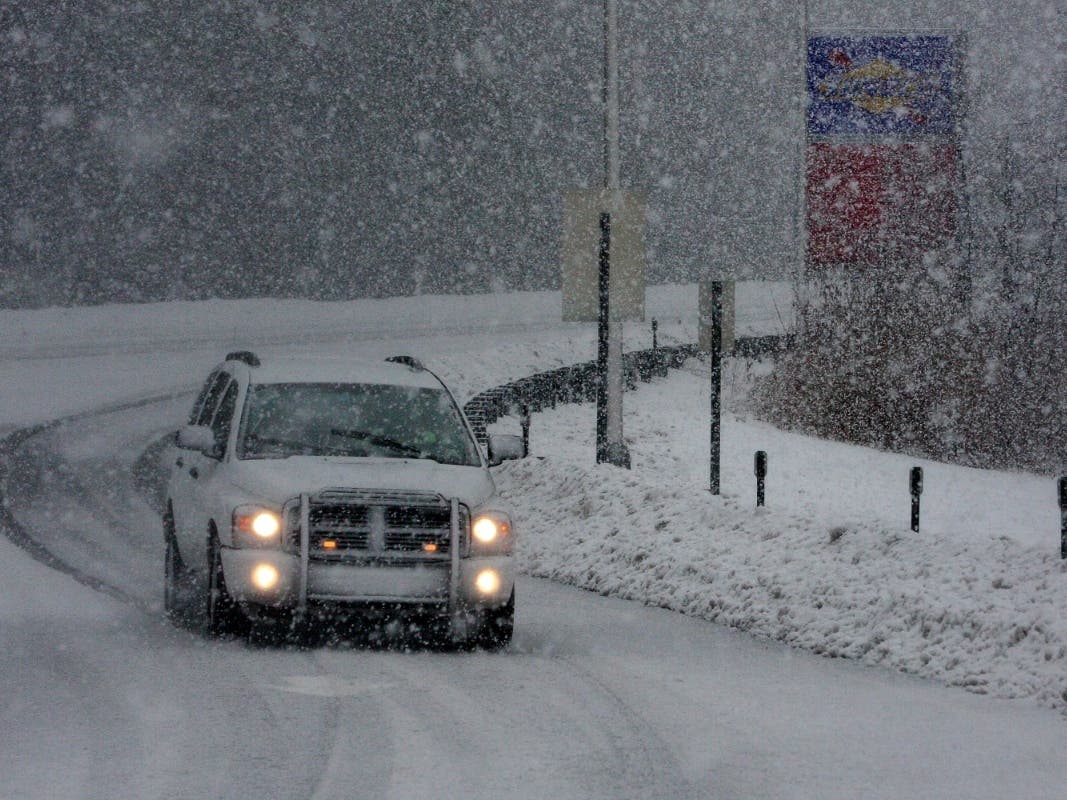
New Jersey Acting Governor Tahesha Way has declared a statewide emergency as a potent winter storm approaches, threatening to blanket the state with heavy snow, sleet, and freezing rain. The emergency declaration, issued through Executive Order No. 409, took effect at 1 p.m. on Friday and will remain in place until state officials determine that the storm has passed and normal conditions are restored.
“Starting this afternoon, we will experience a severe winter storm bringing dangerous outdoor conditions to our state,” Governor Way said. “This storm will cause hazardous road conditions and impact holiday travel. We are urging travelers to avoid the roads during the storm and allow crews to tend to highways and streets.”
According to the National Weather Service (NWS), the storm is expected to drop between five and eight inches of snow in many areas, with certain higher-elevation locations potentially receiving even more. Heavy snow, combined with sleet and freezing rain, will create treacherous conditions across much of New Jersey from Friday afternoon through Saturday. Temperatures are forecast to remain below freezing throughout the weekend, further exacerbating hazardous travel and outdoor conditions.
Regional Warnings and Forecasts
Winter storm warnings have been issued for 11 counties in northern and central New Jersey, including Bergen, Essex, Hudson, Middlesex, Monmouth, Morris, Passaic, Somerset, Sussex, Union, and Warren. Meanwhile, eight southern counties—Burlington, Camden, Cumberland, Gloucester, Hunterdon, Mercer, Ocean, and Salem—are under winter weather advisories.
Meteorologists predict that the heaviest snowfall will begin during the early evening hours on Friday. Central and northern parts of the state could see accumulations of four to eight inches, while southern regions are expected to receive between one and four inches. Higher elevations are likely to see local snow totals exceeding the general forecast, creating particularly dangerous conditions for mountain roadways.
In northern areas, snow may fall at rates exceeding one to two inches per hour during the storm’s most intense phase. Sleet and ice accumulation could compound the dangers, making roadways slick and impairing visibility for drivers. The National Weather Service has warned that roads and bridges are likely to become hazardous, with visibility potentially dropping below a quarter mile due to falling and blowing snow. Travel could become extremely difficult, particularly during Friday evening commutes and holiday-related trips.
Potential Impacts
Officials have cautioned that the rapidly accumulating snow could bring down power lines and trees, leading to outages that may disrupt essential services, including police, fire, and emergency medical response. Residents could also face challenges obtaining necessary goods, medical care, or other emergency services.
Morris and Sussex counties are forecast to experience some of the most severe conditions, with five to eight inches of snow and sleet expected, and localized totals potentially reaching 10 inches. Warren County could see four to seven inches of snow and sleet, along with a light glaze of ice. Somerset, Middlesex, and western Monmouth counties are expected to receive four to seven inches of snow and sleet, combined with light ice accumulation. The distribution of snow will show a sharp gradient from south to north, with the heaviest snowfall concentrating in northern areas as sleet mixes in from the south.
Nearby regions, including southern Connecticut, northeast New Jersey, and southeast New York, are expecting six to nine inches of snow, with the heaviest snowfall occurring between 6 p.m. Friday and midnight.
State Preparedness
State transportation crews have mobilized ahead of the storm, with workers and equipment strategically positioned to respond as conditions deteriorate. The Department of Transportation will implement a commercial vehicle restriction at 3 p.m. Friday, affecting tractor-trailers, empty commercial driver’s license trucks, recreational vehicles, motorcycles, and passenger vehicles pulling trailers along key routes, including Interstate 78, Interstate 80, Interstate 280, Interstate 287, and Route 440.
The emergency declaration grants broad powers to state authorities, allowing them to coordinate a statewide response. The state director of emergency management, who also serves as the superintendent of State Police, has authority to implement emergency operations plans at the state, county, and municipal levels. These powers include controlling traffic flow on roadways, ordering evacuations if necessary, and commandeering state facilities to provide shelter for residents displaced by the storm.
Governor Way urged residents to monitor weather updates and safety advisories from the state’s emergency preparedness website at ready.nj.gov. Those in northern New Jersey and the New York metropolitan area should also follow updates from the National Weather Service New York office, while central and southern residents should consult the NWS Philadelphia/Mount Holly office.
Transportation and Travel Concerns
Officials warned that travel will be extremely hazardous during the storm’s peak. Snow and ice accumulation on roads could result in dangerous driving conditions, while blowing snow may reduce visibility to near zero in some areas. Residents are strongly advised to avoid travel unless absolutely necessary and to allow crews to clear roads and respond to emergencies.
The combination of snow, sleet, and ice could also threaten power infrastructure. Downed power lines and fallen trees may lead to widespread outages, complicating emergency response and access to essential services. Residents are advised to prepare for potential power disruptions, stock up on supplies, and check on neighbors who may require assistance.
Community and Emergency Response
Local emergency management teams and first responders have been placed on high alert. The state has mobilized resources, including snowplows, salt trucks, and emergency personnel, to respond rapidly to road blockages, accidents, and other storm-related incidents. Fire and police departments are coordinating with state authorities to ensure public safety, particularly in areas prone to heavy snow or ice accumulation.
Residents living in areas with high snowfall risk are encouraged to maintain emergency kits, keep vehicles stocked with essentials, and be prepared for temporary isolation if roads become impassable. Motorists should also carry chains or snow tires in mountainous or higher-elevation areas, where conditions are expected to be most severe.
Outlook
The winter storm is expected to impact New Jersey throughout Friday evening and into Saturday, with cold temperatures persisting below freezing into the weekend. Officials have cautioned that travel may remain dangerous even after the snow stops, as icy conditions on untreated roadways can continue for hours.
With northern and central counties forecast to bear the brunt of the storm, residents are urged to remain vigilant and avoid unnecessary travel. Governor Way’s emergency declaration ensures that state agencies have the authority and resources necessary to respond quickly to the evolving situation, protecting lives, property, and public infrastructure during this significant winter weather event.
For continuous updates on road conditions, power outages, and weather forecasts, New Jersey residents should monitor ready.nj.gov and follow advisories issued by local authorities and the National Weather Service.

Emily Johnson is a critically acclaimed essayist and novelist known for her thought-provoking works centered on feminism, women’s rights, and modern relationships. Born and raised in Portland, Oregon, Emily grew up with a deep love of books, often spending her afternoons at her local library. She went on to study literature and gender studies at UCLA, where she became deeply involved in activism and began publishing essays in campus journals. Her debut essay collection, Voices Unbound, struck a chord with readers nationwide for its fearless exploration of gender dynamics, identity, and the challenges faced by women in contemporary society. Emily later transitioned into fiction, writing novels that balance compelling storytelling with social commentary. Her protagonists are often strong, multidimensional women navigating love, ambition, and the struggles of everyday life, making her a favorite among readers who crave authentic, relatable narratives. Critics praise her ability to merge personal intimacy with universal themes. Off the page, Emily is an advocate for women in publishing, leading workshops that encourage young female writers to embrace their voices. She lives in Seattle with her partner and two rescue cats, where she continues to write, teach, and inspire a new generation of storytellers.