Allegations of secret diplomacy, internal betrayal, and months of covert planning are fueling fresh controversy following the U.S. military operation that resulted in the capture of Venezuelan leader Nicolás Maduro.
According to multiple reports and statements from regional political figures, Venezuela’s vice president and now acting leader Delcy Rodríguez held discreet meetings with U.S. officials in the months leading up to the dramatic raid on Caracas—raising questions about whether Maduro’s removal was aided from within his own inner circle.
The claims, if accurate, suggest the extraordinary U.S. operation may not have been a surprise intervention, but the final act of a long-running diplomatic and intelligence effort involving intermediaries, back-channel talks, and competing visions for Venezuela’s future.
Secret Meetings in Doha Raise Questions
Reports indicate that Rodríguez participated in confidential discussions with American representatives in Doha, Qatar, with the talks allegedly mediated by a senior member of the Qatari royal family. During those meetings, Rodríguez is said to have positioned herself as a more “acceptable” alternative to Maduro for Washington.
According to accounts of the discussions, the proposal centered on a concept described by insiders as “Madurismo without Maduro”—a transitional arrangement that would preserve elements of the existing power structure while removing the embattled president himself.
The idea reportedly appealed to some policymakers as a way to avoid chaos or a prolonged vacuum of power while still ending Maduro’s rule.
‘Inside Job’ Theory Gains Traction
As details of the U.S. raid emerged, speculation intensified over the apparent lack of resistance faced by American forces. Social media commentators and regional analysts questioned why U.S. helicopters flying at low altitude were not met with heavier fire, particularly given Venezuela’s well-known air defense capabilities.
Those suspicions were amplified by statements from Colombia’s former vice president Francisco Santos Calderón, who said he was “absolutely certain” that Maduro was betrayed by his second-in-command.
“They didn’t remove him—they handed him over,” Santos said in a televised interview, arguing that the sequence of events pointed to internal cooperation rather than a purely external assault.
He claimed the operation appeared carefully staged to ensure Maduro could be extracted quickly and with minimal resistance.
Months of Intelligence Preparation Alleged
Sources familiar with the matter say U.S. intelligence agencies quietly assembled a small team on the ground in Venezuela as early as August, tasked with tracking Maduro’s daily movements and routines.
According to those accounts, operatives monitored where Maduro slept, how he traveled, and even details of his personal habits. That intelligence allegedly allowed planners to identify a narrow window when the president would be most vulnerable.
U.S. military officials have described the raid as one of the most complex operations in recent memory, involving rehearsals, mockups of fortified structures, and precision strikes on air defense systems to clear a path for helicopters.
The Raid That Changed Everything
The operation—later identified as Operation Absolute Resolve—unfolded in the early hours of Saturday morning. U.S. aircraft targeted military infrastructure, communications systems, and air defenses around Caracas before special operations forces moved in.
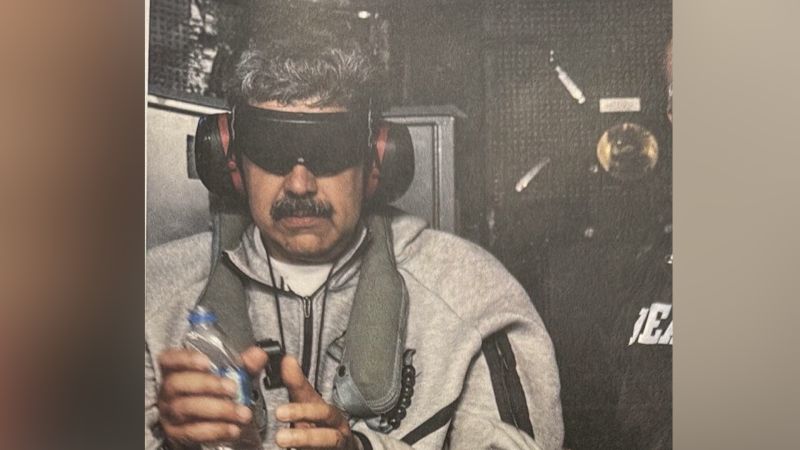
Elite troops, supported by intelligence assets, entered Maduro’s compound, breached fortified doors, and took both Maduro and his wife, Cilia Flores, into custody.
President Donald Trump later said the Venezuelan leader attempted to reach a secure room but was overtaken within seconds.
Despite one helicopter being struck, U.S. officials said no American personnel were killed.
A Sudden Shift in Rodríguez’s Tone
In the immediate aftermath of the raid, Rodríguez adopted a defiant tone in a televised address, condemning what she described as “unprecedented military aggression” and demanding the immediate release of Maduro and his wife.
She declared that Venezuela “will never again be anyone’s colony,” echoing long-standing rhetoric used by the Maduro government.
Yet within 24 hours, her message shifted dramatically.
Rodríguez, now serving as acting president by order of Venezuela’s high court, issued a public statement inviting the United States to cooperate on an agenda of shared development and respectful relations—language that surprised many observers given the severity of the operation.
Competing Plans for Venezuela’s Future
According to accounts of the Doha talks, Rodríguez’s rise was only one of several options presented to Washington. Another involved a retired Venezuelan general living in exile, though that proposal reportedly gained less traction.
Earlier proposals suggested Maduro could step aside in exchange for remaining in the country and avoiding prosecution, with U.S. companies gaining access to Venezuela’s oil sector. Those ideas were ultimately rejected by U.S. officials, who insisted that full regime change was necessary.
Over time, intermediaries allegedly argued that Rodríguez would be willing to protect future American energy investments and manage a controlled transition—an argument that some officials found persuasive.
Allegations of Calculated Pragmatism
Santos and other critics argue the situation reflects hard-nosed pragmatism rather than ideological consistency.
They claim the U.S. leadership made three core decisions: remove Maduro, establish a transition led by someone from within the regime, and secure financing and investment through oil development.
Trump himself has described Rodríguez as someone the U.S. could “work with,” despite the fact that she previously faced U.S. sanctions for her role in undermining Venezuelan democracy.
Mounting Human and Political Costs
While Venezuela has not released official casualty figures, foreign reports citing Venezuelan officials estimate that dozens were killed during the raid, with the toll expected to rise. Images of smoke rising from military installations and reports of power outages added to the sense of shock across the country.
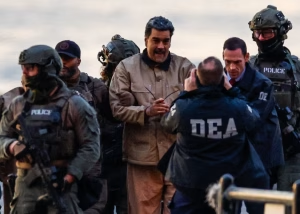
Maduro has since been transported to New York, where he is expected to face trial on charges including narco-terrorism conspiracy, cocaine trafficking, and weapons offenses.
The case marks one of the most consequential U.S. interventions in Latin America in decades, drawing comparisons to the 1989 invasion of Panama.
A Nation at a Crossroads
Rodríguez’s past—shaped by revolutionary politics and personal tragedy—has positioned her as both a symbol of continuity and a potential agent of change. Unlike many in Maduro’s inner circle, she has avoided criminal indictment in the United States and cultivated relationships with international figures and energy interests.
Whether her rise represents a genuine transition or merely a repackaging of power remains an open question.
What is clear is that Venezuela now stands at a crossroads, with its former leader in U.S. custody, its interim government seeking legitimacy, and the world watching closely to see whether peace, reform, or further conflict lies ahead.
As investigations and trials move forward, the unanswered question persists: was Maduro forcibly removed—or quietly handed over in a deal made long before the helicopters arrived?

Emily Johnson is a critically acclaimed essayist and novelist known for her thought-provoking works centered on feminism, women’s rights, and modern relationships. Born and raised in Portland, Oregon, Emily grew up with a deep love of books, often spending her afternoons at her local library. She went on to study literature and gender studies at UCLA, where she became deeply involved in activism and began publishing essays in campus journals. Her debut essay collection, Voices Unbound, struck a chord with readers nationwide for its fearless exploration of gender dynamics, identity, and the challenges faced by women in contemporary society. Emily later transitioned into fiction, writing novels that balance compelling storytelling with social commentary. Her protagonists are often strong, multidimensional women navigating love, ambition, and the struggles of everyday life, making her a favorite among readers who crave authentic, relatable narratives. Critics praise her ability to merge personal intimacy with universal themes. Off the page, Emily is an advocate for women in publishing, leading workshops that encourage young female writers to embrace their voices. She lives in Seattle with her partner and two rescue cats, where she continues to write, teach, and inspire a new generation of storytellers.