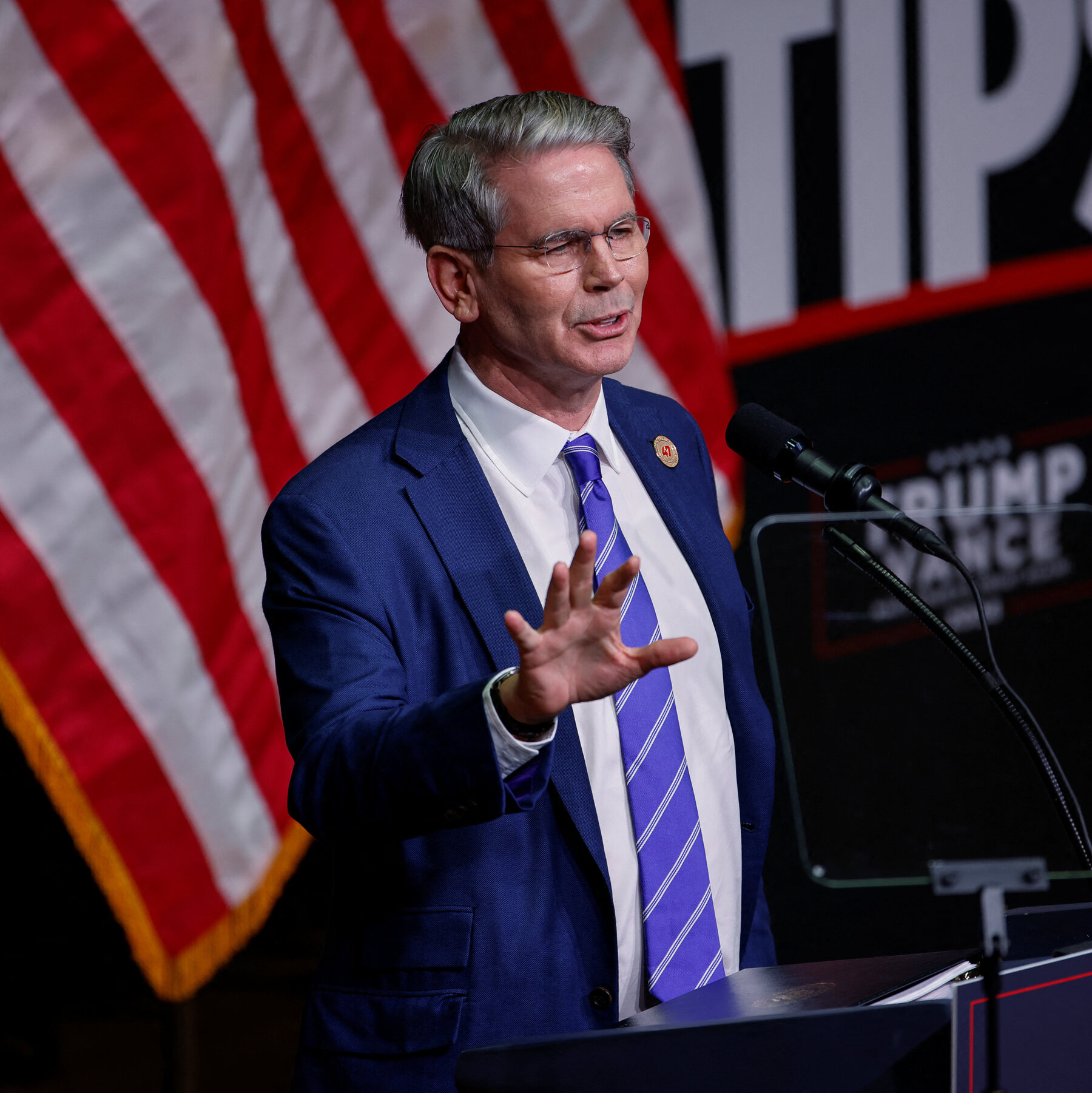
A Significant Shift Inside the Treasury Department
Treasury Secretary Scott Bessent has signaled one of the most aggressive federal crackdowns yet on illegal immigration’s financial footprint in the United States. Speaking both publicly and through a series of targeted statements, Bessent outlined an upcoming regulatory overhaul designed to close off tax-based financial benefits and money-transfer avenues used by individuals who are not lawfully present in the country.
The policy shift aligns with the broader direction of the Trump administration, which has made drastic immigration restrictions a central governing priority. While earlier executive orders focused on border measures and deportation guidelines, Bessent’s proposal moves the battle into the nation’s financial infrastructure.
A Plan to Redefine Who Qualifies for Federal Tax Benefits
Bessent’s announcement explained that the Treasury Department intends to propose new regulations clarifying that a number of taxpayer-funded credits will no longer be accessible to illegal immigrants or individuals not meeting legal residency standards.
According to Bessent, the affected credits include:
-
The Earned Income Tax Credit
-
The Additional Child Tax Credit
-
The American Opportunity Tax Credit
-
The Saver’s Match Credit
If finalized, the changes would represent one of the most sweeping reinterpretations of how federal tax law intersects with immigration status.
Bessent summarized the administration’s goal in a direct message on X:
“At President Trump’s direction, we are working to cut off federal benefits to illegal aliens and preserve them for U.S. citizens.”
The Legal Foundation Behind the Shift
The Personal Responsibility and Work Opportunity Reconciliation Act of 1996 (PRWORA) already bars most illegal immigrants from receiving federal public benefits. However, the Trump administration argues that subsequent administrations weakened or reinterpreted these rules, allowing refundable tax credits to function as de facto public benefits for non-qualified immigrants.
To prevent that, Treasury intends to formally classify these tax credits as “federal public benefits,” placing them directly under PRWORA’s restrictions. The Department of Justice’s Office of Legal Counsel recently issued an opinion supporting this framework, which gives Treasury the legal basis to move forward.
If the final rule is approved, it would take effect beginning with the 2026 tax year.
A Second Front: Cutting Off Financial Channels
Bessent also addressed another concern — the use of U.S. financial institutions by illegal immigrants to move money, including funds that federal officials believe may originate from unlawful activity.
He warned that certain migrants “use our financial institutions to move their illicitly obtained funds,” and called the behavior “exploitation.” His message was blunt:
“It will end.”
In the same post, Bessent wrote:
“If you’re here illegally, there’s no place for you in our financial system.”
This crackdown coincided with an alert issued by the Treasury Department’s Financial Crimes Enforcement Network (FinCEN), which urged money-service businesses — including digital payment processors, remittance companies, and check cashers — to heighten surveillance for suspicious activity tied to illegal immigrants.
Under federal rules, money-service businesses must file Suspicious Activity Reports for any questionable transactions that meet certain thresholds. FinCEN explicitly reminded these businesses that facilitating the transfer of illicit funds can violate federal law.
Financial Fraud Cases Raise Alarms
While the Treasury Department’s new focus centers on unauthorized access to tax credits and financial channels, recent investigative reporting has intensified concern about potential national security implications.
City Journal published a report last week revealing that millions of dollars stolen from Minnesota’s welfare programs may have been funneled — directly or indirectly — to the Somalia-based terrorist organization al-Shabab. Former state fraud investigators, lawmakers, and federal officials told reporters that individuals involved in the scheme were overwhelmingly Somali or Somali American.
These findings landed at a moment when national scrutiny of immigration policies is already high, increasing pressure on federal officials to tighten financial monitoring. Treasury insiders believe this strengthens the administration’s case for stricter oversight.
A Broader Policy Clash Over Immigration
The Treasury Department’s announcement did not unfold in isolation. It came a day after President Trump stated that he plans to temporarily halt immigration from all “third-world countries” following the Thanksgiving-week shooting of two National Guard members in Washington, D.C. One of the soldiers later died.
The suspect, Rahmanullah Lakanwal, entered the United States in 2021 under the Biden administration’s Operation Allies Welcome initiative. He later gained asylum — a step that placed him on track to receive a green card.
Trump used the tragedy to argue that the immigration system has become dangerously lenient.
He pledged to:
-
Pause all migration from “third-world” countries
-
Terminate millions of Biden-era admissions
-
Remove benefits and subsidies for noncitizens
-
Denaturalize immigrants who, in his words, undermine “domestic tranquility”
-
Deport any foreign national who is a “public charge, security risk, or incompatible with Western civilization”
Trump also vowed to pursue “reverse migration” to restore national security and reduce what he called “illegal and disruptive populations.”
Why Financial Restrictions Matter to the Administration
Senior officials say Bessent’s rules complement Trump’s immigration agenda by targeting the domestic incentives that draw migrants to the United States and help them remain here financially.
The administration believes that restricting access to refundable tax credits will remove one of the implicit incentives for illegal immigration. At the same time, shutting down cash-transfer channels makes it harder for migrants to remain financially stable while residing in the country unlawfully.
Supporters argue that this approach protects American taxpayers and strengthens national security. Critics say these policies unfairly target immigrant communities and risk punishing mixed-status families.
A High-Stakes Overhaul
If implemented, the Treasury Department’s new framework would disrupt access to billions of dollars in tax credits and redefine how financial institutions interact with individuals who lack legal immigration status.
It also marks one of the first major efforts to blend immigration enforcement with federal financial regulation — a strategy that supporters call long overdue and opponents warn could lead to civil-rights challenges.
The administration expects significant pushback from advocacy groups, financial institutions, and Democratic lawmakers. But Bessent has made the administration’s stance unmistakable: the rules are coming, and they will reshape how illegal immigrants interact with the U.S. financial system.
The Road Ahead
Treasury officials aim to finalize their regulatory proposal in the months ahead. Once implemented, the changes will affect tax filings beginning in 2026 and could alter financial enforcement practices across the country much sooner.
For now, the administration shows no signs of slowing down. Trump’s immigration directives, Noem’s travel-ban proposal, and Bessent’s financial restrictions represent a coordinated campaign — one designed to close virtually every pathway the administration believes illegal immigrants rely on.
Whether these policies withstand legal challenges remains to be seen. But the direction is clear: immigration enforcement is moving beyond the border and into every corner of federal policy, including America’s tax code and financial system.

James Jenkins is a celebrated Pulitzer Prize-winning author whose work has reshaped the way readers think about social justice and human rights in America. Raised in Atlanta, Georgia, James grew up in a community that instilled in him both resilience and a strong sense of responsibility toward others. After studying political science and creative writing at Howard University, he worked as a journalist covering civil rights issues before dedicating himself fully to fiction. His novels are known for their sharp, empathetic portraits of marginalized communities and for weaving personal stories with broader political realities. Jenkins’s breakout novel, Shadows of Freedom, won national acclaim for its unflinching look at systemic inequality, while his more recent works explore themes of identity, resilience, and the fight for dignity in the face of oppression. Beyond his novels, James is an active public speaker, lecturing at universities and participating in nonprofit initiatives that support literacy and community empowerment. He believes that storytelling is a way to preserve history and inspire change. When not writing, James enjoys jazz music, mentoring young writers, and traveling with his family to explore cultures and stories around the world.