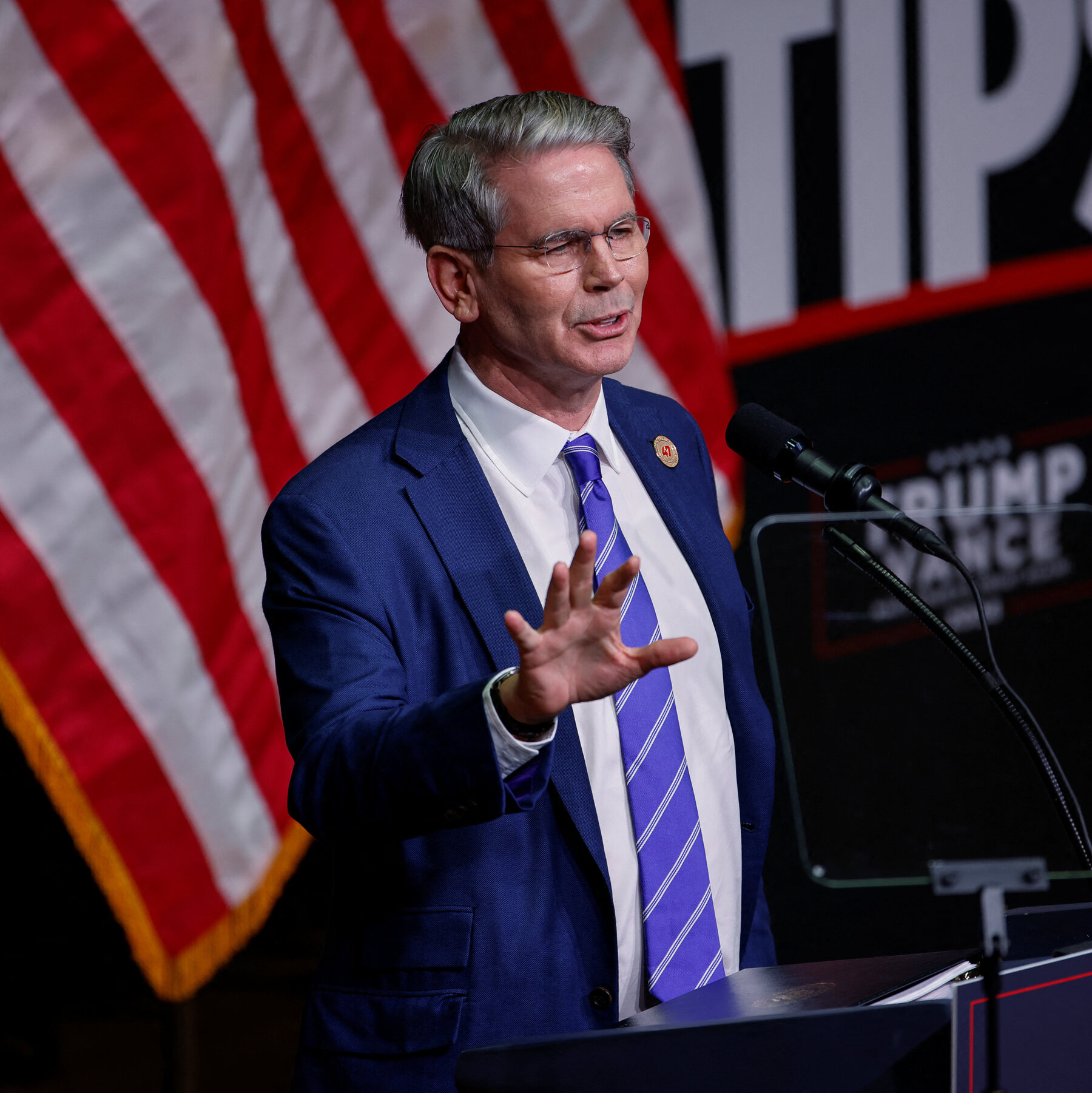
Treasury Secretary Scott Bessent said this week that American workers could see meaningful financial relief in the coming year, predicting substantially larger tax refunds and real wage gains as the economy continues to stabilize. Speaking in a televised interview, Bessent expressed optimism about economic growth, job creation, and easing inflation, while also warning that political uncertainty in Washington could threaten progress if a government shutdown occurs early next year.
Bessent’s comments come as the Trump administration seeks to reinforce its economic message amid mixed public sentiment, lingering inflation concerns, and ongoing political debates over fiscal policy, government spending, and affordability.
Larger Tax Refunds Expected in Early 2026
During an appearance on Fox Business, Bessent said Americans filing their taxes in the first quarter of next year are likely to receive significantly higher refunds, which he argued will translate into stronger consumer confidence and improved household finances.
“Substantial refunds are coming,” Bessent said, adding that the increase would help Americans “go back to the kind of economy that we had.”
According to the Treasury secretary, higher refunds will contribute directly to increases in real income, allowing workers to retain more of what they earn after accounting for inflation.
“They will get an increase in real incomes,” he said. “So I am very optimistic for working Americans, for job growth, and for capital formation.”
Bessent suggested that as tax burdens ease, households will have more flexibility to spend, save, or invest, creating ripple effects throughout the broader economy.
Real Wages and Non-Inflationary Growth
Beyond tax refunds, Bessent predicted that real wages—earnings adjusted for inflation—will continue to rise next year. He said this combination of wage growth and declining inflation could mark a return to a period of non-inflationary economic expansion.
“We’re going to go back to the kind of non-inflationary growth where working Americans do better,” Bessent said, noting that larger refunds would also allow some workers to keep “more of their paychecks.”
Economists often view real wage growth as a key indicator of economic health, particularly for middle- and lower-income workers who are more sensitive to rising costs for housing, food, and energy.
GDP Growth Remains Strong Despite Headwinds
Bessent acknowledged that the economy has faced challenges, including disruptions caused by a recent government shutdown that lasted roughly six weeks. He said the shutdown slowed economic activity and weighed on gross domestic product.
“That was a hit to GDP and slowed things down,” he said.
Despite that setback, Bessent said the U.S. economy is still on track to finish the year with approximately 3.5 percent GDP growth, a figure he described as “incredible” given the circumstances.
Such growth, if sustained, would place the U.S. well above many other advanced economies and reinforce the administration’s argument that its policies are supporting expansion rather than contraction.
Inflation Expected to Decline in 2026
Inflation has remained a central concern for American households since the COVID-19 pandemic, with prices for housing, groceries, and energy remaining elevated even as inflation has cooled from its peak. Bessent said he expects a noticeable decline in inflation during the first half of 2026.
“We expect a substantial drop in prices in the first six months of next year,” he said.
One factor contributing to easing inflation, according to Bessent, is a decline in rental prices. He attributed falling rents in part to stricter border enforcement and a reduction in mass illegal immigration.
“President Trump, by enforcing the border and sending home more than two million illegals, we’re now seeing rents coming down substantially,” Bessent said.
Housing costs, particularly rent, have been among the most persistent drivers of inflation in recent years. Any sustained decline could significantly impact overall price levels.
Warning Over Potential Government Shutdown
While expressing optimism about economic trends, Bessent also warned that political gridlock could undermine progress. He said a potential government shutdown at the end of January could create unnecessary economic disruption.
The current stopgap funding measure is set to expire on Jan. 30, raising the possibility of another lapse in government funding if lawmakers fail to reach an agreement.
“If they try to shut down the government, I believe that the Senate Republicans should immediately forgo the filibuster, keep the government open, and let the economy do its thing,” Bessent said.
Government shutdowns typically disrupt federal services, delay payments, and create uncertainty for businesses and financial markets. Bessent argued that avoiding such disruptions should be a priority.
Labor Market Shows Mixed Signals
Bessent’s comments come amid mixed signals from the labor market. A report released on Dec. 16 showed that the U.S. economy added 64,000 jobs in November, exceeding some expectations but falling short of stronger gains seen earlier in the year.
October data, meanwhile, showed a loss of 105,000 jobs, driven largely by a sharp reduction in federal employment. According to the report, approximately 162,000 federal workers left their positions at the end of fiscal year 2025 on Sept. 30, following government cutbacks.
Economists had previously forecast job gains of about 40,000 for November, making the actual increase higher than expected.
The unemployment rate rose to 4.6 percent last month, the highest level since 2021. While still relatively low by historical standards, the increase has drawn attention from policymakers and analysts watching for signs of economic cooling.
Political Debate Over Economic Direction
The economic outlook has become a focal point of political debate as both parties seek to shape voter perceptions ahead of future elections. Some Democrats have criticized Trump administration policies, particularly tariffs, arguing that they contribute to higher consumer prices and strain household budgets.
Illinois Gov. JB Pritzker has been among the most vocal critics. Speaking earlier this week, he said tariffs imposed by the administration have harmed the economy and worsened affordability challenges.
“Trump has been doing nothing to lower grocery or energy prices,” Pritzker said, adding that “he’s doing the opposite” by implementing tariffs.
Democrats have increasingly emphasized affordability as a core campaign message, focusing on the cost of living, housing, and everyday expenses.
Trump Pushes Back on ‘Affordability’ Narrative
President Donald Trump has rejected Democratic criticism, arguing that his policies are aimed at reducing costs and restoring economic stability. Speaking at an event in Pennsylvania last week, Trump accused Democrats of fueling inflation through excessive spending and regulatory policies.
“They always have a hoax—the new word is affordability,” Trump said. “They gave you the highest inflation in history.”
The administration has framed recent economic indicators—such as GDP growth, rising wages, and easing inflation—as evidence that its approach is working, even as consumer sentiment remains uneven.
Looking Ahead
As 2026 approaches, the U.S. economy faces a complex mix of opportunities and risks. Bessent’s forecast of higher tax refunds and rising real wages offers a positive outlook for many households, particularly if inflation continues to cool.
However, looming political battles over government funding and fiscal policy could introduce uncertainty at a critical moment. Economists say sustained growth will depend not only on macroeconomic trends, but also on lawmakers’ ability to avoid self-inflicted disruptions.
For now, the Treasury secretary remains confident.
“I’m very optimistic,” Bessent said, pointing to strong growth, improving wages, and what he sees as a path toward renewed economic stability for working Americans.
Whether that optimism translates into sustained gains for households will become clearer in the months ahead, as tax season approaches and broader economic data continues to unfold.

Emily Johnson is a critically acclaimed essayist and novelist known for her thought-provoking works centered on feminism, women’s rights, and modern relationships. Born and raised in Portland, Oregon, Emily grew up with a deep love of books, often spending her afternoons at her local library. She went on to study literature and gender studies at UCLA, where she became deeply involved in activism and began publishing essays in campus journals. Her debut essay collection, Voices Unbound, struck a chord with readers nationwide for its fearless exploration of gender dynamics, identity, and the challenges faced by women in contemporary society. Emily later transitioned into fiction, writing novels that balance compelling storytelling with social commentary. Her protagonists are often strong, multidimensional women navigating love, ambition, and the struggles of everyday life, making her a favorite among readers who crave authentic, relatable narratives. Critics praise her ability to merge personal intimacy with universal themes. Off the page, Emily is an advocate for women in publishing, leading workshops that encourage young female writers to embrace their voices. She lives in Seattle with her partner and two rescue cats, where she continues to write, teach, and inspire a new generation of storytellers.