
Hollywood is mourning the loss of a familiar and quietly respected presence, as tributes continue to emerge following the death of a veteran performer whose career stretched across more than half a century in film, television, and theater.
The actress passed away in Los Angeles on Thursday at the age of 88, according to her family. Her death came after complications from surgery following what relatives described as a long and painful illness. While she may not have been a household name to every viewer, her face and performances were instantly recognizable to generations of audiences.
Over decades in the industry, she became known as a dependable character actress—someone casting directors trusted, co-stars admired, and viewers remembered long after the credits rolled. Whether appearing for a single scene or supporting an ensemble cast, she brought depth, warmth, and authenticity to every role she accepted.
Her career spanned five decades, touching nearly every corner of American entertainment. She worked steadily through Hollywood’s shifting eras, appearing in classic films, modern comedies, and some of television’s most iconic sitcoms. Unlike many performers, she never chased stardom, instead building a legacy defined by professionalism, longevity, and respect within the industry.
That legacy was highlighted in a statement released by her family, who emphasized that her commitment to acting never wavered, regardless of the size of the role. They described her as a performer who believed every character mattered and every opportunity deserved her full effort.
“Those who worked with her knew her not just as a talented actress, but as someone who brought dedication, kindness, and integrity to every set,” the statement read. “She believed that every role, no matter how small, was a chance to contribute something meaningful to the story.”
It was in the middle years of her career—and again later in life—that audiences were reminded just how versatile she was. One of her most recognizable later appearances came in the 2016 Oscar-nominated film Hail, Caesar!, written and directed by Joel and Ethan Coen. Set in 1950s Hollywood, the film followed a studio fixer attempting to manage scandal-prone stars, and featured a brief but memorable turn by the actress as a Malibu maid.
That role brought renewed attention to Helen Siff, whose performance opposite George Clooney introduced her to a new generation of filmgoers. Though the part was small, it reflected her ability to leave an impression with minimal screen time—a skill that defined much of her career.
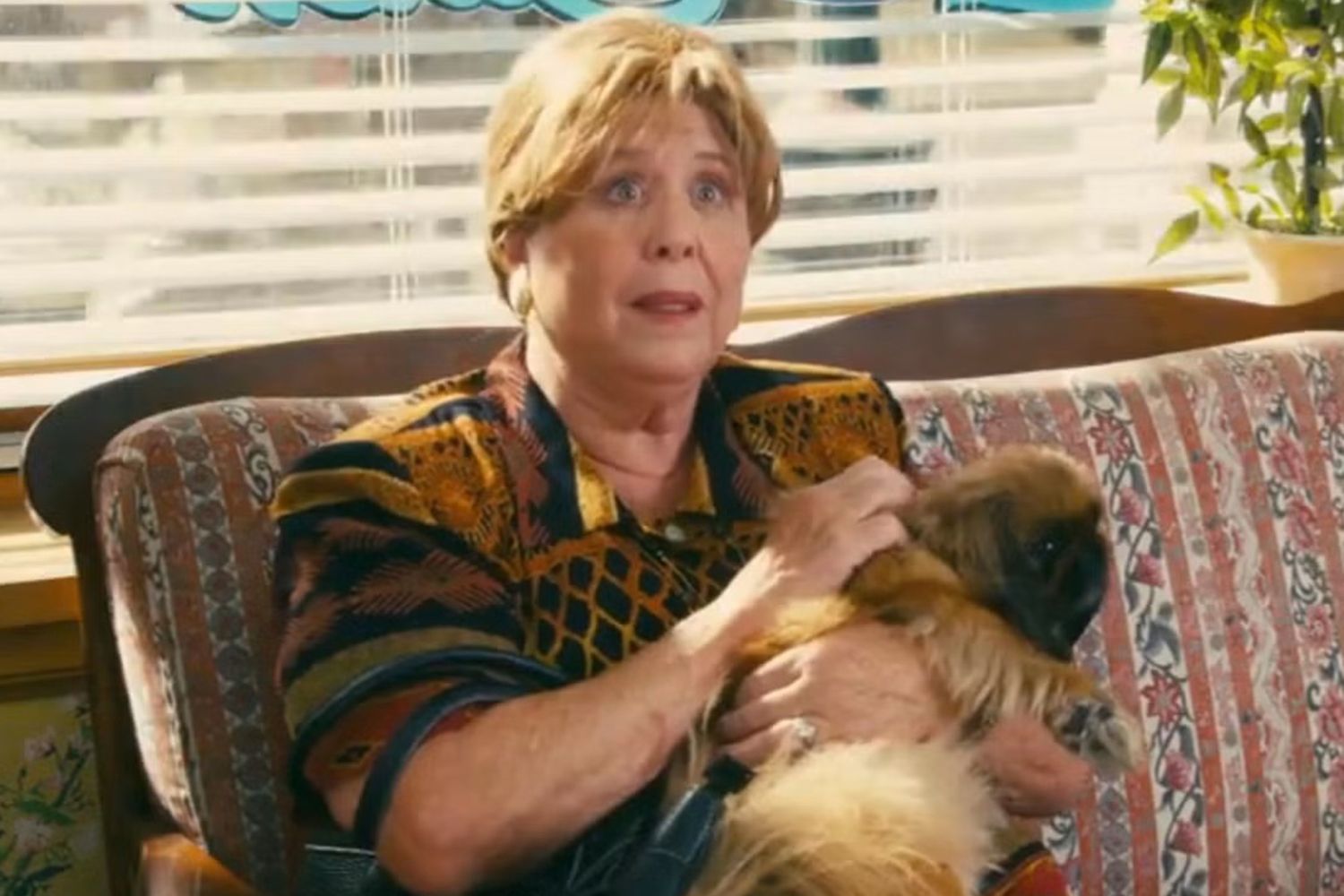
Long before that, she had already built an impressive film résumé. She appeared in the original Rocky in 1976, followed by roles in The Karate Kid (1984), Earth Girls Are Easy (1988), Big Top Pee-wee (1988), City Slickers II: The Legend of Curly’s Gold (1994), The Disappearance of Mrs. Wu (2001), and Adam Sandler’s You Don’t Mess With the Zohan (2008).
Her television work was even more extensive. Over the years, she made guest appearances on some of the most popular and enduring shows in American TV history. Viewers saw her on Ellen, Married… With Children, Will & Grace, and Modern Family, among many others.
Her résumé also included appearances on Lou Grant, Cagney & Lacey, Silver Spoons, L.A. Law, Knots Landing, Dharma & Greg, Scrubs, My Name Is Earl, S.W.A.T., Mom, Curb Your Enthusiasm, and Good Trouble. The sheer range of genres—from sitcoms to crime dramas—spoke to her adaptability and reliability as a performer.
Beyond the screen, she was deeply committed to the stage. She originated the role of Helga in the 1993 off-Broadway production of Grandma Sylvia’s Funeral, a comedy centered on a Jewish funeral that spirals into chaos. The role became one of her most personally meaningful achievements, blending humor, cultural specificity, and emotional nuance.
She also appeared in stage productions of Lilies of the Field, Lost in Yonkers, and Over the River and Through the Woods, earning praise for her timing, presence, and ability to connect with live audiences.
Following news of her death, her daughter Victoria Siff Russell shared an emotional tribute on Facebook, posting a slideshow of photos celebrating her mother’s life and career. In a heartfelt caption, she described both her grief and her admiration.
“I’m heartbroken to share that my mother—my mommy—has passed away,” she wrote. “My dynamic, charismatic, one-of-a-kind mom was a stage, television and film actress. She loved her craft deeply, but her greatest role was being a mother and a grandmother.”
Victoria concluded her message with a poignant farewell: “You’ve taken your final bow, mommy. I will love you forever.”
The actress had been married to attorney Marshall Siff for 41 years until his death in 2007. The couple endured profound personal loss when one of their sons, Bruce, passed away in 1999.
She is survived by her sisters Carol and Janet, her children Matt, Susie, Karen, Jenny, and Victoria, as well as her grandchildren Chelsea, Zach, Robert, Josh, Spencer, Megan, and Dean.
In an industry often defined by fame and visibility, her career stood as a reminder that lasting impact does not always come from leading roles. It can come from consistency, humility, and an unwavering respect for the craft.
As Hollywood reflects on her passing, colleagues and fans alike remember a performer who showed up, delivered excellence, and left every production better than she found it. Her final curtain may have fallen, but the body of work she leaves behind ensures her presence will endure.

James Jenkins is a celebrated Pulitzer Prize-winning author whose work has reshaped the way readers think about social justice and human rights in America. Raised in Atlanta, Georgia, James grew up in a community that instilled in him both resilience and a strong sense of responsibility toward others. After studying political science and creative writing at Howard University, he worked as a journalist covering civil rights issues before dedicating himself fully to fiction. His novels are known for their sharp, empathetic portraits of marginalized communities and for weaving personal stories with broader political realities. Jenkins’s breakout novel, Shadows of Freedom, won national acclaim for its unflinching look at systemic inequality, while his more recent works explore themes of identity, resilience, and the fight for dignity in the face of oppression. Beyond his novels, James is an active public speaker, lecturing at universities and participating in nonprofit initiatives that support literacy and community empowerment. He believes that storytelling is a way to preserve history and inspire change. When not writing, James enjoys jazz music, mentoring young writers, and traveling with his family to explore cultures and stories around the world.