
A familiar face to millions of television viewers and moviegoers has died at the age of 60, leaving behind a long body of work that quietly shaped American comedy for more than three decades. Known for his warmth, timing, and ability to elevate even the smallest role, the actor passed away earlier this week at his home in Los Angeles, according to people close to his family.
He was surrounded by loved ones at the time of his death after a prolonged illness that he had largely kept out of the public eye. While his passing has only recently become widely known, those within his inner circle said his health had declined steadily over the past several years as he continued working whenever possible.
Though he was never one of Hollywood’s loudest personalities, his presence was instantly recognizable. Audiences often remembered him as “that guy” — the dependable supporting player whose scenes lingered long after the episode ended. For fans of sitcoms from the 1990s through the 2010s, his performances were a constant, comforting thread.
A Career Built on Consistency and Craft
Born and raised in the Midwest, the actor discovered comedy early and pursued it with quiet determination. After graduating from college in the late 1980s, he immersed himself in improvisational theater, a training ground that shaped his instincts and sharpened his comedic precision.
Those years proved formative. Working night after night in front of live audiences taught him discipline, humility, and adaptability — traits that would define his professional life. Friends from that period recall someone who took comedy seriously without ever taking himself too seriously.
That balance soon paid off. Television producers began to notice his ability to land a laugh without stealing a scene, and guest appearances on popular sitcoms followed. His résumé grew steadily, populated with roles that ranged from officious authority figures to well-meaning neighbors and eccentric professionals.
He became especially known for brief but memorable appearances on some of television’s most iconic shows, often delivering just a handful of lines that audiences would remember for years.
Breakthrough Recognition on Network Television
While his career spanned decades, many viewers came to know him best through a long-running network sitcom that chronicled the daily struggles of a middle-class American family. Set in the Midwest and grounded in relatable humor, the series became a staple of primetime television.
It was on this show that he portrayed a recurring neighbor and family friend — an affable, slightly awkward character whose loyalty and optimism made him instantly endearing. Over multiple seasons, the role expanded, allowing him to develop a character that felt authentic rather than exaggerated.
By the time the series concluded, he had become one of its most beloved supporting figures. Fans frequently cited his scenes as highlights, praising his chemistry with the main cast and his knack for understated humor.
At that point in the story, viewers may recognize the man being remembered.
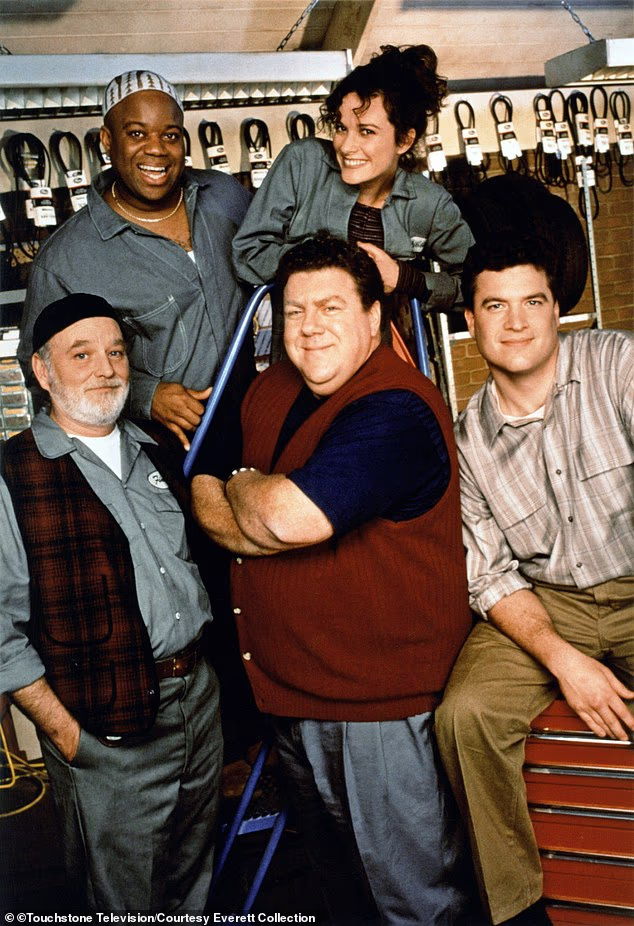
The actor was Pat Finn, a veteran of film, television, and stage, best known for his recurring role as Bill Norwood on The Middle. He died on December 23, 2025, after battling cancer. He was 60.
Beyond One Role
While The Middle introduced Finn to a new generation of viewers, it represented only a fraction of his career. Long before that role, he had built a reputation as one of television’s most reliable character actors.
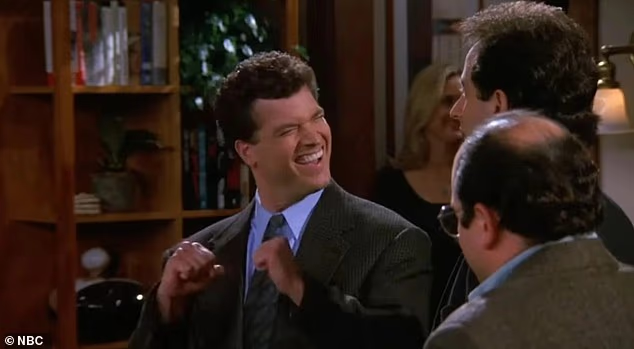
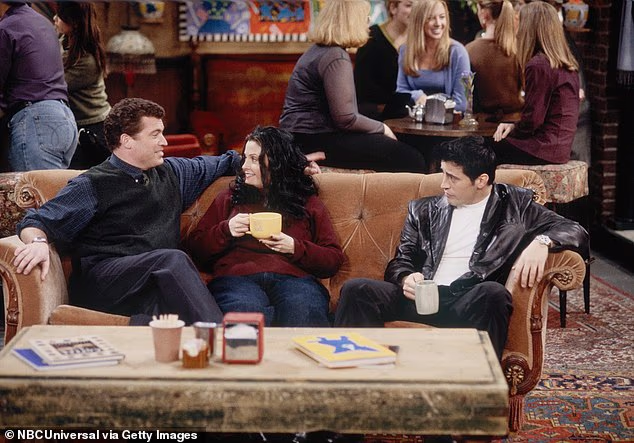
His credits included appearances on a wide range of shows, from classic sitcoms to workplace comedies and drama-tinged series. He appeared on Murphy Brown, 3rd Rock from the Sun, Ed, The George Wendt Show, and Seinfeld, among many others.
One particularly memorable appearance came in a late-1990s episode of Seinfeld, where he shared scenes with Jerry Seinfeld and Jason Alexander. Though his role was brief, fans still cite it as one of the episode’s standout moments.
He also appeared on Friends, portraying a doctor in an alternate-reality storyline — a testament to his versatility and the trust producers placed in his timing.
Film Work and Cult Favorites
In addition to his television career, Finn worked steadily in film, often appearing in comedies that would go on to become cult favorites. He had roles in romantic comedies, teen comedies, and independent films, bringing the same grounded approach to the big screen.
Among those projects was a late-1990s romantic comedy starring Chris O’Donnell and Renée Zellweger, as well as a 2000 comedy that paired him with a then-rising Ashton Kutcher. Though the films varied in tone and reception, Finn’s performances were consistently praised for their authenticity.
His final on-screen role came in 2021, when he appeared in a small independent romantic comedy — a fitting conclusion to a career defined not by spectacle, but by sincerity.
A Life Shaped by Comedy and Friendship
Those who knew Finn personally describe him as generous, deeply loyal, and profoundly kind. He maintained close friendships throughout his life, including bonds formed during his early years in comedy.
One of those friendships was with the late Chris Farley, whom Finn met in college. The two became roommates, teammates, and eventually collaborators, performing together as part of a touring improvisational comedy company. That shared history remained a defining part of Finn’s life.
In later years, he attended tributes and premieres honoring Farley, maintaining close ties with the comedian’s family and fellow performers.
A Private Battle
While Finn remained active professionally, he kept his health struggles largely private. Reports indicate that he had been diagnosed with cancer several years ago, though he chose not to speak publicly about the illness.
Friends say he continued to work when he could, prioritizing time with his family and maintaining his sense of humor even during treatment. His decision to keep his diagnosis out of the spotlight was consistent with the way he lived — quietly, without seeking attention.
He is survived by his wife, Donna, and their two children. In recent years, Finn spoke often of the joy he found in fatherhood and family life, describing it as his most important role.
Tributes Pour In
Following news of his death, tributes flooded social media from fellow actors, comedians, and writers who worked with him over the years. Many emphasized not just his talent, but his decency.
Several described him as one of the kindest people in the industry — someone who treated crew members and co-stars with equal respect. Others recalled his infectious laugh and his ability to defuse tension on set with a well-timed joke.
One longtime friend wrote that Finn was “as generous with encouragement as he was with laughter,” while another called him “the kind of performer every show hopes to have.”
A Quiet Legacy
Pat Finn may never have chased stardom, but his career stands as a testament to the power of consistency, professionalism, and heart. For decades, he showed up, delivered, and made audiences laugh — often without them even realizing how much they would miss him.
His performances remain woven into the fabric of modern American comedy, living on through reruns, streaming libraries, and the memories of viewers who grew up watching him.
In an industry defined by reinvention and reinflation, Finn’s legacy is refreshingly simple: he was good at what he did, kind to those around him, and devoted to his craft.
And for millions of viewers, he will always be remembered — even if they didn’t know his name at first — as someone who made the screen feel a little warmer every time he appeared.

Emily Johnson is a critically acclaimed essayist and novelist known for her thought-provoking works centered on feminism, women’s rights, and modern relationships. Born and raised in Portland, Oregon, Emily grew up with a deep love of books, often spending her afternoons at her local library. She went on to study literature and gender studies at UCLA, where she became deeply involved in activism and began publishing essays in campus journals. Her debut essay collection, Voices Unbound, struck a chord with readers nationwide for its fearless exploration of gender dynamics, identity, and the challenges faced by women in contemporary society. Emily later transitioned into fiction, writing novels that balance compelling storytelling with social commentary. Her protagonists are often strong, multidimensional women navigating love, ambition, and the struggles of everyday life, making her a favorite among readers who crave authentic, relatable narratives. Critics praise her ability to merge personal intimacy with universal themes. Off the page, Emily is an advocate for women in publishing, leading workshops that encourage young female writers to embrace their voices. She lives in Seattle with her partner and two rescue cats, where she continues to write, teach, and inspire a new generation of storytellers.