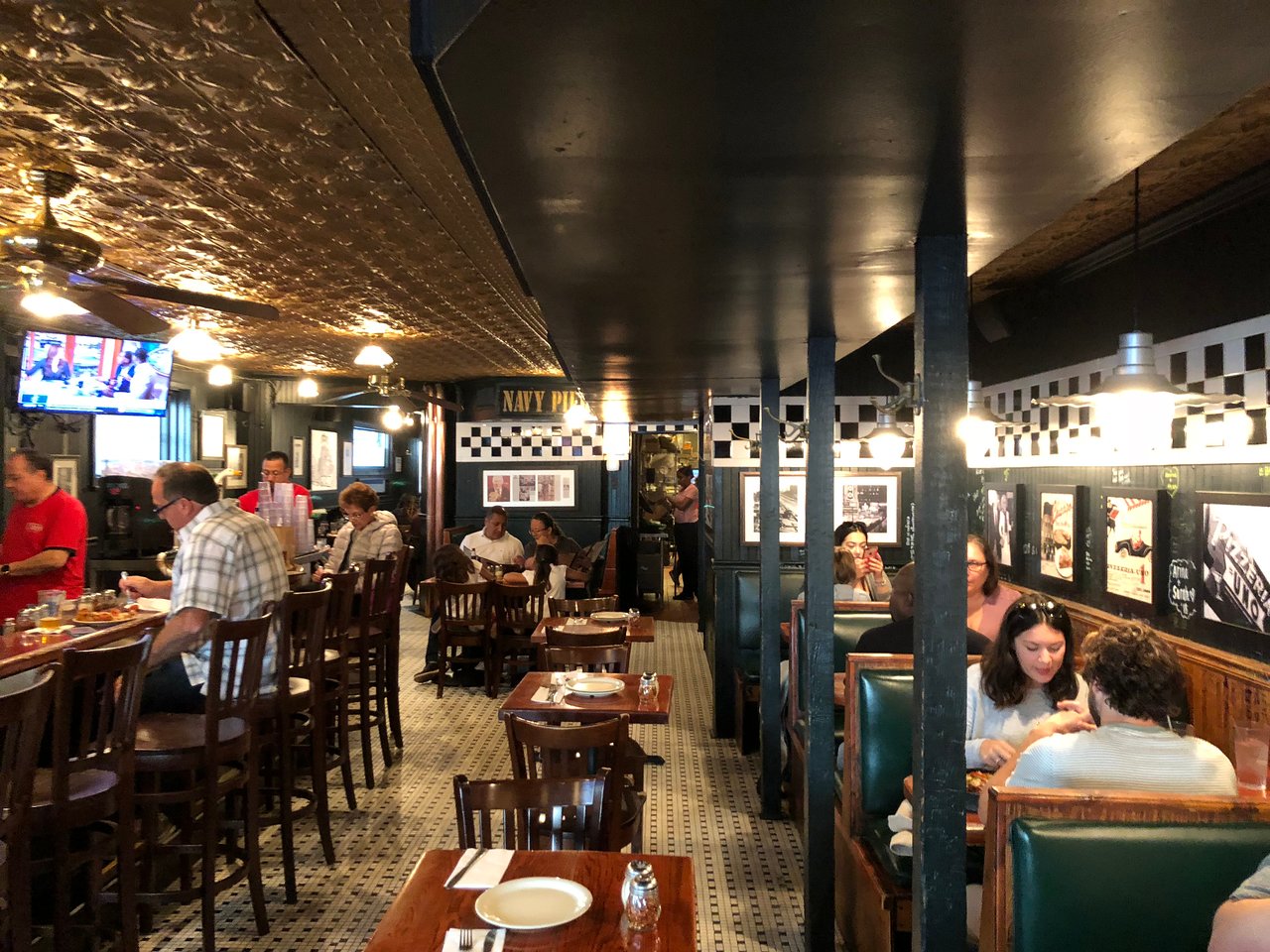
An iconic American pizzeria long credited with inventing the deep-dish pizza is facing an uncertain future as it shuts down scores of restaurants amid declining sales, shifting consumer habits, and mounting competition from fast-casual dining chains.
Pizzeria Uno, founded in Chicago in 1943, has closed roughly 100 locations in recent years, marking a dramatic contraction for a brand that once dominated the casual dining pizza scene in the United States and abroad. The closures come as Americans increasingly favor quicker, lighter, and more customizable dining options offered by chains such as Chipotle and Sweetgreen—leaving traditional sit-down pizza restaurants struggling to keep pace.
The original Pizzeria Uno opened its doors at 29 E. Ohio Street in downtown Chicago, where founders Ike Sewell and Ric Riccardo introduced a radically different style of pizza. Unlike the thin-crust pies common at the time, Uno’s version featured a thick, buttery crust baked in a deep pan and layered with cheese, toppings, and chunky tomato sauce. The dish would later become known worldwide as Chicago-style deep-dish pizza.
That original location, widely regarded as the birthplace of deep-dish pizza, continues to operate today. For decades, it served as the foundation of a growing restaurant empire.
After more than three decades as a single Chicago institution, Pizzeria Uno began expanding beyond Illinois in 1979, opening its first out-of-state location in Boston. The move proved successful, prompting the company to launch a franchising program under the name Uno Pizzeria & Grill. Over time, the brand broadened its menu to include burgers, steaks, pasta, and appetizers in an effort to attract a wider audience.
In 1988, Uno expanded again—this time into retail—by launching Uno Foods, which sold frozen pizzas and other products in supermarkets nationwide. At its height, the brand operated more than 200 restaurants across the United States and maintained international locations in countries including India, Saudi Arabia, Honduras, South Korea, and Kuwait.
Today, however, that footprint has shrunk dramatically.
The chain has quietly shuttered dozens of locations across the U.S. and overseas, with closures accelerating over the past two years. In Massachusetts alone, three Uno Pizzeria & Grill restaurants have closed so far this year. One of them, located in Dedham, announced its closure in an emotional Facebook post that resonated deeply with longtime patrons.
“After 37 years of serving this amazing community, our Dedham location is closing its doors for the last time,” the restaurant wrote. “We would like to extend a massive thank you to everyone who has made this restaurant feel like home for over three decades. It’s been an unforgettable run.”
Customers flooded the comments with memories tied to family milestones, first jobs, and special occasions.
One regular, Jenn Shepherd Harris, shared that she met her husband while working at the restaurant nearly three decades ago. “Heading in for one last meal tonight,” she wrote.
Another customer, Gregg Skelton, reflected on how deeply the restaurant had been woven into his family’s story. He recalled dining there the night before his wife gave birth to twins in the 1990s. “I still say it was the cheeseburger fries and chocolate shake that pushed her along,” he joked. “Thanks for the memories—sad to see it go.”
Pizzeria Uno’s struggles mirror a broader downturn in the pizza industry. According to industry data, pizza sales in the United States dropped sharply in 2025, pushing pizza from the nation’s second-most popular restaurant category down to fourth place. Major chains felt the impact as well: Pizza Hut reported a five percent decline in full-year sales, while Papa John’s experienced weaker same-store performance.
Analysts say the decline reflects changing consumer priorities. Rising food prices, higher labor costs, and persistent inflation have made diners more cautious about spending—particularly at casual sit-down restaurants.
Neil Saunders, managing director and retail analyst at GlobalData, described Uno as “something of a victim of the slowdown in casual dining.”
“Consumers are under significant financial pressure, and there has been a drop in diner traffic over the past couple of years,” Saunders said. “As costs have risen for Uno, some restaurants have simply become unprofitable.”
According to Nation’s Restaurant News, Uno Pizzeria & Grill saw its sales fall nearly 23 percent in 2024, finishing the year with $114.3 million in revenue. During the same period, the company closed 53 restaurants—more than a quarter of its total locations.
Beyond economic pressures, Saunders noted that the brand has struggled to maintain relevance in a rapidly evolving dining landscape.
“Uno isn’t poorly regarded, but it’s a chain that didn’t really move with the times and has slipped off the consumer radar,” he said. “The concept is also somewhat confusing—an average pizzeria focused on deep dish, which isn’t universally popular outside Chicago, combined with a grill menu.”
Deep-dish pizza, while beloved by fans, is often viewed as heavy, time-consuming, and less compatible with modern preferences for faster, lighter meals. Meanwhile, fast-casual competitors like Chipotle emphasize speed, customization, and perceived freshness—attributes that increasingly appeal to younger diners.
This is not the first time Pizzeria Uno has faced existential challenges. In 2010, the company’s parent filed for Chapter 11 bankruptcy protection, citing declining revenues, high debt, and a difficult economic environment following the financial crisis. Despite cost-cutting efforts, Uno reported a $22.2 million loss in fiscal year 2009.
The company eventually emerged from bankruptcy after a court-approved restructuring plan transferred ownership to senior lenders. While the move stabilized operations in the short term, it did not reverse long-term shifts in consumer behavior that have continued to erode sales.
Despite the wave of closures, the original Chicago location remains open, serving as both a tourist destination and a symbol of the brand’s legacy. For many customers, Pizzeria Uno represents more than just pizza—it’s a piece of American culinary history.
Whether that legacy can sustain the brand into the future remains unclear. As casual dining continues to contract and competition intensifies, Uno’s story reflects the broader challenge facing legacy restaurant chains: adapting to modern tastes without losing the identity that made them iconic in the first place.

Emily Johnson is a critically acclaimed essayist and novelist known for her thought-provoking works centered on feminism, women’s rights, and modern relationships. Born and raised in Portland, Oregon, Emily grew up with a deep love of books, often spending her afternoons at her local library. She went on to study literature and gender studies at UCLA, where she became deeply involved in activism and began publishing essays in campus journals. Her debut essay collection, Voices Unbound, struck a chord with readers nationwide for its fearless exploration of gender dynamics, identity, and the challenges faced by women in contemporary society. Emily later transitioned into fiction, writing novels that balance compelling storytelling with social commentary. Her protagonists are often strong, multidimensional women navigating love, ambition, and the struggles of everyday life, making her a favorite among readers who crave authentic, relatable narratives. Critics praise her ability to merge personal intimacy with universal themes. Off the page, Emily is an advocate for women in publishing, leading workshops that encourage young female writers to embrace their voices. She lives in Seattle with her partner and two rescue cats, where she continues to write, teach, and inspire a new generation of storytellers.