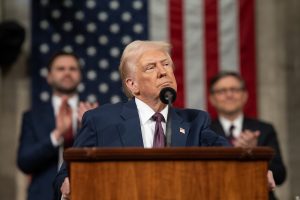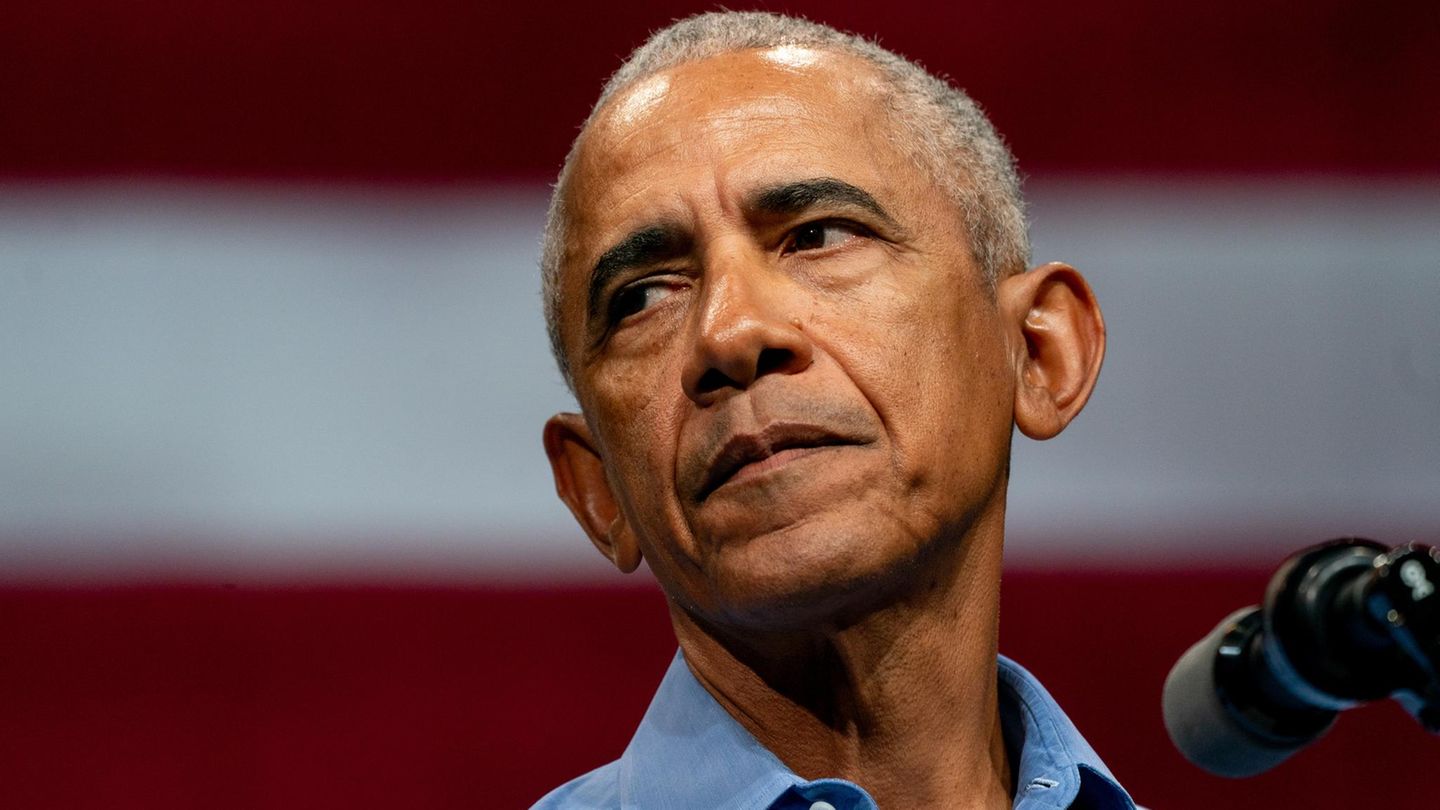
Former President Barack Obama has publicly responded for the first time to a racist video that circulated online from an account associated with the current U.S. president, igniting a fierce national debate about racism, accountability, and the standards expected from public officials. The video in question portrayed Obama and former First Lady Michelle Obama using imagery that has long been associated with racist dehumanization, prompting widespread condemnation and renewed scrutiny of political communication in the digital era.
The clip, which appeared on Donald Trump’s Truth Social account earlier this month, depicted the former first couple as primates while the song “The Lion Sleeps Tonight” played in the background. The segment appeared at the conclusion of a longer video that advanced unsubstantiated claims about election fraud, blending conspiracy-driven political messaging with racially charged imagery. Critics quickly argued that the video was not simply offensive but emblematic of a deeper problem—how racialized content is increasingly being normalized or excused within modern political discourse.
When reporters first questioned the White House about the video, Press Secretary Karoline Leavitt dismissed the controversy as “fake outrage.” She described the content as an internet meme that framed Trump as the “King of the Jungle” and Democrats as characters from The Lion King, urging journalists to focus instead on what she characterized as more substantive issues affecting Americans. That response drew immediate backlash, with critics arguing that dismissing the outrage itself avoided addressing the substance of the imagery and its implications.
Speaking on a podcast hosted by Brian Tyler Cohen, Obama offered a measured but pointed response. Rather than engage in personal attacks or speculate about intent, he placed the incident in a broader societal context. He said that most Americans still believe in basic values such as decency, kindness, and mutual respect, and that behavior undermining those values should not be trivialized. According to Obama, the episode reflects a troubling pattern in which sensationalism and provocation are used to capture attention, often at the expense of civic norms.
Obama emphasized that the issue is not only about a single post or a single individual, but about the tone of public life. He argued that previous generations of leaders generally felt a duty to uphold a sense of decorum tied to the offices they held. That expectation, he suggested, has weakened in recent years, replaced by a willingness to engage in or tolerate behavior that would once have been widely condemned. In his view, the erosion of these standards risks further polarizing the public and undermining trust in democratic institutions.
The White House later clarified that the video had been posted by a staff member who “erroneously” shared it and that it was removed once the issue was identified. Officials stated that the staffer involved would not face termination or formal discipline. For many observers, that explanation raised additional concerns about accountability and oversight within official communication channels. Critics argued that when content is distributed through accounts tied to the presidency, responsibility cannot be easily deflected onto lower-level staff.
Political reactions to the video came from across the spectrum. Senator Tim Scott described the clip as one of the most racist outputs he had seen from the current administration, underscoring how the controversy resonated beyond traditional partisan divides. Others, however, echoed the White House’s framing, suggesting that the backlash was exaggerated or politically motivated.
President Trump addressed the issue directly when speaking to reporters. He stated that he condemned any racist elements within the video but maintained that he personally had not made a mistake. According to Trump, he viewed only the beginning portion of the video, which he said focused on alleged election irregularities, and relied on others to review the full content before it was posted. He added that the video was taken down promptly once concerns were brought to his attention and reiterated that he did not believe the initial message was problematic.
The incident highlights a broader structural tension in contemporary politics: the intersection of social media virality and institutional responsibility. In the current environment, content can be created, shared, and amplified at extraordinary speed, often bypassing traditional editorial or ethical safeguards. When that content originates from accounts associated with high office, the potential impact is magnified, raising questions about how those channels should be managed and what standards should govern them.
For many Americans, the controversy also reopens deeper conversations about race and representation. The depiction of Black public figures as animals has a long and painful historical context in the United States, and its reappearance in modern political messaging is viewed by critics as a regression that should be unequivocally rejected. Supporters of stronger accountability argue that minimizing or dismissing such incidents risks normalizing them and eroding progress made over decades.
Obama’s intervention, though restrained in tone, appears designed to reframe the discussion around shared civic expectations rather than partisan conflict. By focusing on decorum, respect, and the responsibilities attached to public office, he signaled that the stakes extend beyond any single controversy. The question, as he implicitly framed it, is whether political leaders and the systems around them will reinforce norms that promote trust and unity or continue down a path where provocation and outrage dominate the public sphere.
As the debate continues, public opinion remains sharply divided. Some view the reaction to the video as a necessary defense of basic standards and human dignity. Others see it as an example of how political controversies can become amplified in a polarized media environment. Regardless of perspective, the episode underscores how rapidly a single piece of online content can evolve into a national flashpoint.
Ultimately, the incident serves as a case study in the evolving dynamics of political communication, accountability, and public expectations in the digital age. It raises enduring questions about how leaders use their platforms, how institutions enforce standards, and how society responds when those standards are challenged.

Emily Johnson is a critically acclaimed essayist and novelist known for her thought-provoking works centered on feminism, women’s rights, and modern relationships. Born and raised in Portland, Oregon, Emily grew up with a deep love of books, often spending her afternoons at her local library. She went on to study literature and gender studies at UCLA, where she became deeply involved in activism and began publishing essays in campus journals. Her debut essay collection, Voices Unbound, struck a chord with readers nationwide for its fearless exploration of gender dynamics, identity, and the challenges faced by women in contemporary society. Emily later transitioned into fiction, writing novels that balance compelling storytelling with social commentary. Her protagonists are often strong, multidimensional women navigating love, ambition, and the struggles of everyday life, making her a favorite among readers who crave authentic, relatable narratives. Critics praise her ability to merge personal intimacy with universal themes. Off the page, Emily is an advocate for women in publishing, leading workshops that encourage young female writers to embrace their voices. She lives in Seattle with her partner and two rescue cats, where she continues to write, teach, and inspire a new generation of storytellers.