
For decades, his voice, vision, and influence helped shape how millions of people experienced music, culture, and the arts. From landmark television programs to pioneering radio initiatives, his work stood at the intersection of artistic excellence and public service, redefining what cultural broadcasting could achieve in the modern era.
He was a figure whose impact was often felt more than seen — an architect behind the scenes as much as a familiar presence on air. Through carefully curated performances, ambitious collaborations, and a relentless belief in the value of serious art, he helped elevate classical music and the wider arts to a central place in British broadcasting.
Colleagues frequently described him as both exacting and generous: demanding high standards while remaining deeply committed to nurturing talent. Generations of producers, musicians, and presenters credit him with shaping their understanding of what meaningful cultural programming should look like.
A Career Built on Vision and Conviction
His professional life was defined by ambition — not in pursuit of personal acclaim, but in service of the arts themselves. At a time when classical music and serious cultural programming were often viewed as niche or elitist, he argued passionately that they belonged at the heart of public broadcasting.
That conviction informed every stage of his career. He believed audiences were not to be underestimated, and that excellence, when presented with intelligence and care, could reach far beyond traditional boundaries.
Over the years, he became associated with some of the BBC’s most respected arts programs, helping to bring opera, orchestral music, and in-depth cultural discussion into living rooms across the country. His influence extended beyond individual broadcasts, shaping institutional priorities during pivotal decades for British media.
Partnerships With Cultural Icons
His work placed him alongside some of the most influential figures of the 20th century arts world. He collaborated closely with renowned conductors, filmmakers, and performers, forging creative partnerships that were at times intense but always productive.
One of his most enduring collaborations was with conductor Leonard Bernstein, a relationship marked by creative friction and mutual respect. Their exchanges were famously passionate, occasionally spilling over into moments of theatrical drama that later became cherished anecdotes.
Yet beneath the clashes was a shared belief: that art mattered profoundly, and that presenting it properly was worth every ounce of effort.
He also played a crucial role in launching and shaping the careers of several prominent broadcasters and cultural figures, quietly influencing the direction of British television and radio for decades.
Championing the Next Generation
Among his most lasting contributions was his commitment to young talent. He believed that the future of the arts depended not only on preserving great traditions, but on actively cultivating new voices.
That philosophy led to the creation of initiatives designed to identify and support emerging musicians, most notably a national competition that would go on to become a cornerstone of British classical music culture.
For countless performers, it was a career-defining opportunity — one that reflected his belief that excellence should be discovered, encouraged, and shared as widely as possible.
A Relentless Advocate for the Arts
Even later in life, he remained a vocal critic of what he saw as the marginalization of arts programming. He argued that culture should not be tucked away on specialist channels or late-night schedules, but placed where it could challenge, inspire, and enrich the broadest possible audience.
In public appearances and interviews, he lamented the dominance of lifestyle and reality formats, urging broadcasters to remember their responsibility to educate and elevate as well as entertain.
“There should be a regular arts programme as there used to be,” he once said, reflecting a lifelong commitment to the principles of public service broadcasting.
The Man Behind the Work
Away from the studio, he was described by family as deeply devoted, thoughtful, and endlessly curious. He remained engaged with new ideas well into his later years, reading widely and following developments in music and culture with undiminished enthusiasm.
He was married twice and raised six children, several of whom followed paths into broadcasting and the arts. To them, he was not just a towering public figure, but a father and grandfather whose passion for culture was inseparable from his personal life.
The News Confirmed
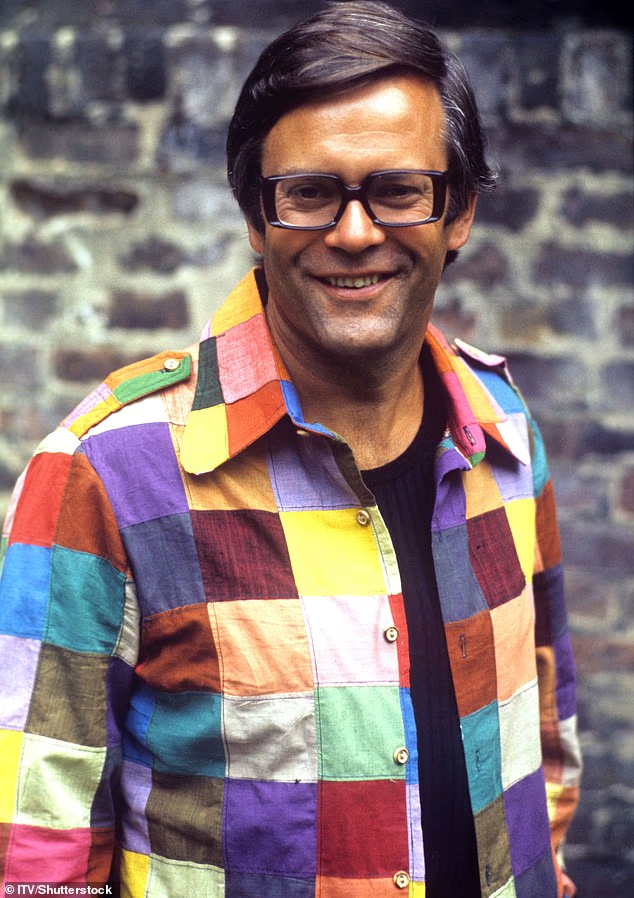
It was only later confirmed that the figure behind this remarkable legacy was Sir Humphrey Burton — the acclaimed BBC broadcaster, producer, and arts visionary.
Sir Humphrey died peacefully at his home on Wednesday morning at the age of 94, surrounded by his family.
In a statement, his family said he was “deeply loved” and that his lifelong commitment to spreading the joy of classical music had inspired generations. They added that he would be “missed beyond words.”
His daughter, Claire Dibble, shared the news publicly, confirming that he passed away in the early hours of the morning with loved ones at his side.
Tributes From the Cultural World
The BBC paid tribute to Sir Humphrey as one of the most influential figures in the history of arts and classical music broadcasting.
“He had a huge influence on generations of programme makers,” BBC Radio 3 said, describing him as a much-loved broadcaster whose legacy would endure far beyond his lifetime.
Senior figures within the corporation praised his vision, ambition, and ability to bring world-class culture to mass audiences, crediting him with shaping the BBC’s arts identity during critical decades.
Fans and former colleagues echoed those sentiments, recalling the way his programs sparked lifelong interests and opened doors to worlds many viewers might otherwise never have encountered.
A Legacy That Endures
Sir Humphrey Burton was knighted in 2020 by the then Prince of Wales, now King Charles III, in recognition of his services to classical music and the arts — a fitting acknowledgment of a life spent championing culture at the highest level.
While his passing marks the end of an era, his influence continues to resonate through the institutions he shaped, the artists he supported, and the audiences he inspired.
In an age of fleeting attention and constant noise, his work stands as a reminder of the enduring power of art — and of the individuals who dedicate their lives to ensuring it is heard.

Emily Johnson is a critically acclaimed essayist and novelist known for her thought-provoking works centered on feminism, women’s rights, and modern relationships. Born and raised in Portland, Oregon, Emily grew up with a deep love of books, often spending her afternoons at her local library. She went on to study literature and gender studies at UCLA, where she became deeply involved in activism and began publishing essays in campus journals. Her debut essay collection, Voices Unbound, struck a chord with readers nationwide for its fearless exploration of gender dynamics, identity, and the challenges faced by women in contemporary society. Emily later transitioned into fiction, writing novels that balance compelling storytelling with social commentary. Her protagonists are often strong, multidimensional women navigating love, ambition, and the struggles of everyday life, making her a favorite among readers who crave authentic, relatable narratives. Critics praise her ability to merge personal intimacy with universal themes. Off the page, Emily is an advocate for women in publishing, leading workshops that encourage young female writers to embrace their voices. She lives in Seattle with her partner and two rescue cats, where she continues to write, teach, and inspire a new generation of storytellers.