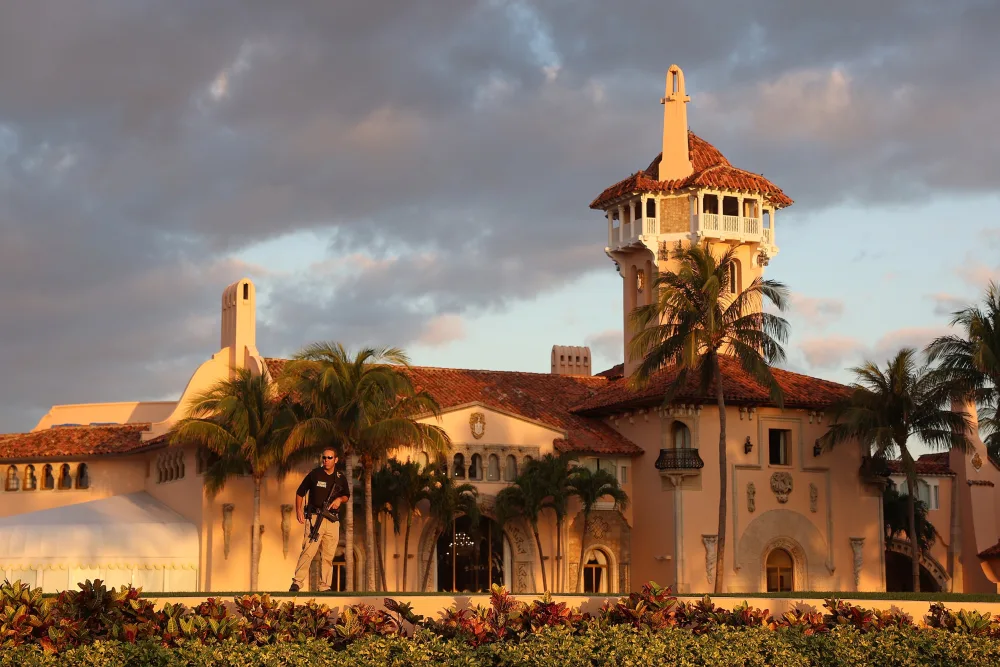
In the early morning hours of Sunday, Feb. 22, 2026, a dramatic security incident unfolded at the Mar‑a‑Lago estate in Palm Beach, Florida — one that is now under active investigation by federal authorities and has once again focused national attention on the safety of high‑profile protected sites and the security protocols that govern them.
Law enforcement officials confirmed that an armed man was shot and killed after unlawfully entering the secured perimeter of the Mar‑a‑Lago property around 1:30 a.m. Eastern Time. Agents from the U.S. Secret Service, supported by deputies from the Palm Beach County Sheriff’s Office (PBSO), confronted the individual after he made his way past the outer boundary of the estate — a location that is patrolled and protected around the clock by trained federal personnel.
The incident, the circumstances surrounding it, and the ongoing investigation raise questions about security preparedness, the motivations of individuals who target such locations, and the broader landscape of threats facing public figures and properties linked to them.
Early Morning Confrontation Ends in Fatal Shooting
According to official statements provided by the U.S. Secret Service and the Palm Beach County Sheriff’s Office, the suspect — described as a male in his 20s — was found carrying a loaded shotgun and a fuel can when he breached the secure perimeter of the property. He was located near the front gate, where agents and deputies had established a security presence.
Authorities reported that the individual was ordered to drop the weapon and the fuel can but instead raised the shotgun toward the approaching officers. Following departmental protocols for the use of force in the face of an imminent threat, the Secret Service agents and the PBSO deputy opened fire. The suspect was struck and died at the scene. There were no injuries reported among the law enforcement personnel involved.
While officials have released limited information about the suspect’s identity, they confirmed he was in his early 20s and had been reported missing by his family prior to the incident. Law enforcement agencies, including the FBI, are actively investigating the man’s background, actions, and potential motives.
As is standard procedure in such cases, the agents directly involved in the shooting have been placed on administrative leave pending a review of the use‑of‑force decision.
Federal and Local Agencies Join Investigation
In statements released on Sunday, the U.S. Secret Service emphasized that the incident remains under investigation and that federal and local authorities are working in coordination to gather evidence. The FBI, which regularly investigates incidents involving major federal protections and use‑of‑force situations, is leading the inquiry.
Officials encouraged residents with security cameras or doorbell footage in the vicinity of Mar‑a‑Lago to come forward with any recordings that may assist investigators. Such footage could provide critical insight into the suspect’s approach, actions prior to arriving at the property, or the timeline leading up to the confrontation.
While investigators work to determine whether the incident was an isolated act by an individual with personal motivations or whether there was a broader intent or plan, law enforcement agencies have stressed that no credible indication of a larger coordinated threat has yet been identified.
No Protectees Present During Incident
At the time of the breach, there were no protectees — including the former U.S. president associated with the Mar‑a‑Lago property — present on the estate grounds. Secret Service officials clarified that while Mar‑a‑Lago is a secured and protected site under federal jurisdiction, the primary focus continues to be on safeguarding individuals, staff, and visitors when protectees are present.
The absence of high‑level protectees at the time of the incident likely reduced the immediate threat to life, but it did not diminish the seriousness with which agencies responded to the breach.
Historical Context: Security Incidents at High‑Profile Sites
This was not the first time that Mar‑a‑Lago — a private club and residence owned by a former U.S. president — has been the site of heightened security concerns. Over the years, the property and its surroundings have been the focus of multiple law enforcement responses due to protest activity, trespassing incidents, and other threats.
In one particularly notable episode in 2024, a would‑be assassin was convicted and sentenced to life in prison following a thwarted attempt on the life of a former presidential candidate who was visiting an adjacent property. That individual had been discovered by a Secret Service agent while attempting to aim a weapon at the candidate near a golf club in the West Palm Beach area. The subsequent trial resulted in multiple federal convictions, including attempted assassination of a major political figure and assault on a federal officer.
The 2026 Mar‑a‑Lago shooting, while distinct in its circumstances, further underscores the range of security challenges that can arise around high‑profile individuals and locations, whether political, commercial, or cultural.
Community and Law Enforcement Reactions
Local leaders and federal authorities alike have responded with statements acknowledging the seriousness of the incident and expressing gratitude that the confrontation did not result in additional casualties.
Palm Beach County Sheriff Rick Bradshaw held a brief press conference on Sunday, describing the sequence of events and emphasizing that the suspect posed an immediate threat that required decisive action.
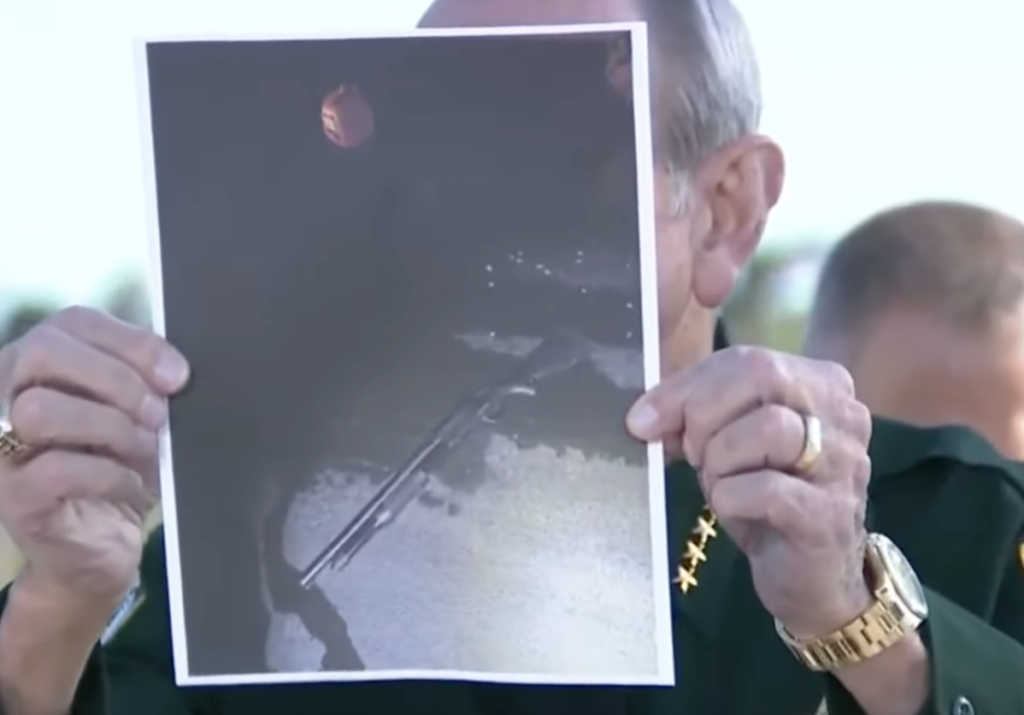
Sheriff Bradshaw also shared a photo of the shotgun and the fuel can recovered at the scene, underscoring the potential danger posed by the individual’s actions. The sheriff’s office reaffirmed its commitment to public safety and cooperation with federal partners as the investigation continues.
In comments to local media, some area residents expressed shock at the incident but also relief that no law enforcement officers or bystanders were harmed. Others emphasized the unpredictable nature of such events and the importance of remaining vigilant.
National Security Experts Weigh In
Security analysts and former federal agents have noted that incidents involving armed intruders at secured perimeters are rare but not unprecedented. They highlight that Secret Service agents are trained to assess threats quickly and respond in ways that protect both themselves and the public.
“In a situation where an individual is armed, refuses commands, and raises a weapon toward officers, the use of lethal force is authorized and often necessary to eliminate an imminent threat,” said one former federal law enforcement official who reviewed the details of the incident for media outlets.
Experts also pointed out that events of this nature can occur without a clear or immediately discernible motive, particularly when individuals are acting alone and may be experiencing personal crises or mental health challenges.
Legal and Oversight Considerations
As the FBI and other agencies continue their investigation, legal analysts anticipate scrutiny of multiple aspects of the case — including whether proper procedures were followed by law enforcement in the use of force and whether there were any gaps in security that allowed the individual to access the perimeter.
Such reviews are routine in incidents involving federal officers and can involve independent assessors, internal affairs divisions, and, in some cases, judicial oversight if lawsuits are filed or if findings have broader policy implications.
Civil liberties organizations and advocacy groups have also expressed interest in the outcome of the investigation, stating that transparency will be important for public trust. They stress that while protecting public safety is essential, communities also expect clear explanations when deadly force is used.
Ongoing Questions About Motive
At this stage, officials have released only limited information about what drove the individual to approach the secured grounds of Mar‑a‑Lago. Investigators are exploring whether personal, political, psychological, or other factors may have played a role.
The fact that the man was reported missing by family members in the days before the incident may provide leads into his state of mind or circumstances leading up to the breach. Federal agents are expected to examine communications records, travel patterns, and social media activity as part of their probe.
Until more details are made public by law enforcement, much of the individual’s motive and intentions remain unknown. Officials have been careful to communicate only verified facts, emphasizing that speculation at this point could be misleading.
Implications for Future Security Protocols
The breach and subsequent fatal shooting have prompted renewed discussion among security professionals about how high‑profile properties are protected and how similar incidents can be prevented in the future.
While Secret Service protocols are continually reviewed and adapted, events such as this one provide real‑world data that can inform training, perimeter design, early detection technologies, and interagency coordination.
Some experts have suggested enhancements in surveillance, community reporting tools, and behavioral threat assessment programs that could help identify high‑risk individuals before they approach secured locations.
Others believe that broad public education about recognizing and reporting suspicious behavior could augment formal law enforcement measures.
Conclusion
The early morning breach of the Mar‑a‑Lago property and the fatal shooting of an armed intruder represent a serious and complex security event. The coordinated response by the U.S. Secret Service and local law enforcement likely prevented further harm, but the incident leaves many questions unanswered as federal authorities continue their investigation.
With national attention focused on the case, officials have pledged transparency where possible and a thorough review of the facts. As more information emerges, including findings from the FBI’s inquiry, the public will gain a clearer picture of what motivated the man’s actions and how such breaches might be deterred in the future.
For now, the event stands as a stark reminder of both the risks associated with securing high‑profile locations and the critical role of trained law enforcement in responding to unpredictable and dangerous situations.

Emily Johnson is a critically acclaimed essayist and novelist known for her thought-provoking works centered on feminism, women’s rights, and modern relationships. Born and raised in Portland, Oregon, Emily grew up with a deep love of books, often spending her afternoons at her local library. She went on to study literature and gender studies at UCLA, where she became deeply involved in activism and began publishing essays in campus journals. Her debut essay collection, Voices Unbound, struck a chord with readers nationwide for its fearless exploration of gender dynamics, identity, and the challenges faced by women in contemporary society. Emily later transitioned into fiction, writing novels that balance compelling storytelling with social commentary. Her protagonists are often strong, multidimensional women navigating love, ambition, and the struggles of everyday life, making her a favorite among readers who crave authentic, relatable narratives. Critics praise her ability to merge personal intimacy with universal themes. Off the page, Emily is an advocate for women in publishing, leading workshops that encourage young female writers to embrace their voices. She lives in Seattle with her partner and two rescue cats, where she continues to write, teach, and inspire a new generation of storytellers.