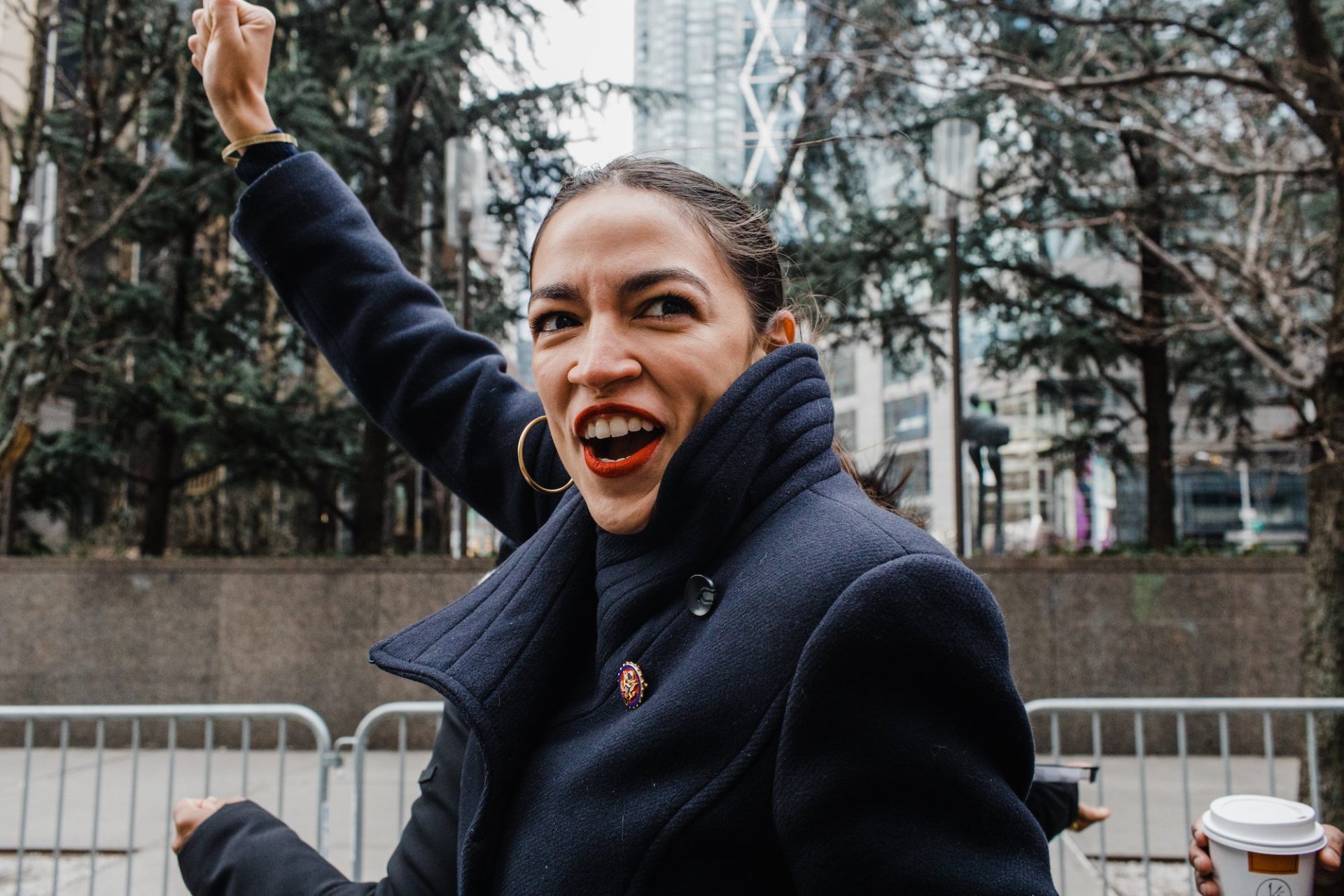
Rep. Alexandria Ocasio-Cortez has never been known for measured rhetoric, but even longtime observers of the New York Democrat say her latest remarks represent a stunning escalation in the left’s ongoing war with President Donald Trump. Speaking to reporters on Friday, Ocasio-Cortez delivered what some are calling an unofficial “State of Trump” address — a public warning claiming the president’s comments about certain members of Congress demonstrate a dangerous decline in his mental fitness.
While Democrats applauded her willingness to confront Trump, Republicans accused her of political theater, fearmongering, and trying to shield her colleagues from scrutiny during a national security controversy they created themselves. But no matter the interpretation, the moment marked a new flashpoint in an already ferocious clash between the White House and the Democratic Party.
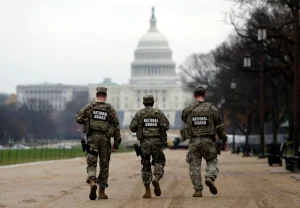
The controversy began when six Democratic lawmakers — all with military or intelligence backgrounds — released a video urging current service members to “refuse illegal orders.” The clip immediately sparked outrage, not only for the implication that the president might issue unlawful directives, but for its timing: it aired in the middle of Trump’s ongoing deployments to crime-ravaged cities and his authorization of deadly force against certain cartel-linked vessels involved in drug trafficking at sea.
Trump responded forcefully, accusing the lawmakers of encouraging disobedience within the ranks — something military law treats as a grave offense. In several public appearances and Truth Social posts, he called their actions “seditious” and warned their behavior could be considered “punishable by death” under federal law. He also amplified a post calling for their hanging, a move his critics condemned but his supporters noted was a rhetorical reference to legal penalties historically attached to treason.
That is when Ocasio-Cortez entered the spotlight.
AOC Sounds the Alarm on Trump’s “Mental State”
Speaking to reporters outside the Capitol, Ocasio-Cortez launched into a series of accusations that sharply heightened tensions in Washington.
“It’s not just shocking, it’s not just offensive. It’s bizarre, it is erratic, it’s volatile,” she said. “And I think it indicates a mental state that we should all be questioning right now.”
She claimed Trump’s rhetoric crossed a line that Americans should not normalize.
“It is not normal to make these accusations,” she continued. “It is not normal to invoke these kinds of threats of violence.”
Her remarks made headlines instantly, and Democratic strategists privately indicated she was saying out loud what many in the party believe but have been reluctant to articulate directly. AOC framed her comments as a moral warning, not a political one.
But to Republicans, the attack was deeply calculated — and deeply misleading.
The Democrats’ Video: A Rare Miscalculation
At the heart of this firestorm is the video that started it all. Senators Mark Kelly and Elissa Slotkin headlined the clip, joined by Reps. Chris Deluzio, Chrissy Houlahan, Jason Crow, and Maggie Goodlander. All of them have military or intelligence backgrounds, and the video was framed as a patriotic defense of constitutional norms.
But the wording was vague enough — and targeted enough — that critics saw something darker: a call for active-duty troops to refuse orders from the president.
The video never explained what “illegal orders” it was referring to. Reporters immediately pressed the lawmakers for examples. Slotkin could not name one. Kelly could not name one. Neither could any of the others.
The absence of specifics was glaring.
While Democrats claimed the video was cautionary, Republicans accused the group of deliberately encouraging disobedience in the chain of command — an action that could, in certain contexts, destabilize military cohesion.
This concern was not limited to Trump loyalists. Former Pentagon officials from previous administrations privately warned that messaging like this can sow confusion among service members.
The political fallout was immediate.
Slotkin and Kelly Admit They Cannot Identify Any Illegal Orders
Facing mounting questions, Sen. Elissa Slotkin was interviewed on Sunday by ABC’s Martha Raddatz. When asked directly whether Trump had issued any illegal orders, Slotkin faltered.
“I can’t point to any right now,” she admitted.
Kelly faced the same question on MS NOW. Rachel Maddow asked him if specific illegal orders were on his mind when making the video.
His answer:
“You don’t want to wait for your kid to get hit by a car before you tell them to look both ways.”
The response was widely mocked as nonsensical, and Republicans seized on it as proof that the Democrats were manufacturing an issue rather than responding to real misconduct.
Trump’s supporters say the video was a thinly veiled attempt to undermine the commander-in-chief’s authority at a time when he is undertaking aggressive operations to control crime and drug trafficking — issues that resonate strongly with older voters.
Threats, Fallout, and a DOJ Review
Sen. Slotkin claimed threats against her skyrocketed after Trump’s denunciations. Democrats accused the president of putting lawmakers in danger, while Republicans insisted he was warning about the seriousness of their actions, not calling for harm.
Deputy Attorney General Todd Blanche said last week that the Department of Justice would review the incident — a move that stunned Democrats, who did not expect the administration to escalate the situation beyond rhetoric.
That review has now begun.
AOC Steps In: Why Her Remarks Matter
Ocasio-Cortez positioned herself as the moral and emotional voice of the Democratic response. Her comments suggesting Trump’s mental instability were designed to shift the national conversation away from what Democrats did and toward the president’s character.
Her argument rests on two pillars:
-
Trump’s rhetoric is dangerous
-
His reaction reveals a deeper instability
But Republican critics say her intervention is a distraction tactic — an attempt to reframe the story before the DOJ review draws conclusions unfavorable to Democrats.
Conservative analysts note that AOC’s remarks conveniently ignore the core issue:
Why did Democratic lawmakers tell U.S. troops to refuse orders without citing a single example of illegality?
Republican Reaction: “AOC Is Trying to Rewrite the Narrative”
Within minutes of her comments, Republicans responded aggressively.
They argue:
-
Trump’s language referenced longstanding legal categories (sedition, treason)
-
The Democratic lawmakers’ actions were unprecedented
-
AOC is attempting to muddy the waters by shifting focus onto Trump personally
-
Democrats created the crisis and now want to avoid accountability
Many conservatives believe the left was caught off-guard by the backlash and is now scrambling to change the subject.
Bigger Political Stakes: What This Fight Really Represents
This battle is happening against the backdrop of Trump’s third year back in office — a time when the country is sharply divided, the 2026 midterms are approaching, and Democrats are desperate to regain lost ground with independents and suburban voters.
For many Republicans, the Democrats’ video represented:
-
A loss of message discipline
-
A reckless escalation
-
A major strategic miscalculation
For Democrats, Trump’s angry response was an opportunity to reignite their “Trump is dangerous” messaging, which has historically unified their base.
AOC’s remarks must be viewed through that lens.
She is not just offering commentary.
She is shaping the narrative the left wants heading into 2026.
The Bottom Line
Ocasio-Cortez’s dramatic warning about Trump’s mental fitness has:
-
inflamed partisan tensions
-
reframed the controversy around personality, not policy
-
given Democrats a rallying point
-
and triggered a fierce Republican pushback
But the underlying issue remains unchanged:
Six Democratic lawmakers urged U.S. troops to reject orders — without identifying a single illegal directive.
That fact is likely to remain central as the DOJ review proceeds and as political pressure mounts.
For now, AOC may have succeeded in grabbing headlines.
Whether she succeeds in changing minds — especially among older Americans who distrust political theatrics — is another matter entirely.

James Jenkins is a celebrated Pulitzer Prize-winning author whose work has reshaped the way readers think about social justice and human rights in America. Raised in Atlanta, Georgia, James grew up in a community that instilled in him both resilience and a strong sense of responsibility toward others. After studying political science and creative writing at Howard University, he worked as a journalist covering civil rights issues before dedicating himself fully to fiction. His novels are known for their sharp, empathetic portraits of marginalized communities and for weaving personal stories with broader political realities. Jenkins’s breakout novel, Shadows of Freedom, won national acclaim for its unflinching look at systemic inequality, while his more recent works explore themes of identity, resilience, and the fight for dignity in the face of oppression. Beyond his novels, James is an active public speaker, lecturing at universities and participating in nonprofit initiatives that support literacy and community empowerment. He believes that storytelling is a way to preserve history and inspire change. When not writing, James enjoys jazz music, mentoring young writers, and traveling with his family to explore cultures and stories around the world.