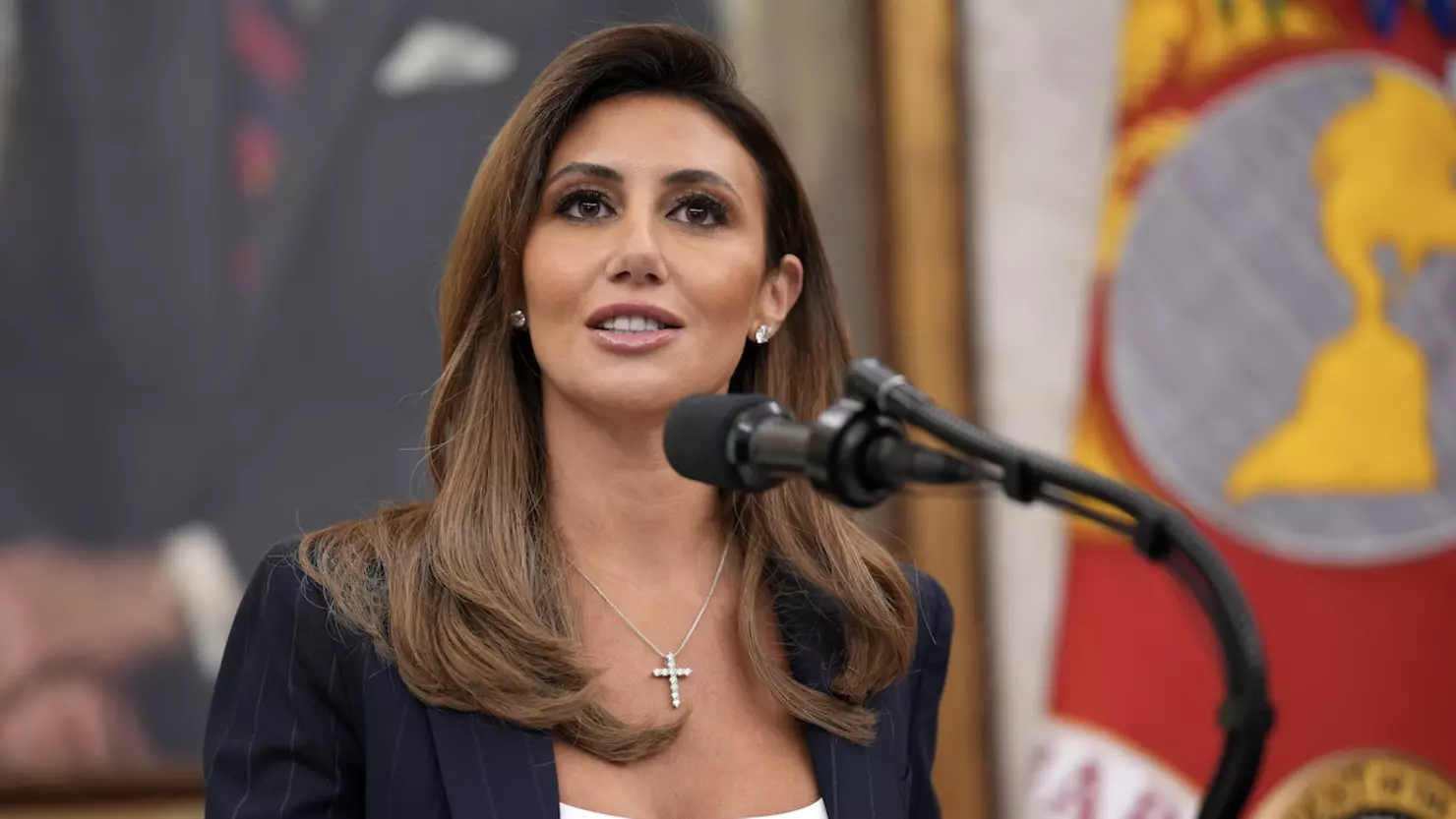
Alina Habba, who has served as the acting United States Attorney for the District of New Jersey, announced on Monday that she is stepping down from her position following a critical ruling from the Third Circuit Court of Appeals. The decision marks a significant legal and political moment for the Justice Department and the Trump administration, which appointed Habba earlier this year.
The resignation follows the court’s finding that the administration violated federal law by installing Habba as the state’s top federal prosecutor without securing the required approval from the U.S. Senate. The ruling effectively invalidated the appointment, leaving Habba with no option but to step down, though she emphasized that her departure reflects legal compliance, not personal retreat.
A Rapid Rise and Sudden Departure
Habba, widely recognized as former President Donald Trump’s personal attorney, was appointed acting U.S. attorney for New Jersey in March. Her appointment quickly drew national attention due to her high-profile role in representing Trump and her visibility in legal matters related to the administration.
During her brief tenure, Habba aimed to pursue public corruption cases and strengthen law enforcement initiatives in the state. Supporters described her as a dynamic and determined leader who brought energy and focus to the office. Critics, however, raised concerns about the legality of bypassing Senate confirmation for such a pivotal federal role, a position traditionally subject to rigorous oversight.
The Third Circuit Court ultimately sided with the critics, ruling that the appointment violated statutory requirements and reinforcing the principle that the Senate must confirm U.S. attorneys unless narrowly defined interim circumstances apply.
Habba’s Defiant Message
In her resignation statement, Habba acknowledged the court’s ruling but made clear her resolve and commitment to her principles. Posting on social media, she wrote:
“As a result of the Third Circuit’s ruling, and to protect the stability and integrity of the office which I love, I have decided to step down in my role as the U.S. Attorney for the District of New Jersey. But do not mistake compliance for surrender. This decision will not weaken the Justice Department and it will not weaken me.”
The statement emphasized that her resignation was an act of compliance with the law, rather than an admission of personal defeat. By including the phrase “Do Not Mistake Compliance for Surrender,” Habba underscored her intention to maintain influence and presence in legal and political circles despite stepping away from the federal position.
The message also signaled to her supporters and critics alike that she remains committed to public service and the principles she has championed, even while following the court’s mandate.
Leadership Vacuum in New Jersey
Habba’s resignation leaves the District of New Jersey without a confirmed or interim U.S. attorney. The office oversees a high volume of cases, including federal crimes, financial fraud, public corruption, and national security matters. Federal law allows the Attorney General or local courts to appoint a temporary leader when such vacancies occur, but as of Monday, no replacement had been announced.
Legal experts note that maintaining continuity of leadership is crucial in New Jersey, one of the nation’s busiest federal districts, encompassing major urban centers, ports, airports, and corporate hubs. The absence of a confirmed leader could slow critical investigations and complicate coordination with other federal and state agencies.
The Legal Battle Explained
The Third Circuit ruling centered on whether the Trump administration had the legal authority to appoint Habba without Senate approval. Federal law mandates that U.S. attorneys must be nominated by the president and confirmed by the Senate, except under narrowly defined emergency or interim circumstances. The court concluded that the circumstances for bypassing confirmation did not exist in this case, making the appointment invalid.
The ruling emphasizes the judiciary’s role in ensuring adherence to statutory requirements and upholding the checks and balances fundamental to the U.S. system of government. By invalidating Habba’s appointment, the court reinforced the Senate’s constitutional authority in confirming key federal officials.
Political and Legal Reactions
Reactions to Habba’s resignation have been mixed. Supporters praised her dedication and described her resignation as a procedural necessity rather than a reflection of her effectiveness. They highlighted her energy, strategic approach, and the fresh perspective she brought to the office.
Critics, meanwhile, argued that the administration should have followed the established Senate confirmation process from the beginning. Some commentators saw the court ruling as a reminder that even politically aligned appointments must comply with federal law, particularly in high-stakes roles such as U.S. attorneys.
Legal scholars also weighed in, noting that the ruling underscores the importance of institutional safeguards in maintaining the credibility and integrity of federal law enforcement. Senate confirmation ensures transparency, accountability, and public trust, qualities that are critical for the legitimacy of federal prosecutions.
Next Steps for the Justice Department
With Habba’s departure, the Justice Department faces the task of ensuring that leadership continuity in New Jersey is preserved. Federal prosecutors and support staff will need clear guidance to maintain ongoing investigations and prosecutions while a new acting or permanent U.S. attorney is identified.
Observers expect that the administration will appoint a temporary interim leader while selecting a nominee who can navigate the Senate confirmation process. The challenge lies in balancing political considerations with the need for legal and administrative continuity, particularly in one of the nation’s most high-profile districts.
Habba’s Future Plans
Although she did not provide specific details about her next steps, Habba’s social media statement suggested she intends to remain professionally and politically active. Her emphasis on compliance without surrender indicates that she may continue to engage in public legal work, advocacy, or political endeavors.
Speculation includes a potential return to private practice, continued representation of high-profile clients, or advisory roles within the Trump administration. Her experience, visibility, and network position her for a variety of influential opportunities, including future judicial appointments or public service roles that adhere to proper legal channels.
A Broader Implication
The resignation is more than a personal or political event—it highlights ongoing tensions between executive authority and judicial oversight. The court’s decision serves as a reminder that legal norms, Senate confirmation, and institutional checks remain critical, even in highly politicized environments.
The episode also raises questions about interim appointments across federal agencies, executive discretion, and the mechanisms by which the president and administration can fill critical roles without violating statutory requirements.
Preserving Integrity Amid Controversy
Throughout her tenure, Habba maintained that her primary goal was to uphold justice and protect the integrity of the U.S. Attorney’s Office. Her statement, particularly the phrase “Do Not Mistake Compliance for Surrender,” reinforces that her decision to resign does not diminish her commitment to the office or the mission she undertook.
For the public and the federal workforce, the message is clear: adherence to the law and institutional norms remains paramount, and personal or political setbacks need not erode professional dedication or influence.
Conclusion
Alina Habba’s resignation as acting U.S. Attorney for New Jersey underscores the delicate balance between executive authority, judicial oversight, and Senate confirmation in the federal system. While her departure follows a court ruling that invalidated her appointment, her message—“Do Not Mistake Compliance for Surrender”—signals her continued engagement in legal and political arenas.
The Justice Department now faces the immediate challenge of maintaining stability and continuity in one of the nation’s busiest federal districts, while the administration navigates the Senate confirmation process for her eventual replacement. For Habba, the resignation marks not an end, but a transition, as she remains a prominent figure in the intersection of law, politics, and public service.

Emily Johnson is a critically acclaimed essayist and novelist known for her thought-provoking works centered on feminism, women’s rights, and modern relationships. Born and raised in Portland, Oregon, Emily grew up with a deep love of books, often spending her afternoons at her local library. She went on to study literature and gender studies at UCLA, where she became deeply involved in activism and began publishing essays in campus journals. Her debut essay collection, Voices Unbound, struck a chord with readers nationwide for its fearless exploration of gender dynamics, identity, and the challenges faced by women in contemporary society. Emily later transitioned into fiction, writing novels that balance compelling storytelling with social commentary. Her protagonists are often strong, multidimensional women navigating love, ambition, and the struggles of everyday life, making her a favorite among readers who crave authentic, relatable narratives. Critics praise her ability to merge personal intimacy with universal themes. Off the page, Emily is an advocate for women in publishing, leading workshops that encourage young female writers to embrace their voices. She lives in Seattle with her partner and two rescue cats, where she continues to write, teach, and inspire a new generation of storytellers.