Washington, D.C. was thrust into chaos this week after a brazen daylight attack left two West Virginia National Guard members critically wounded just blocks from the White House. The shooting — described by investigators as a deliberate ambush — immediately triggered a federal response unprecedented since Trump returned to office. And now, the suspected gunman has been identified: Rahmanullah Lakanwal, a 29-year-old Afghan national.
Officials say Lakanwal was shot and wounded by officers at the scene and is currently in custody. What happened next — and what investigators uncovered — is now shaping a political firestorm that may redefine U.S. security and immigration policy in the months ahead.
An Attack Near the Seat of American Power
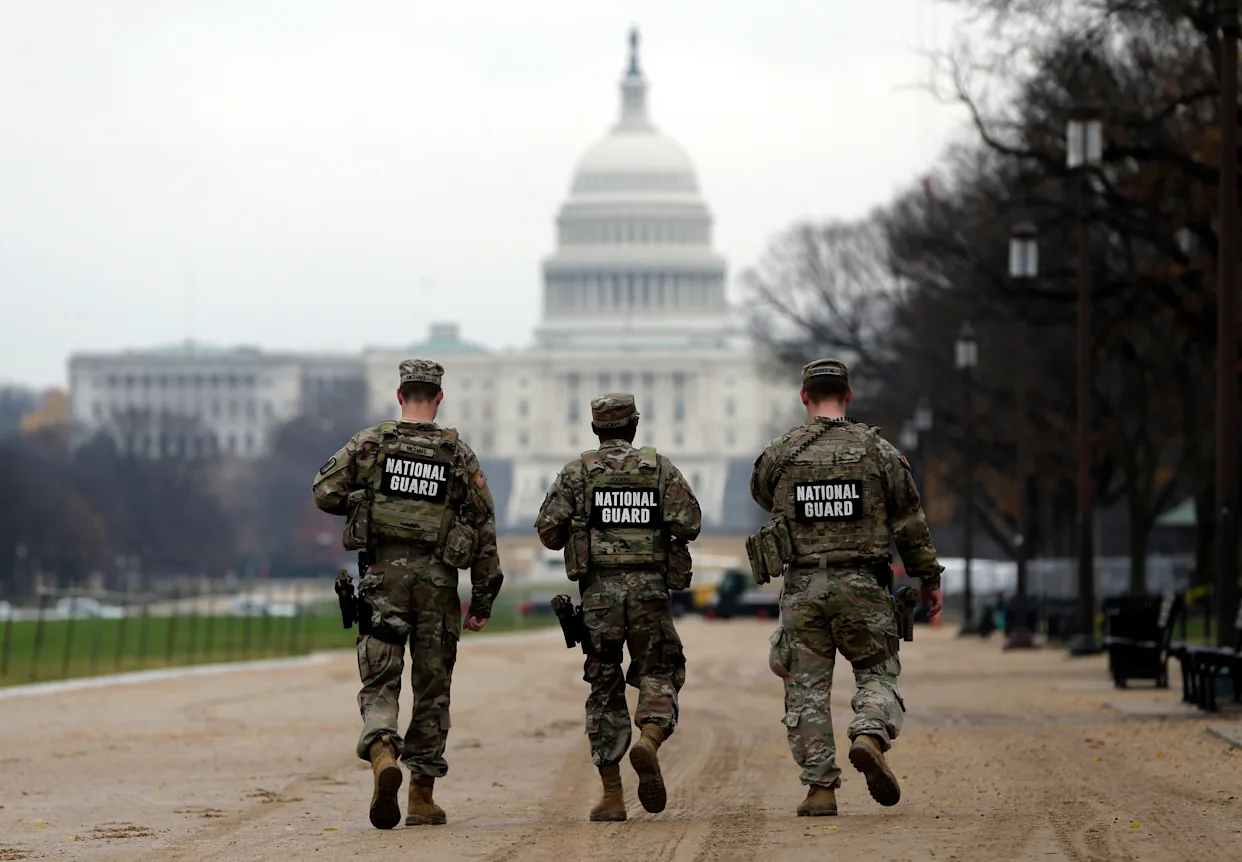
The ambush occurred near Farragut Square, one of the busiest public areas in downtown Washington, surrounded by commuters, office workers, and tourists. The two National Guard members were on active duty supporting the president’s security posture — part of a broader operation aimed at stabilizing high-crime corridors around the capital.
According to initial reports, the shooter approached the Guardsmen without warning and opened fire at close range. Witnesses described a sudden eruption of gunshots followed by crowds scattering in panic as officers rushed toward the sound of the attack.
“It was a targeted assault,” one senior law enforcement source told reporters. “This wasn’t random.”
Officials say early analysis points strongly toward premeditation: the location, timing, and victims all suggest the Guardsmen themselves were the intended targets.
The Shooter: What We Know About Rahmanullah Lakanwal
Authorities have now publicly identified the suspect as Rahmanullah Lakanwal, an Afghan national who arrived in the United States years ago. The Department of Homeland Security confirmed that he had been living in the U.S. under a questionable immigration status — a detail that has already sparked outrage among immigration critics.
Federal officials have declined to provide additional biographical details, citing the ongoing investigation. However, the FBI has taken over the case, and all statements so far point toward one possibility they cannot rule out: terrorism.
“We are treating this as a potential act of terror until proven otherwise,” a federal official told reporters.
Investigators are now tracing:
-
Lakanwal’s digital activity
-
Any foreign contacts
-
His travel history
-
Financial movements
-
Possible ideological motives
Sources say investigators seized several electronic devices during a search of his residence and are combing through encrypted apps, email backups, and possible overseas communications.
Were There Signs? Officials Search for Links to Larger Networks
At this stage, authorities say there is no indication that Lakanwal was part of a group or acting under orders from abroad. But investigators are being cautious.
The FBI, DHS, and Joint Terrorism Task Force are examining whether:
-
Lakanwal had prior contact with extremist groups
-
He was radicalized online
-
He had been communicating with foreign actors
-
He had any affiliation with Afghan militias, Taliban splinters, or ISIS-K networks
One intelligence official said agencies are also looking into whether he may have been involved in discussions within private online groups known for extremist rhetoric.
No manifesto, notes, or claim of responsibility has surfaced.
The Victims: Two Guardsmen Fighting for Their Lives
The two West Virginia National Guard members remain in critical condition in Washington-area hospitals. Early reports suggesting they had died were incorrect, though officials warn their conditions remain extremely fragile.
Their identities have not yet been released publicly.
What has been revealed is that both men were conducting a routine presence patrol near the square — a highly visible deterrence operation intended to protect federal facilities and reduce the surge in violent assaults in the area.
Officials described them as “targeted solely because of their uniform.”
Trump Reacts: “An Act of Terror”
Within hours, President Trump addressed the nation, calling the shooting an “act of terror” and ordering an immediate increase of National Guard personnel in the capital.
He authorized an additional 500 troops, bringing the total deployment to its highest level since last year’s nationwide crime crackdown.
“We will not tolerate attacks on our service members,” Trump said from the South Lawn. “And we will not allow foreign nationals who pose a threat to remain in our country for one second longer.”
The Immigration Fallout: Afghan Vetting Under Emergency Review
Perhaps the most politically explosive reaction came minutes after the president spoke. The administration announced a sweeping policy shift: the immediate suspension and emergency review of immigration processing for Afghan nationals.
Officials say the move is temporary but necessary to ensure that prior vetting procedures — especially those implemented during the late stages of the Afghanistan withdrawal — were not flawed.
According to administration sources, the review will examine:
-
Known security gaps in 2021 and 2022 evacuations
-
Background check failures
-
Incomplete biometric screenings
-
Passports provided by foreign or non-verified authorities
The decision sparked immediate debate. Supporters say the attack exposed serious vulnerabilities. Critics accuse the administration of overreacting.
But within Trump’s orbit, the message was clear:
If this attack involves foreign radicalization, U.S. policy will change. Immediately.
Why the Case Is So Sensitive
This incident touches on multiple national flashpoints:
-
Immigration
-
Terrorism
-
Trump’s security deployment to blue cities
-
Rising violent crime
-
Tension between federal authorities and local officials
And because the attack occurred near the White House, the political stakes are enormous.
A targeted ambush on uniformed service members — in the capital — is one of the rarest and most alarming types of domestic attacks.
A senior law enforcement official said quietly:
“This is exactly the scenario that keeps security planners awake at night.”
What Investigators Haven’t Revealed Yet
Despite wide speculation, officials have not released:
-
Evidence of a terror organization
-
A written motive
-
A statement of intent
-
Foreign orders or command links
-
Social posts indicating extremist ideology
They also have not confirmed:
-
Whether Lakanwal was surveilling other locations
-
Whether he targeted the Guardsmen for symbolic reasons
-
Whether he attempted to reach other federal sites
One investigator told reporters that the absence of a manifesto does not mean the motive was not ideological.
“Some attackers never write anything down,” he said. “Their motive lives in their behavior.”
A Capital on Edge
Law enforcement presence has surged across Washington, with federal agencies quietly increasing patrols around the Capitol, White House, and federal buildings.
Special counterterror units are reviewing security camera footage from hours before and after the attack. Intelligence analysts are also studying whether the suspect scouted the area beforehand — and whether he had accomplices who have not yet been identified.
Officials emphasize they do not believe additional attackers are at large. But they admit the investigation is still in its early hours.
“We’re moving fast,” one FBI official said. “This is a priority case.”
What Comes Next
In the coming days, expect:
-
A flood of new details about the suspect
-
Confirmation (or rejection) of terrorism ties
-
A political battle over Afghan immigration policy
-
Heightened security in D.C.
-
Congressional hearings on vetting failures
-
Renewed debate over Trump’s National Guard deployments
If federal investigators discover even a hint of extremist ideology or foreign contact, the political and national security implications could be massive.
For now, Washington is bracing for the next development — and Americans are left with a troubling realization:
An armed attacker targeted U.S. troops just blocks from the White House.
And the nation still doesn’t know why.

Sarah Mitchell is a bestselling novelist recognized for her insightful and emotionally resonant stories that explore the complexities of human relationships. Originally from Denver, Colorado, Sarah grew up in a family of teachers who nurtured her curiosity and love for storytelling. She studied psychology at Stanford University, where she became fascinated by the intricacies of human behavior—an interest that would later shape her writing career. Sarah’s novels are praised for their nuanced characters, intricate plots, and ability to capture the subtle tensions that define love, friendship, and family ties. Her breakthrough novel, The Spaces Between Us, became an instant bestseller, lauded for its honest portrayal of strained family relationships and the fragile bonds that hold people together. Since then, she has published several works that continue to captivate audiences around the world. Outside of her writing career, Sarah is passionate about mental health advocacy and often partners with organizations to promote awareness and support for those struggling with emotional well-being. Her personal life is quieter—she enjoys hiking in the Colorado mountains, practicing yoga, and spending time with close friends. With each new book, Sarah Mitchell cements her reputation as a writer who illuminates the beauty and struggles of human connection.