A set of newly declassified federal interview records has reignited controversy in Washington and placed a long-serving U.S. senator under serious legal and political examination. At the center of the storm are allegations from a former congressional staffer who claims that classified intelligence was deliberately disclosed to the media during one of the most contentious political periods in recent American history.
The claims, which date back several years but have only recently resurfaced with documentary backing, suggest that sensitive national security information may have been leaked for political purposes while Congress was overseeing investigations tied to the 2016 presidential election. If proven accurate and pursued by prosecutors, the implications could extend far beyond reputational damage, potentially involving significant criminal penalties.
The renewed attention follows the release of FBI interview summaries in which the whistleblower repeatedly alleged misconduct to federal agents. Those accounts, now public, are drawing renewed interest from legal analysts, former prosecutors, and critics who argue that the allegations were never fully examined at the time.
Whistleblower Account Raises Serious Questions
According to the declassified materials, the whistleblower worked for Democrats on a powerful House committee for more than a decade. Beginning in 2017, the individual told FBI agents that senior leadership on the committee had authorized the leaking of classified intelligence to news organizations in order to harm a sitting president.
The whistleblower claimed that during an internal staff meeting, it was stated openly that derogatory classified information would be shared with the press and later used as part of a broader political strategy. The individual said he objected immediately, warning that such actions were unethical and potentially illegal, but was allegedly reassured that there would be no consequences and that the operation would not be detected.
The accounts further allege that these disclosures were not isolated incidents, but part of a pattern that continued over time. The whistleblower stated that after raising concerns internally and then with federal authorities, he was abruptly dismissed from his position.
At the time, no charges were brought, and the matter largely faded from public view. That silence, however, is now being questioned as more details have emerged.
FBI Response and Lingering Controversy
One of the most contentious aspects of the episode is the whistleblower’s assertion that the FBI did not act decisively after being informed of the alleged leaks. According to the interview summaries, the individual approached federal agents multiple times over several years, including again in 2023, reiterating the same allegations.
Critics argue that the lack of visible enforcement action has fueled perceptions of unequal treatment under the law, particularly when politically connected figures are involved. Supporters of the FBI’s handling contend that internal reviews and prosecutorial discretion may explain the absence of charges, especially given the high legal thresholds involved in classified-information cases.
Nonetheless, the release of the interview records has reopened debate over whether the matter was properly investigated and whether further review is warranted.
Potential Legal Consequences Explained
Legal experts note that leaking classified information carries serious penalties under federal law. Former U.S. Attorney Brett Tolman, speaking recently with political commentators, outlined how exposure could escalate rapidly depending on how prosecutors frame potential charges.
Each instance of an unlawful classified disclosure can carry fines of up to $250,000. If multiple leaks are charged separately, those penalties can stack quickly. Beyond financial consequences, prison sentences may apply, particularly if prosecutors determine that the disclosures were intentional and designed to influence government proceedings.
Tolman emphasized that the motive behind the leak is often central. If classified material is disclosed with the purpose of undermining government operations or influencing official proceedings, additional statutes—such as conspiracy or obstruction—could come into play. In such cases, sentencing exposure could reach decades.
While legal analysts caution that such outcomes are far from guaranteed, they agree that the stakes are exceptionally high if the allegations are substantiated.
The Political Context
The events described in the whistleblower’s account occurred during a period of intense political conflict, as Congress investigated alleged ties between the Trump campaign and Russia. The committee involved wielded enormous influence, handling some of the nation’s most sensitive intelligence.
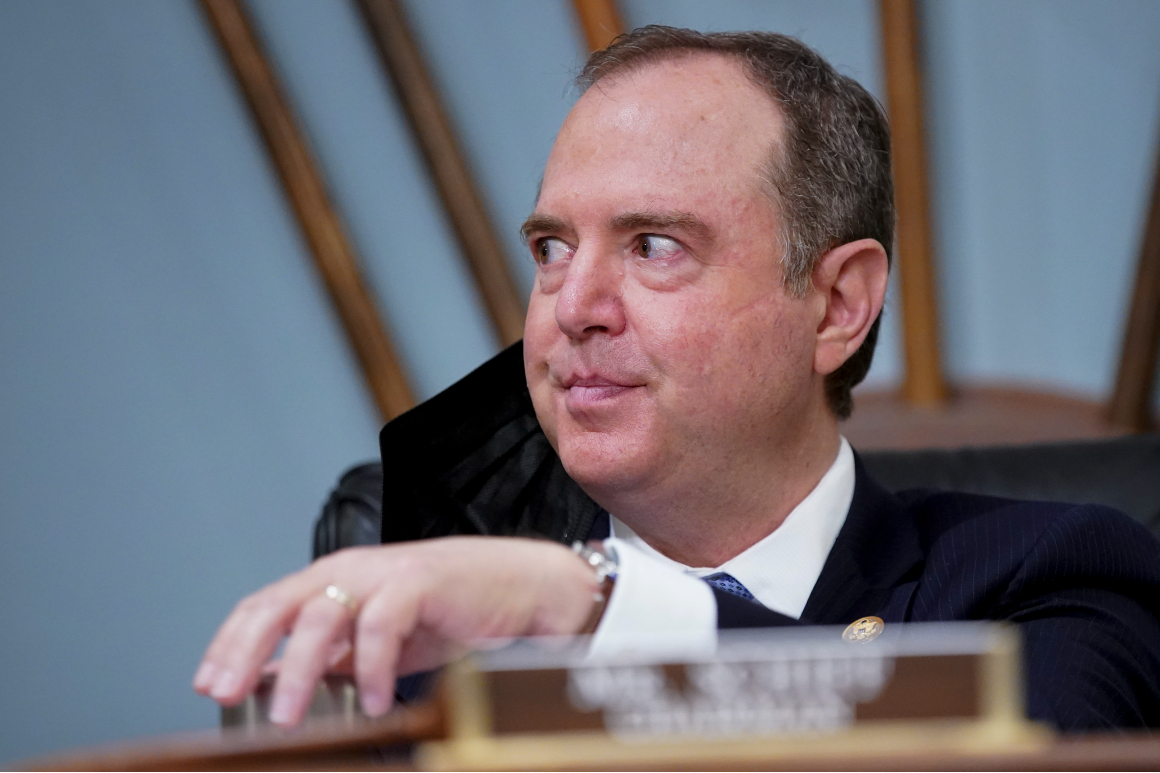
The lawmaker at the center of the allegations served first as the ranking member and later as chairman of that committee, placing him in a position of significant authority over classified material. Throughout that period, he became a prominent public figure, frequently appearing in the media to discuss the investigation and its findings.
He has consistently denied leaking classified information and has characterized accusations of misconduct as politically motivated attacks. To date, he has not issued a public response to the newly released FBI interview records.
Claims of Political Favoritism
The controversy has also reignited broader criticism of federal law enforcement leadership during that era. Some former officials and commentators argue that politically sensitive cases were handled differently depending on the individuals involved.
Former Trump administration officials have pointed to this episode as evidence of a double standard, contrasting the FBI’s response here with its aggressive pursuit of other cases involving classified materials. These critics argue that such disparities erode public trust in institutions meant to operate above politics.
Supporters of the senator counter that allegations alone, even when detailed, do not equate to proof, and that prosecutorial restraint may reflect the complexities of classified-information law rather than favoritism.
Additional Allegations and Career Implications
The whistleblower’s account includes claims that political ambitions and future appointments were discussed in connection with the alleged leaks, though those assertions have not been independently verified. If substantiated, such claims could significantly complicate the legal picture, potentially introducing elements of quid-pro-quo or conspiracy.
Even absent criminal charges, the renewed attention carries serious political consequences. Ethics investigations, congressional inquiries, or special counsel reviews could emerge if pressure continues to build. For a sitting senator with a national profile, prolonged scrutiny alone can reshape a career.
No Charges Filed—Yet
It is important to note that no charges have been filed, and no formal investigation has been announced based on the newly released materials. Legal experts stress that whistleblower testimony, while significant, must be corroborated by documentary evidence, witness accounts, and forensic records before prosecutors can move forward.
Still, the disclosure of the FBI interview reports has changed the landscape. What was once an obscure allegation is now part of the public record, accessible to lawmakers, journalists, and voters alike.
What Comes Next
Whether the matter advances beyond public debate will depend on several factors: prosecutorial interest, political pressure, and the emergence of additional evidence. Congressional oversight committees may seek briefings, and watchdog groups could push for independent review.
For now, the episode serves as a reminder of the legal and ethical boundaries surrounding classified information—and the severe consequences that can follow if those boundaries are crossed.
As Washington absorbs the implications of these disclosures, the questions raised extend beyond any single individual. They touch on accountability, transparency, and the enduring challenge of ensuring that national security is not subordinated to political warfare.
The coming months may determine whether this controversy remains a historical footnote or becomes a defining legal battle with far-reaching consequences.

Emily Johnson is a critically acclaimed essayist and novelist known for her thought-provoking works centered on feminism, women’s rights, and modern relationships. Born and raised in Portland, Oregon, Emily grew up with a deep love of books, often spending her afternoons at her local library. She went on to study literature and gender studies at UCLA, where she became deeply involved in activism and began publishing essays in campus journals. Her debut essay collection, Voices Unbound, struck a chord with readers nationwide for its fearless exploration of gender dynamics, identity, and the challenges faced by women in contemporary society. Emily later transitioned into fiction, writing novels that balance compelling storytelling with social commentary. Her protagonists are often strong, multidimensional women navigating love, ambition, and the struggles of everyday life, making her a favorite among readers who crave authentic, relatable narratives. Critics praise her ability to merge personal intimacy with universal themes. Off the page, Emily is an advocate for women in publishing, leading workshops that encourage young female writers to embrace their voices. She lives in Seattle with her partner and two rescue cats, where she continues to write, teach, and inspire a new generation of storytellers.