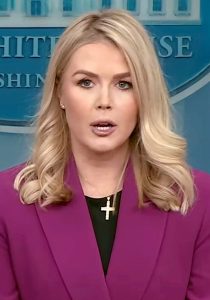



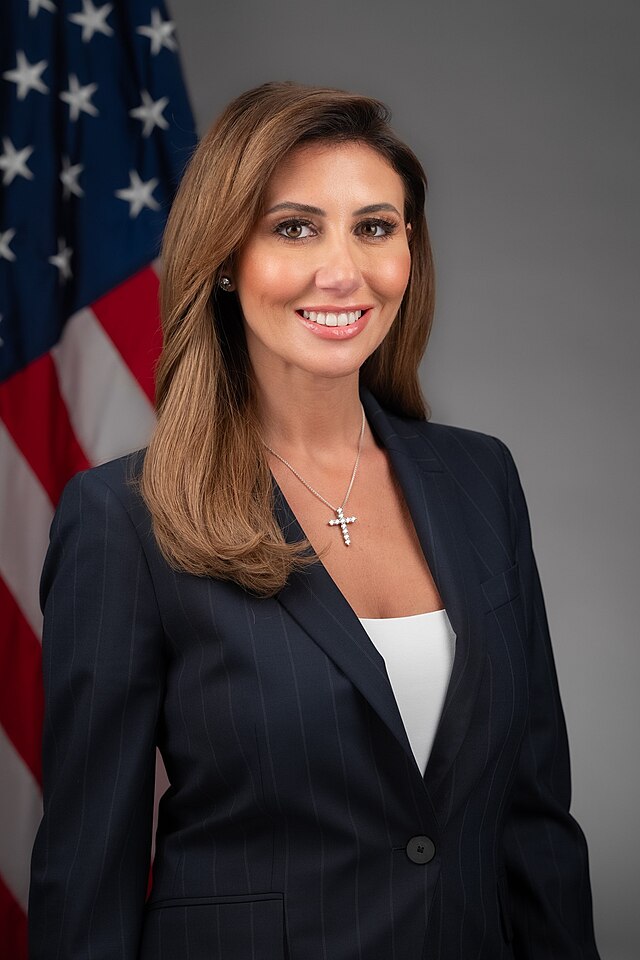
Alina Habba, President Donald Trump’s pick for U.S. attorney in New Jersey, is not backing down after a major legal and political setback. Speaking out on Fox News’ Sunday Morning Futures with Maria Bartiromo, Habba blasted the Senate’s “blue slip” tradition and vowed that she “won’t be intimidated” following a federal judge’s ruling that deemed her recess appointment unlawful.
The Blue Slip Controversy
At the heart of the dispute is the Senate’s blue slip tradition, an unwritten rule that allows home-state senators to approve or block federal judicial and U.S. attorney nominees before they proceed to a confirmation vote.
“This tradition that Sen. [Chuck] Grassley is upholding effectively prevents anybody in a blue state from going through to the Senate to then be voted on,” Habba said during the interview.
“Senator Booker and Senator Kim had absolutely every right to vote no for me for the U.S. attorney position, but I had the right, as the nominee, to get in front of Senate and to be voted on, to be vetted. I never even got there.”
New Jersey’s two Democratic senators, Cory Booker and Andy Kim, invoked the tradition to block Habba’s nomination, arguing they had concerns about her appointment.
Judge Rules Against Habba’s Appointment
The battle intensified last week when a federal judge ruled that Habba’s recess appointment as acting U.S. attorney violated the law because it bypassed Senate confirmation. The decision nullified her temporary appointment and left the office under interim leadership pending Senate action on a formal nominee.
Habba criticized the ruling as politically motivated and warned that the blue slip process is being “weaponized” to obstruct Republican nominees in Democratic-led states.
Trump Weighs In
President Trump has also taken aim at the tradition, calling it an unnecessary and partisan tool that allows Democrats to stall appointments.
“Chuck Grassley, who I got re-elected to the U.S. Senate when he was down, by a lot, in the Great State of Iowa, could solve the ‘Blue Slip’ problem we are having with respect to the appointment of Highly Qualified Judges and U.S. Attorneys, with a mere flick of the pen,” Trump wrote in a July Truth Social post.
“Democrats like Schumer, Warner, Kaine, Booker, Schiff, and others, SLEAZEBAGS ALL, have an ironclad stoppage of Great Republican Candidates.”
Grassley Defends the Tradition
Sen. Chuck Grassley, who chairs the Senate Judiciary Committee, pushed back against Trump’s criticism, saying the practice helps preserve bipartisan input.
“I was offended by what the president said,” Grassley told committee members last month. “And I’m disappointed that it would result in personal insults.”
Grassley has argued that the blue slip custom fosters cooperation between presidents and senators when filling critical roles in the judiciary and the U.S. attorney’s offices.
Habba’s Counterargument
Habba disagrees, claiming the tradition has become a partisan weapon rather than a tool for bipartisan collaboration.
“This is not law—it’s a courtesy that has been abused,” she said. “Democrats have figured out how to use it to stall Republican administrations from putting qualified people in place. That’s not what the American people want.”
What Happens Next?
The standoff has created uncertainty about the leadership of the U.S. attorney’s office in New Jersey. Under Department of Justice rules, an interim official will fill the role until a Senate-confirmed candidate is approved.
The dispute underscores broader tensions between Trump and Senate leadership over the rules governing federal appointments. Observers say the outcome could influence whether the blue slip tradition survives or faces reform in the coming months.
Habba, for her part, says she’s prepared to fight: “I won’t be intimidated by partisan politics. This is about the rule of law—and the right for nominees to be fairly considered.”
https://www.youtube.com/watch?v=-4V2QAoDOc0

James Jenkins is a celebrated Pulitzer Prize-winning author whose work has reshaped the way readers think about social justice and human rights in America. Raised in Atlanta, Georgia, James grew up in a community that instilled in him both resilience and a strong sense of responsibility toward others. After studying political science and creative writing at Howard University, he worked as a journalist covering civil rights issues before dedicating himself fully to fiction. His novels are known for their sharp, empathetic portraits of marginalized communities and for weaving personal stories with broader political realities. Jenkins’s breakout novel, Shadows of Freedom, won national acclaim for its unflinching look at systemic inequality, while his more recent works explore themes of identity, resilience, and the fight for dignity in the face of oppression. Beyond his novels, James is an active public speaker, lecturing at universities and participating in nonprofit initiatives that support literacy and community empowerment. He believes that storytelling is a way to preserve history and inspire change. When not writing, James enjoys jazz music, mentoring young writers, and traveling with his family to explore cultures and stories around the world.