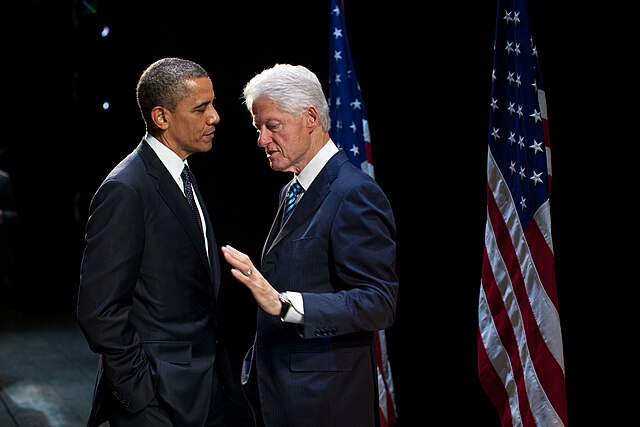
New Documents Revive Long-Running Controversy
Fresh revelations have emerged from within the FBI’s historical files, shedding new light on a high-profile corruption investigation that quietly spanned multiple field offices. The case, involving a politically prominent charitable foundation, had been underway for years before being abruptly halted at the direction of senior officials.
A Multistate Investigation
According to newly disclosed records, agents in New York, Washington, D.C., and Little Rock were pursuing a fully authorized criminal inquiry into whether foreign nationals and wealthy donors sought special access to the U.S. State Department. The allegations centered on whether such access was tied to substantial contributions to the foundation in question, which was overseen by a former president and his family.
Agents believed they had developed substantial leads. Requests for subpoenas, grand jury support, and other investigative tools were sent to multiple U.S. Attorneys’ offices. However, in three of the four jurisdictions approached, federal prosecutors reportedly declined to assist, leaving the investigative teams without the resources needed to advance the case.
Senior-Level Interference Alleged
The investigation, already unfolding in the politically sensitive environment leading up to the 2016 election, faced additional constraints. Sources claim that then–FBI Deputy Director Andrew McCabe required personal approval before any investigative steps could be taken—effectively slowing the pace of the probe.
The most significant new detail comes from a message sent by a top Justice Department official during the Obama administration. The email, described by investigative journalist John Solomon as a “smoking gun,” was uncovered by current FBI Director Kash Patel. It reportedly contains a direct instruction to cease the ongoing corruption inquiries related to the foundation.
Reaction from Investigators and Prosecutors
The correspondence is now in Patel’s possession, and he has indicated plans to provide it to Congress. Solomon has stated that several prosecutors familiar with the matter are willing to cooperate with the current Justice Department leadership, potentially offering firsthand accounts of what they witnessed during the investigation’s shutdown.
Observers note that the pattern described by these sources is part of a broader allegation: that federal law enforcement, at various points, was more aggressive in pursuing unfounded claims against political rivals than in following through on credible leads involving politically connected figures.
Next Steps in a Renewed Inquiry
The revelation of the email has prompted renewed calls for oversight hearings and possible reopening of certain lines of inquiry. Whether Congress will press for a formal review remains to be seen, but Patel and other officials have signaled that additional Obama-era communications may soon be made public.
For now, the existence of a documented order to halt the probe has intensified partisan debate and raised fresh questions about the handling of politically sensitive investigations at the highest levels of government.

James Jenkins is a celebrated Pulitzer Prize-winning author whose work has reshaped the way readers think about social justice and human rights in America. Raised in Atlanta, Georgia, James grew up in a community that instilled in him both resilience and a strong sense of responsibility toward others. After studying political science and creative writing at Howard University, he worked as a journalist covering civil rights issues before dedicating himself fully to fiction. His novels are known for their sharp, empathetic portraits of marginalized communities and for weaving personal stories with broader political realities. Jenkins’s breakout novel, Shadows of Freedom, won national acclaim for its unflinching look at systemic inequality, while his more recent works explore themes of identity, resilience, and the fight for dignity in the face of oppression. Beyond his novels, James is an active public speaker, lecturing at universities and participating in nonprofit initiatives that support literacy and community empowerment. He believes that storytelling is a way to preserve history and inspire change. When not writing, James enjoys jazz music, mentoring young writers, and traveling with his family to explore cultures and stories around the world.