



In the aftermath of a tragic mass shooting in Midtown Manhattan that left multiple people dead, including a law enforcement officer, political leaders from both parties have begun weighing in. The debate that often follows such incidents has reignited—but one senator’s comments are already drawing sharp reactions and stirring national conversation.
The shooting, which unfolded at a prominent skyscraper on Park Avenue, shook the city and the country. A total of four lives were lost, including a police officer, a woman hiding for safety, a building security guard, and one additional victim on the upper floors. The suspect, who police say acted alone, took his own life after the rampage. Law enforcement officials provided a timeline that showed the rapid escalation of events, all unfolding in under two hours.
In Washington, familiar calls for legislative action quickly resumed. Statements from Democratic lawmakers focused on the need for “decisive action” and renewed scrutiny of firearm accessibility. But while some expected a standard partisan divide to follow, what came from one Republican senator took a noticeably different tone—not necessarily more aggressive, but certainly more provocative.
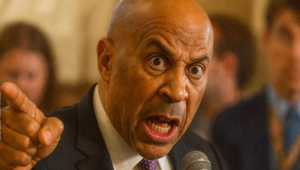
Speaking on national television shortly after the event, the senator addressed what he believes is a deeper issue than simply policy enforcement. He acknowledged the tragedy but pivoted quickly to a broader commentary on society and public safety. Without offering immediate support for additional firearm legislation, he instead suggested something far more contentious.
The senator raised concerns about the way some violent individuals are discussed in the media and political arenas. He expressed little interest in examining motives or background stories in this case, emphasizing that the public response should reflect the severity of the act—not dilute it with speculation or misplaced sympathy.
Moreover, the senator advocated for the reevaluation of a law enforcement strategy that once defined policing in America’s largest cities. While some critics have long argued that the practice disproportionately affected minority communities and raised constitutional concerns, the senator countered that its impact on violent crime rates should not be ignored in times like these.
The senator’s remarks point to a larger cultural frustration—one not just rooted in partisan politics, but in a belief that America’s core problem lies not in the tools used to commit violence, but in the mindset of those who do. For many of his supporters, it’s a reminder that legislation alone cannot fix what they see as a society unraveling at its edges.
For others, however, the comments were a deflection—avoiding the difficult but necessary questions about how access to high-powered weapons plays into tragedies like this.
Still, as the dust settles in Manhattan and investigations continue, public figures are not holding back. The national spotlight, as often happens after such violence, is now just as focused on Capitol Hill as it is on the victims’ families.
And that’s when the senator dropped the line that instantly cut through the noise—both praised and condemned in equal measure.
“We’ve got hundreds of gun control laws—maybe thousands,” he said. “We don’t need more gun control. We need more idiot control.”
The statement, delivered during a Fox News appearance, has already sparked strong reactions online and in mainstream media. For his critics, it’s an oversimplification. For his supporters, it’s a brutal but honest encapsulation of a deeper issue they feel has gone ignored for too long.
Whether his remark will drive legislative change, cultural pushback, or simply fade into the soundbite cycle remains to be seen. But in a moment of national grief, the senator chose not to echo the familiar refrain. Instead, he offered a phrase that many won’t soon forget.
https://twitter.com/ProudElephantUS/status/1950039011071816167

Emily Johnson is a critically acclaimed essayist and novelist known for her thought-provoking works centered on feminism, women’s rights, and modern relationships. Born and raised in Portland, Oregon, Emily grew up with a deep love of books, often spending her afternoons at her local library. She went on to study literature and gender studies at UCLA, where she became deeply involved in activism and began publishing essays in campus journals. Her debut essay collection, Voices Unbound, struck a chord with readers nationwide for its fearless exploration of gender dynamics, identity, and the challenges faced by women in contemporary society. Emily later transitioned into fiction, writing novels that balance compelling storytelling with social commentary. Her protagonists are often strong, multidimensional women navigating love, ambition, and the struggles of everyday life, making her a favorite among readers who crave authentic, relatable narratives. Critics praise her ability to merge personal intimacy with universal themes. Off the page, Emily is an advocate for women in publishing, leading workshops that encourage young female writers to embrace their voices. She lives in Seattle with her partner and two rescue cats, where she continues to write, teach, and inspire a new generation of storytellers.