



NOTE: VIDEO AT THE END OF THE ARTICLE.
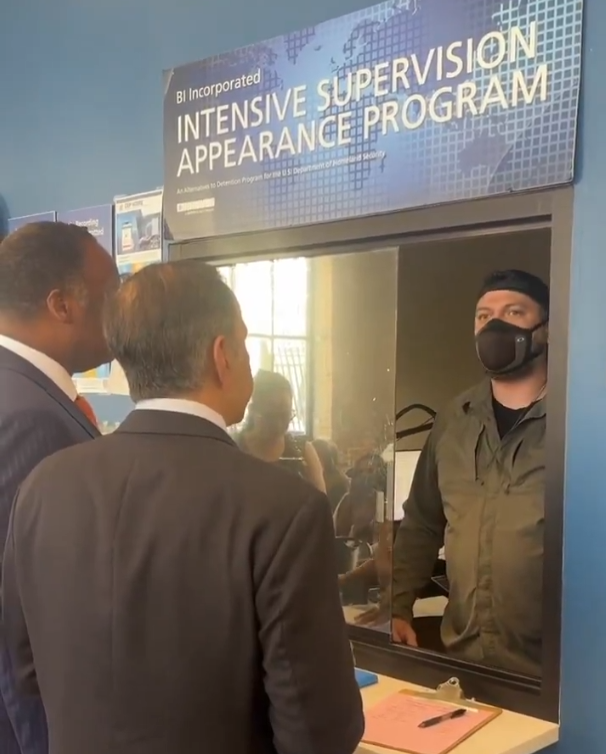
In a tense and highly publicized encounter, two Democratic members of Congress were turned away at a U.S. Immigration and Customs Enforcement (ICE) holding facility in Chicago this week after arriving without notice and demanding immediate access.
Representatives Raja Krishnamoorthi and Jonathan Jackson staged the uncoordinated visit, asserting their status as federal lawmakers to try and gain entry. The confrontation, which was captured on video and widely circulated on social media and news platforms, has sparked heated debate about the boundaries between legitimate congressional oversight and political grandstanding.
In the footage, both congressmen are seen speaking through a security window to an ICE staffer, pressing for entry and questioning why they were being denied. The facility representative, remaining composed, informed them that access to the building requires prior coordination and approval, regardless of congressional status. They were also told that law enforcement had been contacted due to the surprise nature of the visit.
Despite multiple explanations, Krishnamoorthi and Jackson insisted on their right to inspect the facility, suggesting that denying them entry was a violation of transparency and accountability standards. Their attempts were rebuffed, with ICE citing strict protocols intended to protect both detainees and staff.
The standoff quickly drew national attention, with critics accusing the lawmakers of deliberately staging a confrontation for media impact rather than working through proper oversight channels. Supporters, however, defended the move, arguing that surprise visits are sometimes necessary to expose potential misconduct or abuses.
Opponents of the lawmakers’ tactics were quick to label the move as political theater. “This wasn’t about oversight,” one federal source commented anonymously. “It was about creating a viral moment. Real oversight happens through coordination—not ambushes.”
This isn’t the first time Democratic lawmakers have attempted unannounced visits to detention or ICE facilities. Similar incidents have played out in past years, often becoming flashpoints in the broader debate over immigration enforcement and detainee treatment under federal authority.
ICE has since reiterated its policy that congressional visits must be arranged in advance for safety, security, and logistical reasons. The agency emphasized that it welcomes oversight, but not at the cost of protocol and safety.
The encounter underscores growing political tensions around immigration enforcement as the 2026 midterms draw nearer, with Democrats increasingly using bold tactics to spotlight what they view as human rights concerns—and Republicans countering that such actions jeopardize order and enforcement.
PLAY:

James Jenkins is a celebrated Pulitzer Prize-winning author whose work has reshaped the way readers think about social justice and human rights in America. Raised in Atlanta, Georgia, James grew up in a community that instilled in him both resilience and a strong sense of responsibility toward others. After studying political science and creative writing at Howard University, he worked as a journalist covering civil rights issues before dedicating himself fully to fiction. His novels are known for their sharp, empathetic portraits of marginalized communities and for weaving personal stories with broader political realities. Jenkins’s breakout novel, Shadows of Freedom, won national acclaim for its unflinching look at systemic inequality, while his more recent works explore themes of identity, resilience, and the fight for dignity in the face of oppression. Beyond his novels, James is an active public speaker, lecturing at universities and participating in nonprofit initiatives that support literacy and community empowerment. He believes that storytelling is a way to preserve history and inspire change. When not writing, James enjoys jazz music, mentoring young writers, and traveling with his family to explore cultures and stories around the world.