President Donald Trump has escalated his hardline immigration stance, ordering Immigration and Customs Enforcement (ICE) to significantly expand deportation operations in several major U.S. cities. The move follows widespread protests—some peaceful, some turbulent—that have intensified in response to recent immigration enforcement actions.
In a Sunday night statement posted on Truth Social, Trump instructed ICE to prioritize large-scale deportations in urban centers such as Los Angeles, Chicago, and New York. He framed the move as a necessary step to uphold law and order and protect American communities from what he described as “an unchecked influx of illegal aliens.”
“Our Nation’s ICE Officers have shown incredible strength, determination, and courage as they facilitate a very important mission, the largest Mass Deportation Operation of Illegal Aliens in History,” Trump wrote.
The statement continued with sharp criticism of Democratic lawmakers and local officials who have resisted ICE activity in their jurisdictions. “Every day, the Brave Men and Women of ICE are subjected to violence, harassment, and even threats from Radical Democrat Politicians, but nothing will stop us from executing our mission,” he said. “ICE Officers are herewith ordered, by notice of this TRUTH, to do all in their power to achieve the very important goal of delivering the single largest Mass Deportation Program in History.”
The latest surge in ICE operations follows a wave of enforcement actions that began earlier this month. On June 7, coordinated raids in Los Angeles led to the arrest of hundreds of individuals living in the U.S. illegally, many of whom reportedly had prior criminal records. Similar actions have since been reported in other sanctuary cities, sparking immediate backlash from immigrant rights groups and progressive leaders.
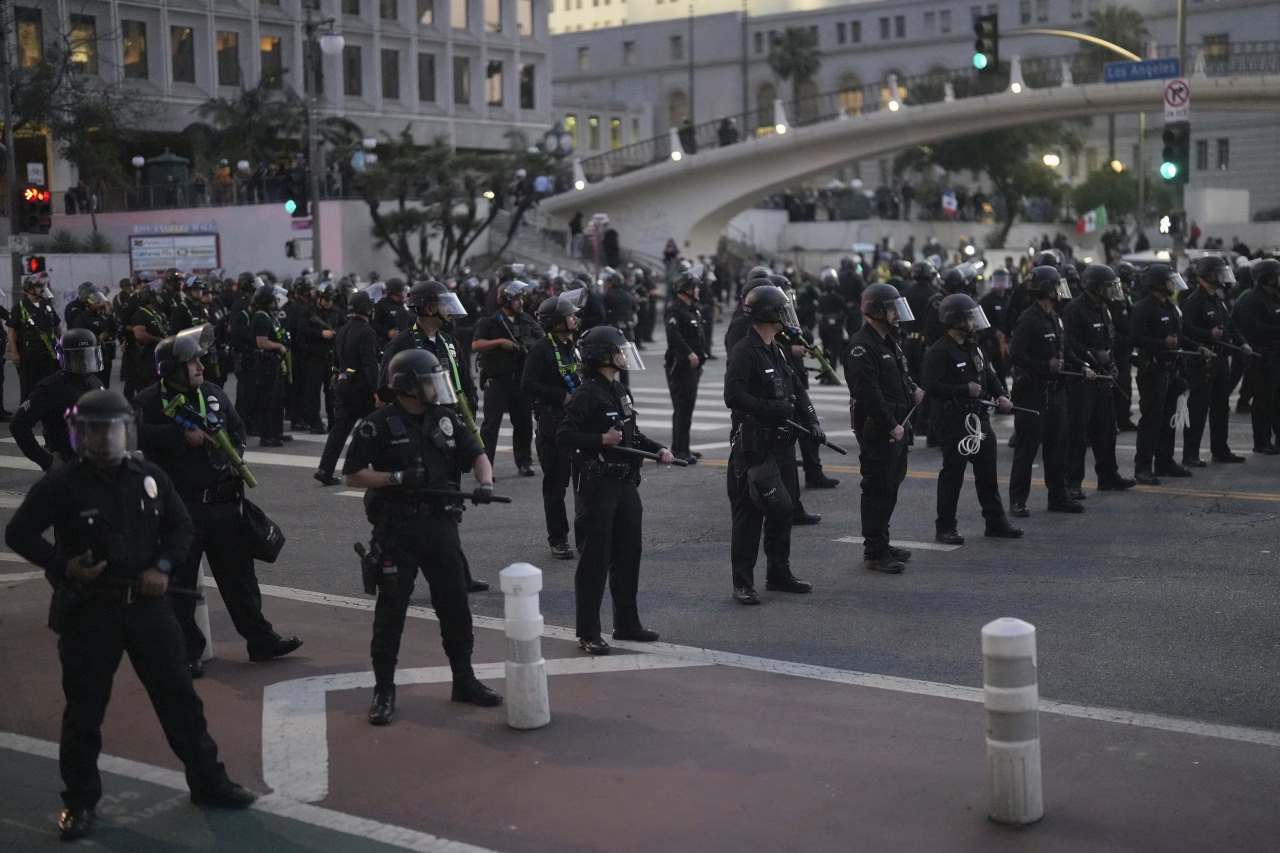
Protests quickly erupted in cities like LA and New York, with demonstrators blocking ICE vehicles, holding vigils, and demanding an immediate halt to the deportations. Some of these protests turned chaotic, with confrontations between demonstrators and law enforcement escalating tensions.
While the Biden administration previously scaled back aggressive ICE tactics, Trump’s return to what critics call a “zero-tolerance” approach has reignited a fierce national debate on immigration enforcement. Supporters argue the crackdown is long overdue and necessary for national security, while opponents warn of human rights violations and the trauma inflicted on immigrant families.
As ICE continues its expanded operations, the political and legal fallout is expected to grow—particularly in cities and states actively resisting federal immigration directives. With the 2026 midterms looming, Trump’s latest move is poised to remain a flashpoint in America’s immigration battle.

James Jenkins is a celebrated Pulitzer Prize-winning author whose work has reshaped the way readers think about social justice and human rights in America. Raised in Atlanta, Georgia, James grew up in a community that instilled in him both resilience and a strong sense of responsibility toward others. After studying political science and creative writing at Howard University, he worked as a journalist covering civil rights issues before dedicating himself fully to fiction. His novels are known for their sharp, empathetic portraits of marginalized communities and for weaving personal stories with broader political realities. Jenkins’s breakout novel, Shadows of Freedom, won national acclaim for its unflinching look at systemic inequality, while his more recent works explore themes of identity, resilience, and the fight for dignity in the face of oppression. Beyond his novels, James is an active public speaker, lecturing at universities and participating in nonprofit initiatives that support literacy and community empowerment. He believes that storytelling is a way to preserve history and inspire change. When not writing, James enjoys jazz music, mentoring young writers, and traveling with his family to explore cultures and stories around the world.