



NOTE: VIDEO AT THE END OF THE ARTICLE.
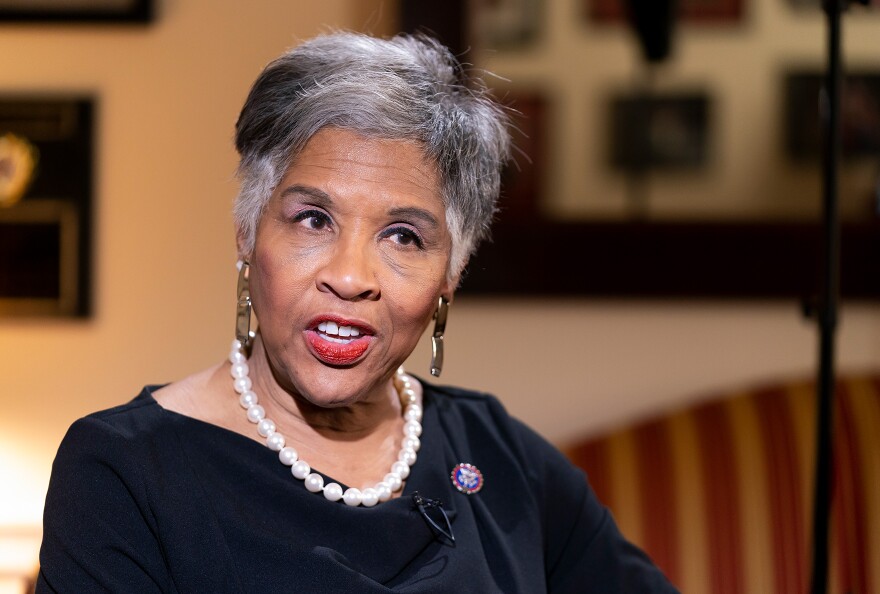
A fiery exchange erupted during a May 7, 2025, session of the House Financial Services Committee when Rep. Joyce Beatty, a Democrat from Ohio, clashed with U.S. Treasury Secretary Scott Bessent. The hearing, meant to focus on regulatory compliance by foreign entities, took a dramatic turn as Beatty launched into a prolonged and impassioned critique of Bessent’s policy stance—culminating in a moment where she appeared to attempt to shut down the session entirely.
The confrontation began when Beatty questioned Bessent about the enforcement of the Corporate Transparency Act (CTA), a bipartisan law aimed at unmasking the real owners behind shell companies. She accused the Treasury Department of failing to apply the law equally, particularly when it came to domestic companies. “Now that foreigners, including drug cartel members and gang affiliates, can establish companies in the U.S. without disclosing ownership—this undermines national security,” she argued, linking the exemption of domestic entities to potential criminal abuse.
Beatty’s tone quickly escalated as she shifted to a secondary topic—the decades-long push to feature abolitionist Harriet Tubman on the $20 bill. She criticized Bessent for what she viewed as a lack of progress, accusing him of resisting long-overdue symbolic reforms. While the issue was tangential to the hearing’s focus, Beatty tied it to a broader narrative of institutional resistance to progressive change.
Throughout the back-and-forth, Bessent remained composed. In response to Beatty’s accusation that the policy enables criminal activity, he calmly clarified that “a significant majority of the domestic entities you are referring to are diligent Americans operating small businesses.” He further explained that the CTA had been designed to differentiate between domestic and foreign business entities in terms of filing requirements.
Unmoved by his explanation, Beatty grew visibly frustrated. She accused Bessent of downplaying the risks and claimed his department was making it easier for bad actors—such as traffickers and terrorist groups—to exploit loopholes in the law. “By exempting domestic entities,” she asserted, “you’re ignoring 99% of the businesses Congress intended to cover.”
Her frustration appeared to reach a boiling point as she attempted to wrap up the discussion unilaterally, speaking over Bessent and growing visibly agitated. The hearing momentarily descended into chaos before order was restored.
The incident has since sparked sharp reactions online, with critics accusing Beatty of grandstanding, while supporters praised her for confronting what they view as weak enforcement of key financial transparency laws.
As partisan tensions continue to flare in Washington, moments like these underscore the increasingly combative tone of congressional oversight—especially when financial regulation and social justice collide.
PLAY:
https://www.youtube.com/watch?v=qUI26_RJB2I

James Jenkins is a celebrated Pulitzer Prize-winning author whose work has reshaped the way readers think about social justice and human rights in America. Raised in Atlanta, Georgia, James grew up in a community that instilled in him both resilience and a strong sense of responsibility toward others. After studying political science and creative writing at Howard University, he worked as a journalist covering civil rights issues before dedicating himself fully to fiction. His novels are known for their sharp, empathetic portraits of marginalized communities and for weaving personal stories with broader political realities. Jenkins’s breakout novel, Shadows of Freedom, won national acclaim for its unflinching look at systemic inequality, while his more recent works explore themes of identity, resilience, and the fight for dignity in the face of oppression. Beyond his novels, James is an active public speaker, lecturing at universities and participating in nonprofit initiatives that support literacy and community empowerment. He believes that storytelling is a way to preserve history and inspire change. When not writing, James enjoys jazz music, mentoring young writers, and traveling with his family to explore cultures and stories around the world.