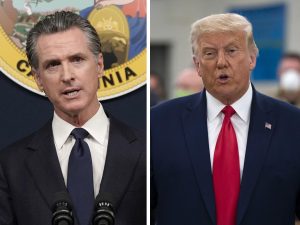



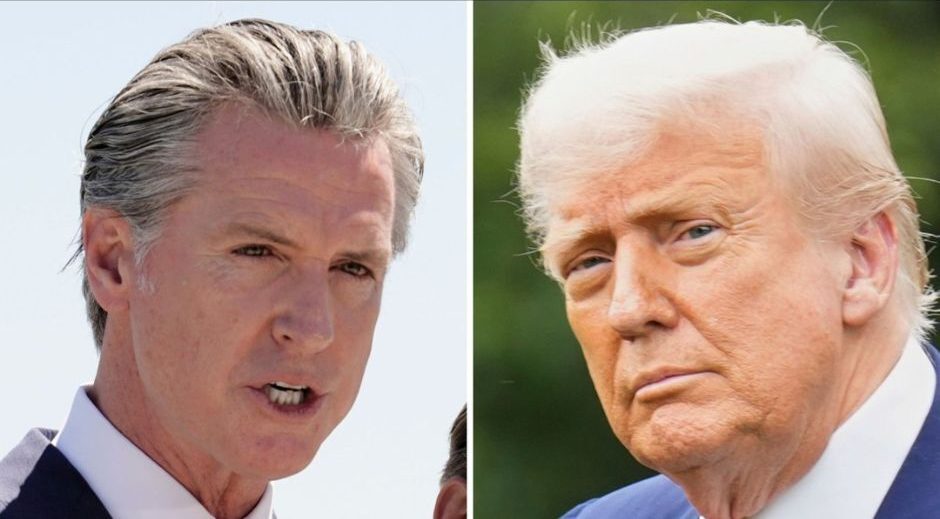
A federal judge has dismissed California’s lawsuit targeting former President Donald Trump’s use of tariffs, delivering a key procedural win for the Trump administration.
U.S. District Judge Jacqueline Scott Corley ruled that the case, brought by Governor Gavin Newsom and Attorney General Rob Bonta, was filed in the wrong court. Rather than allowing the lawsuit to move forward in the Northern District of California, Corley determined that trade-related cases of this nature must be handled by the U.S. Court of International Trade (CIT), a specialized federal court based in New York.
Instead of transferring the case, Corley chose to dismiss it outright—leaving California with the option to appeal the decision to the Ninth Circuit Court of Appeals.
The lawsuit was the first of its kind filed by a state against Trump’s controversial tariff regime. California officials argued that the former president overstepped his authority by imposing broad tariffs under the International Emergency Economic Powers Act (IEEPA) without congressional input.
Trump has defended the tariffs by declaring economic relationships with certain countries—particularly those tied to manufacturing, trade imbalances, or fentanyl trafficking—as national emergencies. His administration maintains that these declarations give the executive branch the power to impose tariffs unilaterally under IEEPA.
Judge Corley had previously indicated skepticism about whether her court had jurisdiction over the matter. Her final ruling confirmed that view, emphasizing that trade disputes of this kind are specifically reserved for the Court of International Trade.
The legal outcome adds to the broader debate over executive power and international trade, especially as lawsuits challenging Trump’s trade policies continue to make their way through the federal court system.
Just days prior, a separate court struck down some of Trump’s tariffs in a case brought by importers. However, most of those tariffs remain in place while the legal battles unfold.
While California’s case has been dismissed for now, it may not be the end of the road. State officials could still pursue the matter through appeals or by re-filing in the appropriate venue.

James Jenkins is a celebrated Pulitzer Prize-winning author whose work has reshaped the way readers think about social justice and human rights in America. Raised in Atlanta, Georgia, James grew up in a community that instilled in him both resilience and a strong sense of responsibility toward others. After studying political science and creative writing at Howard University, he worked as a journalist covering civil rights issues before dedicating himself fully to fiction. His novels are known for their sharp, empathetic portraits of marginalized communities and for weaving personal stories with broader political realities. Jenkins’s breakout novel, Shadows of Freedom, won national acclaim for its unflinching look at systemic inequality, while his more recent works explore themes of identity, resilience, and the fight for dignity in the face of oppression. Beyond his novels, James is an active public speaker, lecturing at universities and participating in nonprofit initiatives that support literacy and community empowerment. He believes that storytelling is a way to preserve history and inspire change. When not writing, James enjoys jazz music, mentoring young writers, and traveling with his family to explore cultures and stories around the world.