



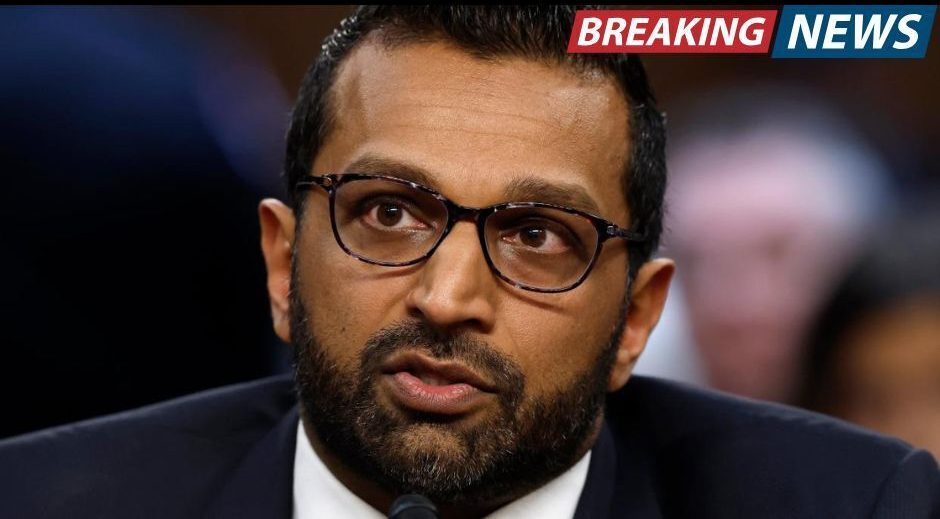
FBI Director Kash Patel delivered a blunt response this week to criticism from former FBI chief James Comey, who questioned Patel’s qualifications to lead the bureau alongside his deputy, Dan Bongino.
Comey, speaking on CNN, cast doubt on the duo’s ability to manage the nation’s top law enforcement agency, saying, “There’s nothing in their backgrounds that shows they’re ready for this kind of responsibility.” However, he added that he hoped career agents would help guide the bureau through what he described as uncertain leadership.
Patel, in an appearance on Special Report with Bret Baier, responded sharply to Comey’s comments—and to a separate controversy stemming from an Instagram photo Comey posted featuring the number “8647” spelled out with seashells. The image sparked speculation online, with some interpreting it as a veiled dig at former President Donald Trump (the 47th president). The number “86” is sometimes used as slang for “getting rid of,” leading to concerns the post was a political statement or worse.
Comey later clarified that the photo was not intended as a threat, saying he did not arrange the shells and that it was his wife’s idea to share the image. He stated he does not support or promote violence in any form.
Patel, however, was unsparing in his response.
“He can walk the beach and talk about seashells and conspiracies all he wants,” Patel said. “But let’s not forget who brought political propaganda into a federal court to justify surveillance of a presidential campaign. That’s his legacy.”
Patel also criticized the fallout from the Instagram post, claiming it triggered multiple copycat incidents that the FBI was forced to investigate, stretching already limited resources.
“I’ve had to reassign agents from cases involving drug trafficking, terrorism, and child exploitation just to deal with these social media threats,” Patel told Baier. “That’s the real-world impact of irresponsible behavior from someone who once held the highest position in federal law enforcement.”
He added, “If Comey wants to take shots at me, fine. But I’ve been living rent-free in his head for years. That’s on him.”
The dispute underscores ongoing tensions between past and current FBI leadership, especially as the agency remains a flashpoint in broader political debates.

James Jenkins is a celebrated Pulitzer Prize-winning author whose work has reshaped the way readers think about social justice and human rights in America. Raised in Atlanta, Georgia, James grew up in a community that instilled in him both resilience and a strong sense of responsibility toward others. After studying political science and creative writing at Howard University, he worked as a journalist covering civil rights issues before dedicating himself fully to fiction. His novels are known for their sharp, empathetic portraits of marginalized communities and for weaving personal stories with broader political realities. Jenkins’s breakout novel, Shadows of Freedom, won national acclaim for its unflinching look at systemic inequality, while his more recent works explore themes of identity, resilience, and the fight for dignity in the face of oppression. Beyond his novels, James is an active public speaker, lecturing at universities and participating in nonprofit initiatives that support literacy and community empowerment. He believes that storytelling is a way to preserve history and inspire change. When not writing, James enjoys jazz music, mentoring young writers, and traveling with his family to explore cultures and stories around the world.