
My brother called when I was in the security line at the airport to tell me he’d sold my farmhouse.
Not asked. Not warned. Just sold.
My suitcase had already disappeared down the conveyor belt, my passport was in my hand, and I was exactly two hours away from boarding a flight to Zurich—my first real vacation in four years. I still remember the exact grey tile pattern under my feet because that’s the kind of detail your brain locks onto when the ground gets pulled out from under you.
“I got three million for it,” Brandon said, sounding incredibly pleased with himself, like he expected a thank-you note. “Honestly, Clara, you should be happy. That place was just sitting there gathering dust anyway.”
I stepped out of line, ignoring the collective sigh of the crowd behind me.
“You sold my farmhouse?” I said, keeping my voice down but letting the anger drip through.
He laughed—that easy, annoying laugh he’s used since we were kids to blow off whatever trouble he’d caused. “Don’t be dramatic. You live in the city. You’re never even there.”
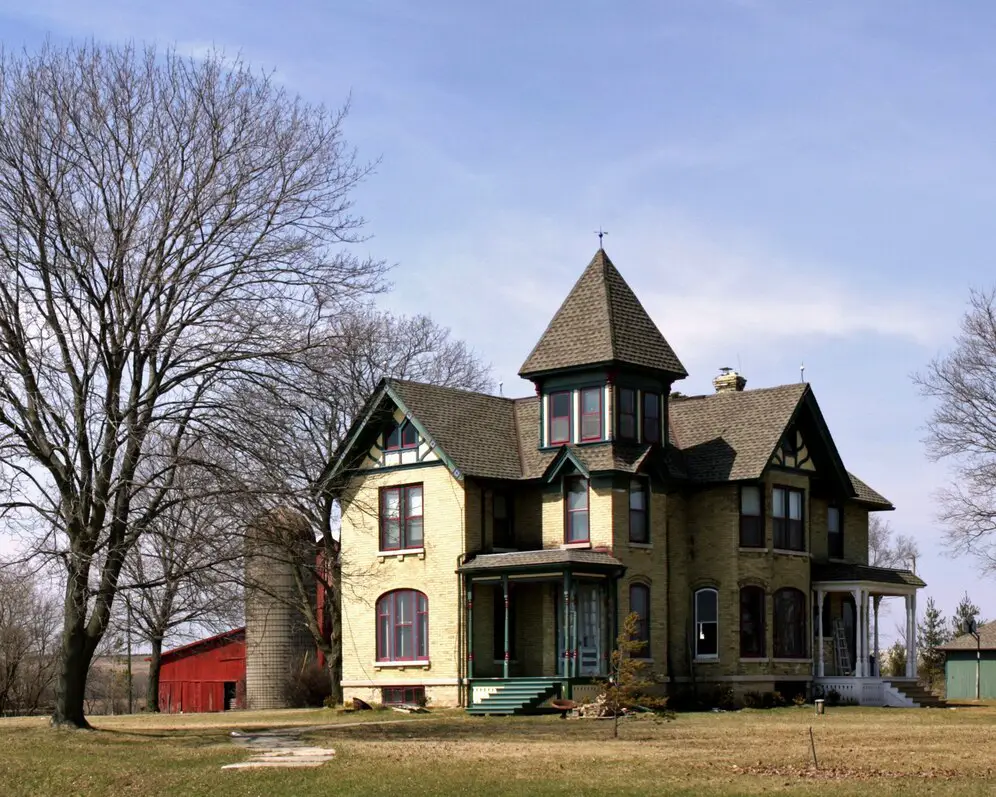
The property was actually worth $6.3 million. Not in some hypothetical market fantasy, but because it sat on eighty acres of restored apple orchards and prime lake-front land. My grandmother had left it specifically to me in her will. I had rebuilt the main house beam by beam after a fire nearly gutted it when I was twenty-six. I sourced the reclaimed lumber, tracked down local carpenters, and paid every tax bill myself. I also converted the old cider barn into a retreat for kids aging out of the foster system—a safe space for kids who had nowhere else to go.
To Brandon, it was just “Clara’s country hobby.”
To me, it was the only place that actually felt like home.
“Where is the money, Brandon?” I asked.
The silence on the line stretched so long I thought we’d dropped the call.
Then he said, “I spent it.”
My stomach dropped. “On what?”
“Tessa’s business. She needed a lifeline, Clara. Don’t be selfish. You’ve got other properties, you’ll survive.”
I canceled my flight right there. No yelling, no crying. Just a cold, quiet focus.
By noon, I was in a rental car, making the six-hour drive back home while managing three calls at once—my lawyer, my property manager, and the county recorder’s office. Brandon’s texts kept lighting up my dashboard:
Don’t make this weird.
The deal is done.
Family supports family.
I ignored every single one. By the time I pulled onto the gravel road leading to the farmhouse, my panic had turned into a very sharp, very quiet anger.
And then I saw it. A tacky “Sold” sign hammered into the grass near the driveway.
Next to it stood Brandon, his girlfriend Tessa, and some guy in a cheap suit holding a thick manila folder. Tessa was wearing giant sunglasses on a cloudy day, sporting the smug grin of someone who had already decided where she was going to put her new furniture.
Brandon threw his arms out when he saw my car. “See? No crisis. The buyer is happy, Tessa’s company is saved, everyone wins.”
I got out of the car, looked at the guy in the suit, looked at my beautiful house, and looked at the locked gate.
And I just started laughing. I couldn’t stop. It was that wild, hysterical laugh you get when something is so absurd your brain short-circuits.
Brandon’s smile vanished. “What’s so funny?”
I wiped my face. “What’s funny,” I said, “is that you just sold a house you don’t own, to a buyer who doesn’t exist, using a deed that expired six months ago.”
Tessa slid her sunglasses down. The man in the suit looked like he forgot how to breathe. For the first time all day, Brandon actually looked terrified.
He pointed at the folder. “I have papers.”
“I’m sure you do,” I said. “That’s the whole problem.”
Right on cue, my attorney, Evelyn, pulled up behind me. She got out of her car looking like a walking lawsuit, carrying the kind of quiet authority that makes guilty people start sweating immediately.
Brandon glared at her. “Why is she here?”
Evelyn ignored him and looked at the guy in the suit. “Mr. Keller, is it? The buyer?”
He gave a fast, nervous nod.
She tapped her tablet. “That’s odd. Keller Holdings was dissolved a year ago. And your broker’s license was suspended eight months ago for wire fraud.”
Tessa grabbed Brandon’s arm. “What is she talking about?”
“It means,” I said, “that your boyfriend got scammed while trying to scam me.”
“I didn’t commit fraud!” Brandon yelled.
Evelyn handed him the actual, current deed.
Here is what Brandon didn’t bother to check: six months ago, after he’d “borrowed” some of my property tax files under the guise of helping with family estate planning, I quietly moved the farmhouse into a protected charitable trust. I did it because my grandmother’s old lawyer warned me that leaving prime real estate to one sibling usually invites this exact kind of family entitlement. The trust required three separate trustees, legal notices, and my physical signature to sell anything.
Brandon had none of that. He had an old photocopy of a deed, a terribly forged signature, and a massive ego.
The fake buyer, “Keller,” had convinced Brandon that he just needed to sign a power of attorney form. Brandon, who has never read a contract in his life, signed it and wired the three million dollars directly to Tessa’s “business partner’s” account. That partner had disappeared that morning with every dollar.
Tessa went white. “You said the money was safe.”
“You said your guy was a luxury investor!” Brandon snapped back.
Evelyn’s phone rang. She walked away, spoke for a second, and came back. “The county fraud unit is on their way. And Clara, the bank confirmed the wire went through a shell account owned by Tessa’s LLC.”
Tessa looked like she was going to throw up.
I looked at my brother. “You stole from me to impress a woman who was actively robbing you.”
Two sheriff’s cars pulled down the driveway. Brandon started talking at warp speed, rambling about “family misunderstandings” and how Grandma “meant for the house to be shared.”
I let him dig his own grave. Evelyn handed the deputies the trust papers, the fake authorization letter, and printed copies of the text messages where Brandon had happily confessed to spending my money.
The deputy read Brandon’s text out loud, completely deadpan: “I spent all the money on my girlfriend’s business. She needed it more than you.”
Even Tessa looked away.
“Keller” was arrested two days later at a motel near the state line. Tessa claimed she was a victim too, until the police found emails showing she’d explicitly pushed Brandon to use the outdated deed because “Clara won’t sue her own family.”
She guessed wrong. I don’t care about family optics when it comes to outright theft.
The farmhouse was never legally sold. The transaction was void from the start. But the fallout was massive. Brandon lost his job when his boss found out he used company databases to forge financial records for the deal. Tessa’s business accounts were frozen. And my parents called me, furious that I was “ruining his life.”
I didn’t argue. I just texted them a screenshot of Brandon’s text: She has too much anyway.
My mother didn’t call me for a week. When she finally did, she asked if I’d help pay his legal fees.
I laughed. “No. I’m done funding people who think my hard work is their bank account.”
Six months later, we hosted the summer retreat again. The kids painted the barn doors blue, planted new vegetables, and spent their nights around the bonfire trading stories.
This land was never just an asset to me. It was a promise to my grandmother that I’d protect it from the family members who only see dollar signs.
Brandon thought he’d sold my home out from under me. All he did was prove why he never should have had a key in the first place.

James Jenkins is a celebrated Pulitzer Prize-winning author whose work has reshaped the way readers think about social justice and human rights in America. Raised in Atlanta, Georgia, James grew up in a community that instilled in him both resilience and a strong sense of responsibility toward others. After studying political science and creative writing at Howard University, he worked as a journalist covering civil rights issues before dedicating himself fully to fiction. His novels are known for their sharp, empathetic portraits of marginalized communities and for weaving personal stories with broader political realities. Jenkins’s breakout novel, Shadows of Freedom, won national acclaim for its unflinching look at systemic inequality, while his more recent works explore themes of identity, resilience, and the fight for dignity in the face of oppression. Beyond his novels, James is an active public speaker, lecturing at universities and participating in nonprofit initiatives that support literacy and community empowerment. He believes that storytelling is a way to preserve history and inspire change. When not writing, James enjoys jazz music, mentoring young writers, and traveling with his family to explore cultures and stories around the world.