They actually showed up with a locksmith and a moving truck to steal my house. They had absolutely no clue what was waiting for them.
It was 8:00 AM on a Saturday, and it was that totally dead, crisp quiet you only get before anyone else is awake. I was standing in my foyer in flannel pajamas, holding a mug of black coffee, running on maybe four hours of sleep because I’d stayed up until 2:00 AM finishing a massive compliance report.
For context, I’m a senior contract compliance director for a medical corporation. My entire job is finding lies buried in the fine print. I basically get paid to trust no one and verify everything. So after a 60-hour week, all I wanted that morning was to be left alone.
Instead, someone started pounding on my front door like they were trying to break it down.
It wasn’t a normal knock or a delivery guy tapping. It was this violent, aggressive banging. I didn’t even have time to open my security app before I threw the door open, half-expecting a panicked neighbor.
What I actually saw felt like a sleep-deprivation hallucination.
My mother, Victoria, was standing on my porch in a beige cashmere sweater, hair perfectly blown out like she was going to brunch. She wasn’t looking at me; she was staring at my house—the whole front of it—with this cold, greedy look. Behind her stood my dad, Arthur, arms crossed in his golf clothes, visibly annoyed that this errand was cutting into his tee time.
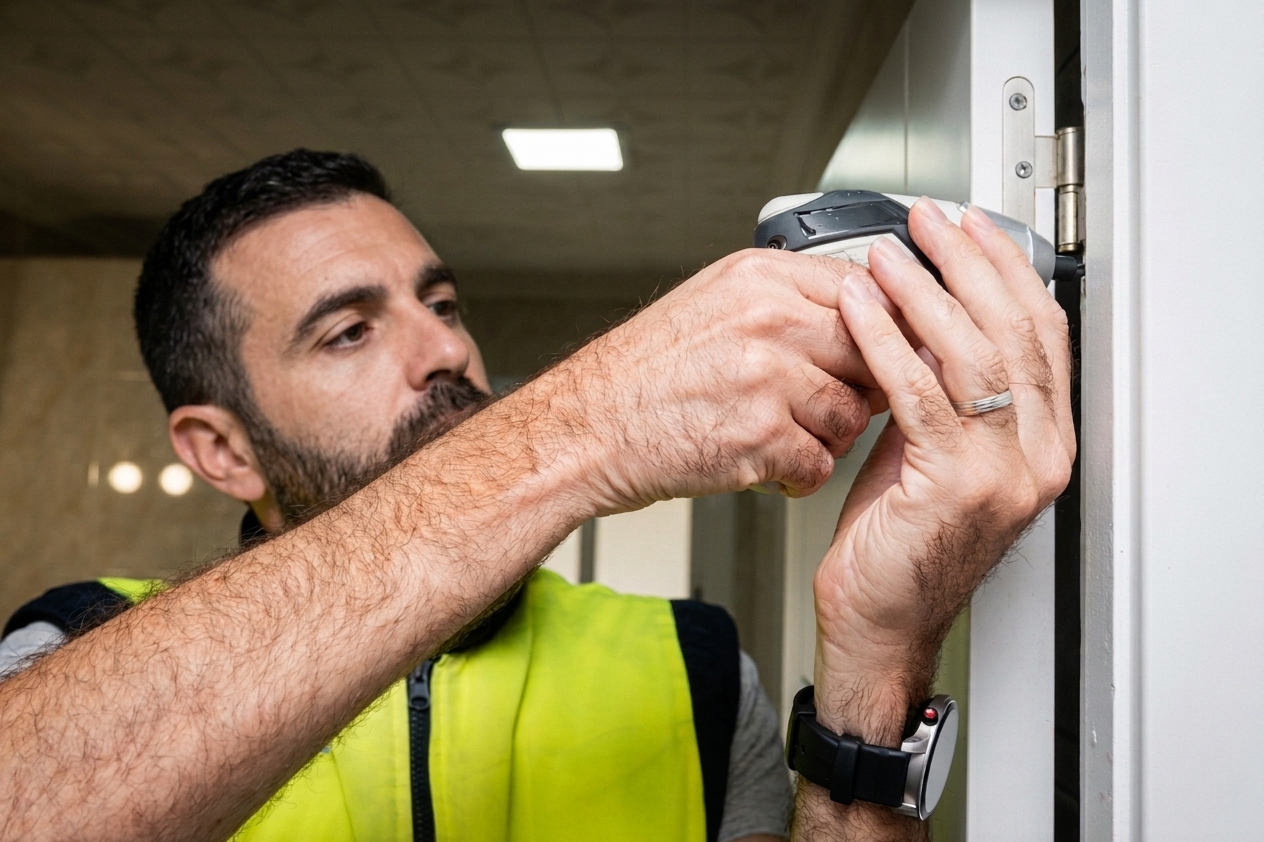
Next to them was a nervous-looking guy holding a tool bag with a local locksmith company logo on his shirt. And down my driveway, parked right past my gate, was a massive white moving truck, engine idling, with three guys leaning against the side smoking.
I gripped my coffee mug tighter.
“What are you doing here?” I asked. Total flat tone. No warmth.
My mother didn’t say hello or ask how I was. She just stepped forward and tried to push past me into my own house like I was a maid opening the door for her. I planted my shoulder against the frame and blocked her.
“Pack your bags, Maya,” she said, giving me a fake smile that didn’t reach her eyes. “You need to be out by noon.”
I blinked. “Excuse me?”
“Your sister and Trevor are getting married in two months,” she said, like she was explaining something incredibly obvious. “They need a proper estate to start their life. You’re just one person, Maya. You’re single. You don’t need five bedrooms and an acre of land. It’s selfish to hoard all this space while your sister struggles to find a venue. So your father and I are gifting this house to her. The movers are here to pack your things. You can find a nice little apartment downtown by Monday.”
I just stood there. I didn’t scream or cry. Honestly, dealing with their chaos for years had burned all the panic out of me a long time ago. When you catch a fraud at work, you don’t throw a tantrum; you just lock the account down.
I looked at the nervous locksmith, then back at my mom.
“Are you completely insane?” I asked, keeping my voice dangerously calm. “You brought a locksmith and a moving crew to illegally evict me from a $1.2 million home. A home I bought with a $250,000 cash down payment. A home that is solely, exclusively in my name.”
My dad scoffed loudly and stepped up, puffing his chest out to try and intimidate me like he used to when I was a kid. It used to work, but now it just looked sad.
“Don’t be dramatic and disrespectful, Maya,” he snapped, his face turning red. “We’re a family. Family wealth belongs to the family. You’ve been living here like a queen for three years while your sister struggles. It’s time to let Khloe have her turn. We raised you. You owe us. We make the decisions about family assets.”
He completely dismissed me, turning around to gesture to the locksmith. “Go ahead, Grady. Ignore her. Start with the front door. Drill out the deadbolt, then hit the patio doors. The movers are charging by the hour.”
Grady hesitated, looking between me—in my pajamas holding coffee—and my aggressive parents. He was clearly doing the math on how much legal trouble he was about to walk into.
“Ma’am,” he said to my mom, clearing his throat, “I really need to see proof of ownership before I drill out a high-security deadbolt on a place like this. This doesn’t feel right. I could lose my license.”
My mother waved her manicured hand like the law was just an inconvenience for people like her.
“I’m her mother,” she said. “We cosigned the mortgage. She could never afford this on her own. We have every legal right.” She dug through her purse, pulled out a crumpled piece of paper, and shoved it at his chest.
I recognized it instantly. It was a photocopied welcome brochure from a title company. A map to their office and a list of business hours. Nothing legal at all.
Grady stared at it, then looked up at her like she was crazy. “Ma’am, this is a map. This doesn’t prove you own anything. It’s directions to an office.”
Before my dad could start shouting at him, I took a slow sip of coffee and looked Grady dead in the eye.
“Do not touch my door,” I said slowly. “If you put a drill to that lock, I won’t just call the police. I’ll sue your business into the ground for attempted destruction of property, trespassing, and participating in an illegal eviction. I have four cameras recording this right now. My name is the only name on the deed.”
Grady immediately dropped his tool bag on the concrete and stepped back with his hands up. My dad looked like he wanted to break the door down himself, but watching them unravel in front of total strangers didn’t make me feel scared. It just made me feel cold.
To understand how my own parents felt entitled to try and steal a million-dollar house from me, you have to go back.
From the outside, my family looked like the perfect suburban success story. Dad played golf, Mom hosted charity events, and our lawn was immaculate. But inside, I wasn’t treated like a daughter; I was treated like an appliance—something that just needed to keep running quietly without maintenance.
Therapists call it a “glass child.” The kid who is healthy, capable, and low-maintenance, so they become invisible. All the emotional and financial energy goes to the dramatic sibling, while the capable one raises herself. That was me. The eldest, the responsible one. I learned early on never to ask for help with homework or new clothes because I already knew the answer would be no.
My younger sister, Khloe, was the golden child. She’s 26 now, beautiful, charismatic, and completely allergic to responsibility. My parents treated her like she was made of actual glass that would shatter if life ever asked anything of her.
If you want to know exactly where I stood, look at the staircase wall in my parents’ house. It’s a massive shrine of framed photos. One night during a tense holiday dinner, I actually counted them. There were 52 photos of Khloe—baby photos, school dances in designer dresses, vacations, the opening of a boutique she ran that failed in months. There were 14 photos of my brother, David, the quiet peacemaker.
And me? Two photos. One was a group shot from a Hawaii trip I paid for myself. The other was my college graduation picture—and in that one, I was half-hidden behind my dad’s shoulder with my eyes closed. Out of all the photos from that day, they picked the worst one to frame.
They didn’t care about my achievements unless they could use them.
The financial bleeding started the second I turned 18. I studied like crazy in high school, kept a perfect GPA, did every free extracurricular, and got into a top-tier finance program. When the acceptance letter came, I ran downstairs to show them. My dad barely looked up from his tablet, glanced at the tuition estimate, and slid the letter back across the counter.
“We can’t afford that,” he said. “We need to save the college fund for Khloe. She’s got a sensitive, artistic disposition. She can’t handle the stress of loans or working while studying like you can. You’re tough. You’ll figure it out.”
So I did. While my classmates went to parties, I took out massive student loans and worked three jobs. I waited tables until midnight, slept four hours, mopped library floors before morning classes, and tutored rich freshmen in calculus on weekends just to buy textbooks. I drove a rusted-out Honda Civic that rattled past 40 miles an hour and tracked every single dollar in a notebook, terrified of an overdraft fee.
Meanwhile, Khloe dropped out of a fully paid-for community college after one semester because it was “too stressful.” My parents didn’t cut her off; they bought her a brand new Mercedes to help her “find her path.”
I told myself that once I made it, I’d finally be free of them.
The real breaking point happened four years ago. I’d landed a good management job, was aggressively paying down my debt, and was finally building real savings. One rainy night, Khloe showed up at my apartment crying, mascara everywhere. Her car had died, she was about to lose her job, and she was drowning.
Within the hour, my phone was ringing off the hook. My mother was in full guilt-trip mode: “She’s your little sister, Maya. You make such good money. Please help your family. Just loan her enough for a reliable used car. She’ll pay you back. Be the bigger person.”
Against my better judgment, I transferred her $18,500. It was almost half my savings.
Two weeks later, I was scrolling Instagram on my couch when a photo popped up. It was Khloe, standing on the deck of a yacht in Santorini, Greece, holding a glass of champagne. The caption read: “Living my best life. Sometimes you just gotta treat yourself.”
I called my mother, hands shaking, demanding my money back.
She just sighed like I was being unreasonable. “Maya, don’t be so vindictive. Khloe’s been depressed. She needed a break. The money’s gone, sweetheart. You make plenty. Just let it go.”
That phone call was the exact moment the “good daughter” in me died. I didn’t scream. I just hung up and sat in the dark, realizing with total clarity that my success would never be celebrated in this family. It would only ever be harvested.
The next day, I booked a therapist who specialized in narcissistic family dynamics. She gave me one piece of advice that changed everything: stop arguing with them emotionally, because they feed on that reaction. Instead, keep a “ghost ledger”—a factual, timestamped record of everything, so you never doubt your own reality.
Being an auditor, I took that idea and ran with it. My ghost ledger became an encrypted spreadsheet on a password-protected hard drive. Dates, amounts, screenshots, every dollar taken, every holiday I was uninvited from, even the photo count on the staircase wall.
From that point on, the Bank of Maya was closed. I stopped paying for family dinners, stopped buying expensive gifts, and went full “gray rock”—flat, boring, and completely unresponsive to their manipulation. I poured all that energy into my career.
By 26, I was a senior compliance director making $210,000 a year plus bonuses. I lived frugally, invested aggressively, and eventually bought my dream home—a $1.2 million place with floor-to-ceiling windows and an acre of land. I put down $250,000 in cash. No co-signer. No guarantor. Just my name on the deed.
A stupid, hopeful part of me still invited them over for dinner after I moved in, thinking maybe seeing what I’d built would finally earn some respect.
It didn’t. It just made them greedy.
My mother walked through the doors, looked at the vaulted ceilings, and said, “It’s a bit flashy, don’t you think? Cold and unnecessarily large for a single woman. Honestly, think about how your sister’s going to feel, living in her cramped little apartment while you have all this. You should’ve thought about her feelings before buying something so arrogant.”
My dad just grunted and inspected the marble counters like he was looking for cracks. “The taxes alone will bleed you dry. You’re in over your head.”
I stood in my kitchen holding a glass of wine and felt absolutely nothing. It was the final click of a vault door closing.
That was the last time I let them into my life. For three years, I kept them at arm’s length. But narcissists don’t respect boundaries; they see a locked door as a challenge.
Three days before they showed up with the moving truck, I was in my kitchen cooking dinner when my phone buzzed. It was a voice memo Khloe had accidentally sent to the wrong family group chat.
“Oh my god, girls, you will not believe it,” her voice squealed through my speaker. “Mom and Dad are moving us into Maya’s estate this weekend! She’s been playing house long enough—time for a real family to use it. Mom’s literally going over there Saturday with a moving crew to kick that boring spinster out. I’m ripping out her ugly cabinets and painting everything blush pink. We’re doing our engagement party by her pool!”
I stood there with my dinner sizzling behind me, feeling a cold wave wash over me. This wasn’t just a petty thought; it was a concrete plan with moving trucks scheduled. My mother texted me seconds later: Maya, don’t listen to that, Khloe’s just stressed about the wedding. We were going to talk to you Sunday. Please don’t overreact. Call me.
I didn’t reply. I closed my laptop, sat down, and opened the ghost ledger. It was time to build a trap.
If I confronted them, they’d just deny it, gaslight me, and play the victims. I needed them to actually commit the crime. I needed them to show up.
So I spent the next two hours printing documents: 36 months of bank statements showing every mortgage payment coming from my personal account, my loan paperwork based entirely on my own income, the wire transfer for the down payment, and the certified county deed listing exactly one owner: me.
I put it all in a bright red folder.
Where did my dad’s delusion about “co-signing” even come from? It was honestly laughable. Three years earlier, on closing day, my car got a flat tire, so I asked them for a ride to the title company. They complained the entire drive. When we got there, the receptionist told them they couldn’t come into the signing room, but said if they signed the visitor log in the lobby, they could help themselves to the coffee machine.
My parents signed a guest book for free coffee. I went into the back room and signed a million-dollar mortgage. Over three years, in their heads, that guest book had somehow transformed into a legally binding co-sign agreement. They genuinely believed giving me a ride to the closing made them part owners.
But delusion doesn’t hold up against an auditor with receipts.
I needed one more thing to make sure the hammer landed with maximum force: law enforcement.
I called Sheriff David, a family friend I’d known since I was 16. He’d written my college recommendation letters and actually showed up to my graduation when my own parents claimed they were “too busy” with a fake crisis of Khloe’s. He knew exactly what I’d sacrificed to get here.
We met Thursday morning at a diner. I slid my phone across the table and played the voice memo. He listened, his jaw tightening, and looked at me with a mix of anger and concern.
“What do you want to do, Maya?” he asked. “I can go over there right now and put the fear of God into them.”
“No,” I said. “If you warn them, my mother will spin it into a misunderstanding, cry fake tears, and I’ll be the villain again. I want them to show up. I want them to actually try it. And then I want to crush them with reality in broad daylight.”
He let out a slow breath and gave a grim smile. “Okay. You’re the auditor. How do we set this up?”
I opened the red folder and walked him through the bank statements, the deed, and the ridiculous story of the visitor log. He reviewed it all carefully.
“This is bulletproof,” he said. “They don’t have a leg to stand on.”
“Will you be there Saturday?” I asked.
“Just give me the signal, kid. I’ll park two blocks out. When they make their move, I’ll come down hard.”
Friday night, I did a full security sweep—checked every camera, wiped the lenses, and confirmed the cloud backups were running. I walked through my rooms, thinking about every diner shift and every 5:00 AM library floor I’d mopped to get this place. I pulled up the ghost ledger one last time, looking at the stolen $18,500, the ruined holidays, and the endless demands to shrink myself for Khloe. I realized I wasn’t just preparing for a legal fight; I was mourning the death of the family I’d spent 29 years hoping would finally care about me. I let myself grieve for exactly ten minutes, then closed the laptop. The audit was complete.
Which brings us back to Saturday morning, with my dad’s finger inches from my face, threatening to push me out of my own doorway.
Right as he shifted his weight to shove past me, a siren cut through the quiet street. Red and blue lights bounced off my windows and painted the side of the moving truck. A county cruiser turned hard into my driveway, blocking the truck’s exit.
My dad’s face went completely white. My mother gasped, her hand flying to her mouth.
Sheriff David stepped out in full uniform and walked up the driveway slowly. The moving crew immediately stood up straight, dropped their cigarettes, and started backing toward their truck. Grady dropped his tool bag and put his hands up, wanting no part of this.
I stayed on my porch, sipping my coffee, and said nothing.
My mother switched masks instantly. The screaming, entitled woman from 30 seconds ago vanished, replaced by the polished suburban mom. She smoothed her sweater and stepped toward the sheriff.
“Good morning, Officer,” she said, her voice dripping with fake sweetness. “So sorry you were called out. This is just a silly family misunderstanding. My daughter’s overreacting a bit—you know how stressful wedding planning is. We just need a few minutes to talk sense into her.”
David didn’t even slow down. He walked right past her and planted himself between my parents and my porch.
“It’s Sheriff, ma’am,” he corrected, his voice flat and cold. “And I’m not here for a misunderstanding. I’m responding to a reported theft in progress and an attempted illegal eviction at a private residence.”
Her smile cracked. “Theft? That’s ridiculous. We’re her parents. We own this house. We’re simply transferring it to our other daughter.”
My dad puffed his chest out, trying to reclaim some authority. “Now listen here, Sheriff, we don’t appreciate the accusation. We co-signed the paperwork for this estate three years ago. We have every right to be standing here.”
David turned to him slowly. “You co-signed the paperwork?”
“Yes. Absolutely. We were there at the title company. We signed the documents.”
David reached into his shirt pocket and pulled out a folded, stamped document. “That’s fascinating, sir, because I personally pulled the county records for this address yesterday.” He held it up so the sun caught the official seal. “According to the official record, this property has exactly one registered owner. Her name is Maya. No co-signers. No guarantors. No secondary parties listed anywhere.”
My dad’s face turned crimson. “That’s impossible. The county made a mistake. We were there.”
David didn’t even blink. He pulled out a second document—the mortgage summary. “Sir, Maya qualified for this mortgage entirely on her own. Two hundred ten thousand a year in verified income. Two hundred fifty thousand cash down, wired directly from her own account. The bank didn’t need your signature. Frankly, she makes more money than you do, and her credit’s flawless.”
The silence that followed was total. My mother’s mouth hung wide open.
Then David delivered the finishing blow.
“I also had a detective contact the title company yesterday. They pulled their security archives from the day of closing.” He looked directly at my dad. “Do you want to know what you actually signed, sir?”
My dad just stared, the arrogance draining out of his eyes.
“You signed the visitor log in the front lobby,” David said. “The receptionist asked you to sign a guest book so you could get free coffee while you waited. You didn’t sign a legal contract. You signed a sign-in sheet for a latte. And based on that, you brought a locksmith to break into a home you have zero legal claim to.”
I had to raise my coffee mug just to hide the massive smile spreading across my face. For three years, he’d held this fake power over me as the generous benefactor who “made it all possible”—and his entire contribution had been a free vanilla latte.
My mother grabbed my dad’s arm, her nails digging in. “Arthur, tell him he’s wrong. Do something.”
But he couldn’t speak. His ego had been publicly punctured beyond repair.
“Ma’am,” David said, turning to her, “attempting to claim ownership of a property you have no legal right to, and bringing unauthorized personnel to breach its security, constitutes attempted real estate fraud and illegal eviction. Those are felony charges.”
My mother stumbled backward like she’d been slapped. “Felony? No, no, she’s my daughter, she’d never press charges against her own mother. We’re family. Maya, please.”
I finally stepped off the porch, walked down, stood beside the sheriff, and looked her right in the eye.
“Family,” I repeated. “Family doesn’t show up at 8:00 AM with a drill and a moving truck to make their daughter homeless. Family doesn’t plot behind her back to hand her house to a 26-year-old who can’t even pay her own car loan. You stopped being my family the second you decided my life was just a bank account for Khloe to drain.”
That was enough for Grady. He zipped his bag shut. “I’m out of here. I don’t do illegal evictions, and I definitely don’t touch felony fraud.” He was in his van and gone in under a minute. The moving crew didn’t even bother asking about their hourly rate; they just reversed out of the cul-de-sac and cleared out.
My parents stood there completely alone. No crew, no locksmith, no delusion left standing.
“You heard the homeowner,” David said. “This is a verbal trespass warning. You have 60 seconds to leave this property, and if you ever set foot on it again without written permission, I will personally have you arrested.”
My dad grabbed my mother’s arm without another word. They walked to their car in total silence and drove away.
I stood there and felt the weight that had been around my neck for 29 years finally snap.
Of course, it didn’t end right there. Narcissists don’t just accept defeat. Within days, the smear campaign started. My aunt left me a five-minute voicemail calling me a cold, heartless monster for calling the cops on my own mother. My brother David sent a wall of texts blaming me for embarrassing our parents, completely ignoring what they’d actually tried to do to me. I didn’t reply to any of it. I just screenshotted everything and filed it into the ghost ledger.
Then, 18 days later, my mother made one final, catastrophic mistake. Desperate, because Khloe’s lease was running out and she had nowhere to go, Victoria drove to the county precinct and filed a sworn police report against me. She claimed I’d fraudulently altered the deed to cut them out after they’ve “generously” paid the down payment in cash.
She had no idea that the detective taking her statement, Detective Ganon, had been trained by Sheriff David—who had already filed his own detailed report on the Saturday incident, including the now-legendary visitor log story.
Ganon let her talk for 45 minutes, handed her tissues, and nodded sympathetically. Then, once she signed the sworn statement, he closed the folder and asked, “Do you have a single receipt proving you paid that down payment?”
“No,” she admitted. “It was cash. A verbal agreement. But I’m her mother, you have to believe me.”
He turned his monitor around so she could see Sheriff David’s original incident report. “I don’t believe you, Victoria. Because I have Maya’s wire transfer, the certified deed, and a report detailing your attempted illegal eviction based on a coffee shop guest book. What you just did is sign a sworn statement full of provable lies to open a criminal investigation. That’s a felony.”
My mother ran out of that precinct in a complete panic.
Word travels fast in a small town, and the gossip eventually reached Trevor, Khloe’s fiancé. Hearing that his future mother-in-law had nearly been charged with fraud over a house dispute made him start asking hard questions about Khloe’s actual finances. When she finally cracked under pressure, the truth came out: she was $90,000 in credit card debt, funding her entire lifestyle on cards she couldn’t pay down, banking on moving into my house rent-free to hide it all until after the wedding.
Trevor called off the engagement that same night and left the state.
Khloe had to move back into our parents’ basement with her debt and no plan. Eventually, she took a job working mornings at a coffee shop just to start chipping away at what she owed.
It’s been six months since that Saturday morning. I’m sitting on my patio right now, watching the sky turn orange, with my rescue German Shepherd, Duke, resting his head on my lap. I adopted him three months ago. He’s the most loyal thing that’s ever been in my life, and he’s never once asked me for a dime.
People love to say blood is thicker than water, or that family means unconditional forgiveness. I learned the hard way that respect and peace are worth way more than a shared last name.
My ghost ledger is officially closed. And for the first time in 29 years, this house—every wall, every window, every hard-earned inch of it—is finally, completely mine.

James Jenkins is a celebrated Pulitzer Prize-winning author whose work has reshaped the way readers think about social justice and human rights in America. Raised in Atlanta, Georgia, James grew up in a community that instilled in him both resilience and a strong sense of responsibility toward others. After studying political science and creative writing at Howard University, he worked as a journalist covering civil rights issues before dedicating himself fully to fiction. His novels are known for their sharp, empathetic portraits of marginalized communities and for weaving personal stories with broader political realities. Jenkins’s breakout novel, Shadows of Freedom, won national acclaim for its unflinching look at systemic inequality, while his more recent works explore themes of identity, resilience, and the fight for dignity in the face of oppression. Beyond his novels, James is an active public speaker, lecturing at universities and participating in nonprofit initiatives that support literacy and community empowerment. He believes that storytelling is a way to preserve history and inspire change. When not writing, James enjoys jazz music, mentoring young writers, and traveling with his family to explore cultures and stories around the world.