
The Pouch
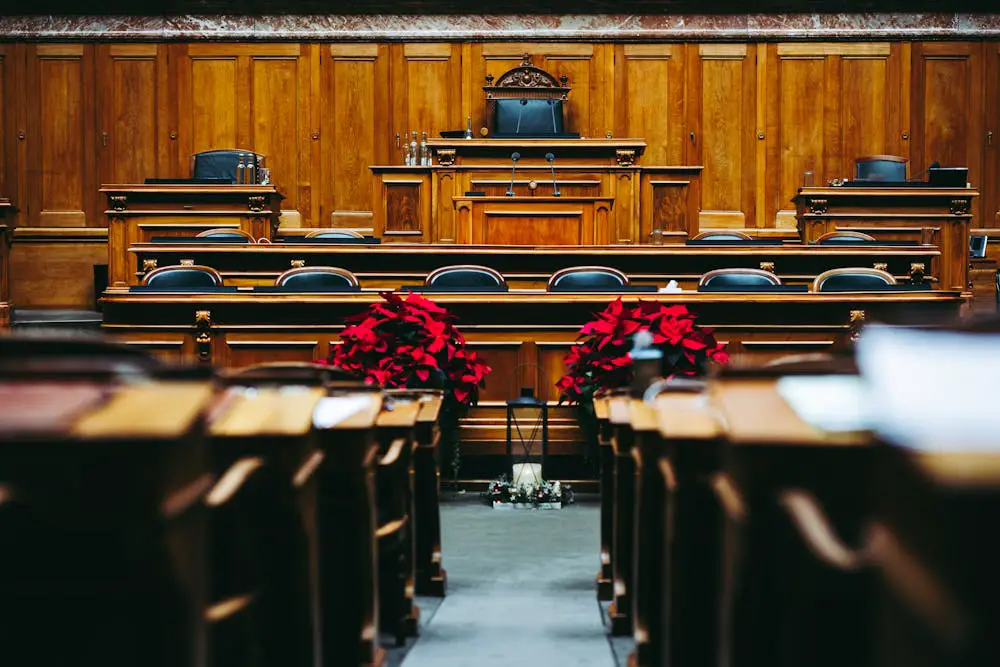
I uncuffed an old criminal, and the second I saw his arm, every sound in the courtroom disappeared.
His sleeve had ridden up just enough to expose a faded military tattoo on his left bicep. The ink had turned muddy over the years, the edges blurred by age, but I knew exactly what I was looking at. The 101st Airborne Division. The Screaming Eagles. And under it, the numbers 3/187.
My father’s unit.
For a moment I forgot where I was. I forgot the judge, the prosecutor, the defendant line, the fluorescent lights, the stale courthouse air, all of it. I was back in my mother’s living room at nine years old, standing under a framed photo of a young soldier with my eyes and somebody else’s smile.
David Johnson. Killed in action on May 20, 1969, on Dong Ap Bia Mountain in Vietnam. Hamburger Hill. I never knew him. He died three months before I was born. Everything I knew about him came from my mother’s stories, a few letters she kept folded in a tin box, and the military patch she had framed next to his photograph like it was the closest thing she had to a body she could still speak to. That patch had those same numbers. 3rd Battalion, 187th Infantry Regiment.
My hand was still around the old man’s wrist when he glanced back and said, “Officer, the cuffs are off.”
But I couldn’t let go.
I heard my own voice coming out thin and strained. “That tattoo. The 101st. Third Battalion. Where were you stationed?”
His tired eyes sharpened in a way that made him look twenty years younger and a hundred years sadder.
“Vietnam,” he said.
My throat tightened. “What year?”
“Sixty-nine to seventy-one.”
“Hamburger Hill?”
The old man went rigid. “Yes.”
“My father was there,” I said. “Specialist David Johnson.”
He stared at me so hard I thought he might stop breathing. “David Johnson?” he repeated.
“Yes.”
Then came the words that made the room fall completely silent.
“Are you the baby?” he asked.
I felt my stomach drop. “What did you say?”
“Are you Marcus?”
The judge had stopped speaking. The prosecutor lowered his file. Even the clerk’s typing had stopped.
“Yes,” I said slowly. “I’m Marcus.”
The old man closed his eyes, and when he opened them again, they were wet. “I was with him,” he whispered. “I was with your father when he died.”
I should have stepped back. I should have restored order, followed procedure, done my job. Instead I stood there like a son hearing his father’s name from a ghost.
Judge Robinson cleared his throat. “Mr. Johnson, do we need to take a recess?”
I looked toward the bench, embarrassed by the tears burning behind my eyes. “I’m sorry, Your Honor. I…”
But the defendant interrupted. “Please,” he said, voice trembling. “Please don’t send me away before I say this.”
The entire courtroom held still.
Judge Robinson studied him for a long second, then looked at me. “Five minutes,” he said quietly. “Officer Ruiz, clear the gallery except counsel.”
That was unusual, maybe improper, but I think the judge could see that this was no ordinary outburst. Within a minute the room had emptied down to the judge, the prosecutor, the public defender, me, and the old man standing at the rail with his wrists red from the cuffs.
He reached slowly under his shirt.
Instinct kicked in and I grabbed his forearm, thinking weapon, thinking contraband, thinking risk. He winced.
“It’s not that,” he said. “It’s just, I kept it close. All these years, I kept it close.”
His fingers shook as he pulled a small leather pouch from a cord around his neck. It was dark with age and sweat, the edges cracked, the stitching nearly gone. He looked at me with an expression I had never seen on a defendant before. Not fear. Burden.
“He gave me this,” James Patterson said. “For your mother. For you. I swear to God I tried.”
My legs felt weak. “What is it?”
He extended the pouch toward me, then hesitated as though it had gained weight in his hands over fifty-five years.
“Your father was my best friend over there,” he said. “He saved my life twice before the hill. The day he died, he did it a third time.”
The public defender sat down slowly, notepad forgotten. Even the prosecutor had the look of a man who knew the law had just been shoved aside by something older and more powerful.
I took the pouch.
Inside were two things. A set of dented dog tags, dark with tarnish. And a letter folded so many times it looked like cloth.
My breath caught in my chest. The dog tags read DAVID JOHNSON. I had never seen my father’s actual dog tags before. The Army had sent my mother paperwork, medals, a citation, but no one had ever explained why some personal items never came home. She had accepted that war swallowed things. War, apparently, had handed them to a homeless man instead.
My fingers trembled as I looked at the letter. On the outside, in faded ink, were three words.
For Anna and Marcus.
Anna was my mother.
I could barely speak. “How do you know my mother’s name?”
James let out a long, uneven breath. “Because your father said it every night before he tried to sleep.”
No one spoke after that. The judge leaned back and folded his hands.
I looked at the letter and then at James. “Why didn’t you deliver this?”
That was the question that changed the whole room.
James’s face folded inward with shame. “Because I came home broken,” he said. “And by the time I was well enough to try, everything had already gone wrong.”
He asked if he could sit. Judge Robinson nodded. James lowered himself into a chair like every joint in his body had been rusted by grief.
“David and I met in training,” he began. “Fort Campbell. He was loud, impossible not to like, and he talked about your mother like she was sunlight. Most guys over there tried not to talk about home too much. It hurt too much. Not David. He talked about home because he was fighting to get back to it.”
I stared at him, trying to build a picture of my father from this stranger’s memory.
“He knew Anna was pregnant,” James continued. “He used to keep her picture tucked inside a plastic sleeve in his helmet liner. Blonde hair, blue dress, standing by a car. He had another little paper folded behind the photo. A list of baby names.”
A strange sound escaped me, something between a laugh and a sob. My mother had once told me she and my father argued for weeks about names. She wanted Michael. He wanted Marcus, after his grandfather.
James saw the look on my face and nodded. “Yeah. That sounds right. He said if the baby was a boy, he was fighting for Marcus.”
I sat down too because I no longer trusted my knees.
James swallowed hard. “On May twentieth our company took heavy fire near the slope. You hear people say things about Hamburger Hill like it was one battle. It wasn’t one thing. It was heat, mud, confusion, screaming, artillery, men moving ten feet and losing half of them. We were pinned down in a patch of torn earth and elephant grass. David was next to me.”
His eyes went somewhere far away.
“There was incoming from above. I was hit in the leg. Couldn’t get footing. Thought I was done. David came back for me when he should have kept moving. He dragged me behind a log while rounds were cracking through branches over our heads. I told him to leave me. He told me to shut up because he had a son on the way and he was going home to teach that boy how to throw a football.”
I covered my mouth.
James continued in a voice so low we all had to lean in to hear him. “Then a blast hit close. Dirt everywhere. Ears ringing. I couldn’t see. David was still upright somehow, still trying to pull me. He pushed something into my hand.” He pointed to the pouch. “That. He said, if I don’t make it, get this to Anna. Tell her I was thinking of her. Tell my son I knew his name.”
My vision blurred. “What happened then?”
James closed his eyes. “He took the fire meant for me.”
The room went silent again.
“He fell right there,” James said. “I crawled to him. He was still breathing for a few seconds. He told me not to let the letter get lost. Told me not to let his boy grow up thinking he’d been forgotten. Then…”
James couldn’t finish. He pressed the heel of his hand into his eye.
I looked down at the letter in my palm and felt something old and locked inside me begin to crack. My entire life I had believed my father died a distant military death, faceless and sealed inside official language. Killed in action. Heroic service. Deepest condolences. Those words had weight, but they didn’t breathe. They didn’t sound like a man talking about football and baby names.
Now he was suddenly real. Real enough to hand a pouch to a friend. Real enough to say my name.
The judge finally spoke. “Mr. Patterson,” he said carefully, “you said you tried to deliver this. Explain.”
James nodded without looking up. “I was evacuated out. Spent months in a hospital. Shrapnel in my leg, infection, then stateside treatment. By the time I got discharged, I was a mess. Nightmares, drinking, pills. Back then nobody called it trauma the way they do now. They just called you weak or crazy and sent you home.”
His laugh was dry and brutal. “So I went home weak and crazy.”
He said he came to Miami in 1971 because he found a forwarding address in David’s things. He saved bus money, slept in terminals, carried the pouch the whole way. When he got to the address on the envelope, my mother no longer lived there.
“A neighbor told me she’d moved after the funeral,” he said. “Said her family had taken her north for a while because she wasn’t doing well. I wrote the new address down.”
He paused. “I lost it that same night when I got rolled in an alley and beaten for what little money I had.”
The prosecutor shifted in his seat. The public defender looked like she wanted to cry.
“I still had the pouch,” James said. “I tied it under my shirt after that. I never lost the pouch. But I lost the address.”
“So why not contact the Army?” I asked, the anger surfacing before I could stop it. “Why not search? Why not send it to the newspaper? Why not do something?”
James took that blow without flinching. “Because every year after that I sank lower,” he said. “I drank. I worked odd jobs. I got arrested. I got clean. I relapsed. I told myself I’d look tomorrow, then next month, then next year when I had enough money, enough sense, enough dignity to knock on a widow’s door and tell her I’d failed the dead man who trusted me.”
His voice broke. “Then one day it had been twenty years. Then thirty. Then forty. After that, shame does something ugly. It tells you it’s too late to do the right thing because now the pain you cause will be even worse.”
I wanted to hate him for that. Part of me did. Because my mother died eight years earlier without ever seeing that letter. She had spent a lifetime loving a man whose last words to her were sealed in a pouch around a stranger’s neck. The cruelty of that made my hands shake.
But looking at James, I also saw a man who had never forgiven himself for surviving where my father did not.
Judge Robinson asked softly, “Why steal medicine?”
James wiped his face. “For my wife.”
That surprised everyone, including me.
“You’re married?” the public defender asked.
“Was,” he said. “Lena. We weren’t legally married, but after twenty-three years I don’t know what else to call her. She has congestive heart failure. We live in a room behind an old auto shop when they let us. She ran out of medication three days ago. I had forty-two dollars. Needed one hundred thirty-one. I asked for help. No one gave it. I stole the rest.”
The prosecutor looked down at his file as if the paper had become hard to read.
No one said anything for a long moment.
Then Judge Robinson turned to me. “Mr. Johnson,” he said, “you appear to be the only person in this room capable of reading that letter right now. Sit down.”
I sat.
The paper was so fragile I was afraid it would fall apart in my hands. I unfolded it carefully, one crease at a time. My father’s handwriting slanted sharply to the right. It was young handwriting. Strong. Impatient.
Anna,
If this gets to you, then something went wrong, and I am sorry for that before anything else. I am sorrier than these words can say.
The letters blurred immediately. I had to blink until the lines steadied. I kept reading.
I hope you never have to read this, but they told us before coming up here to write what matters. What matters is you. What matters is our baby. I know he is a boy. I don’t care what your mother says. Name him Marcus if you still have room in your heart for my stubbornness.
A sound broke out of me before I could stop it. James bowed his head.
The letter went on.
Tell him I was not afraid of being his father. I was afraid of missing it. Tell him I wanted to teach him how to shave and drive and hold his ground when life gets ugly. Tell him I loved him before I saw his face.
I had to stop there because I couldn’t breathe.
My father had loved me before I existed to him except as hope. All those years, some ugly little part of me had believed a dead man could not truly belong to me. Dead fathers became symbols. Legends. Obligations. But not flesh. Not tenderness. And yet here he was on paper, worrying about whether I’d know I was wanted.
I forced myself to keep reading.
He wrote to my mother that if he did not come home, she should not let grief bury her alive. He wrote that she should laugh again without guilt. He wrote that if another man one day treated her and the baby with kindness, he wanted her to choose life over loyalty to the dead. At the bottom was one more line.
James will bring this if I can’t.
I lowered the letter and stared at the old man across from me. He had failed in the worst way possible. And yet he had also carried my father’s last words for fifty-five years without ever throwing them away, pawning them, losing them, or pretending they meant nothing.
“Did my mother ever know your name?” I asked.
James shook his head. “No.”
I folded the letter with desperate care. “She died not knowing this existed.”
His face crumpled. “I know.”
The anger in me rose hot and immediate. “Do you?” I snapped. “Do you know what that means? She sat by that picture every Memorial Day. She kept his letters under her bed. She never remarried. She never stopped waiting for some kind of last word. You had it. You had it all those years.”
James accepted every word like a sentence. “You’re right,” he said. “I did.”
That answer did more to break me than any excuse could have. Because he wasn’t defending himself. He was confessing.
Judge Robinson leaned forward. “Mr. Patterson,” he said, “do you understand the gravity of what you’re admitting?”
James nodded. “Every day since 1969.”
The courtroom stayed quiet for a long time. Then something happened I still think about. The prosecutor, who had asked for sentencing ten minutes earlier over eighty-nine dollars in stolen medicine, stood up and said, “Your Honor, the State is willing to dismiss in the interests of justice.”
The judge looked at the public defender. She nodded. “Defense joins.”
Judge Robinson tapped his pen once and said, “Charge dismissed.”
James didn’t react at first. I don’t think he had expected mercy from any institution ever again. Then the judge added, “Mr. Patterson, that does not erase what happened in this room today. But it does mean you are not leaving in shackles.”
James began to cry in the open, like a man too old and too tired to hide it.
The hearing was over. Officially, everyone should have left. Nobody moved.
I looked at James and asked the question that had been growing in me since he mentioned the medicine. “Where is Lena?”
“At Mercy General,” he said. “Free clinic wing. They stabilized her but won’t hold her forever.”
I reached for my wallet before I had fully decided to. The prosecutor did the same. Then the public defender. Then Judge Robinson quietly opened his briefcase. No speeches. No grandstanding. Just four adults in a courtroom placing money on a table because the story had stopped being about law and become about debt. Moral debt. Human debt.
I drove James to the hospital myself after my shift. The ride there was mostly silent. He kept the empty pouch in his hands, turning it over while the dog tags and letter sat in my jacket pocket over my heart. At one red light he said, “You don’t owe me kindness because your father was a good man.”
I kept my eyes on the road. “This isn’t for you,” I said.
He nodded. “I figured.”
When we got to Mercy General, Lena was asleep in a narrow bed near the window. She was a small woman with silver hair wrapped in a scarf and a face worn thin by illness but softened by peace in sleep. The second she woke and saw James, she smiled like he was still the best thing she had ever found.
That smile hit me harder than I expected. This broken man had still been loved.
He introduced me awkwardly. “This is Marcus.”
Lena looked from him to me and seemed to understand immediately that this was no ordinary introduction. “The Marcus?” she asked.
James looked ashamed. “Yeah.”
She closed her eyes for a second and whispered something I couldn’t hear. Then she reached for my hand. “He told me about you every Christmas,” she said. “Said somewhere out there was a boy who should have had a letter before he had his first birthday.”
I looked at James. “You told her?”
“He told me everything,” Lena said before he could answer. “Including the parts that made him hate himself.”
I stood there holding a stranger’s hand and felt my anger shifting shape. Not disappearing. Never entirely that. But changing into something more complicated and more honest than pure rage, something that had room in it for a man who had carried a burden that had warped him and a woman who had loved him anyway, and a father who had trusted the wrong messenger and been right to trust him in all the ways that ultimately mattered.
I paid for the medication at the hospital pharmacy before I left that evening. The prosecutor called in a favor the following day and found a veterans’ outreach coordinator willing to take on James’s case. By the next morning, James had an appointment with the VA. By the end of the week, a caseworker had located records, emergency housing options, and a benefits advocate willing to push through the backlog. It turned out James had never properly completed half the paperwork that might have helped him decades earlier, forms that had seemed too complicated or too humiliating or simply too permanent a record of a self he had been ashamed of. The advocate was patient with him. Lena went with him to every appointment.
I went with them to the first one. Not because James needed a handler, but because I needed to be in the room when the government acknowledged that this man existed and had served and was owed something back. There was a particular satisfaction to watching the paperwork move forward on his behalf that I had not expected and could not entirely explain.
The prosecutor sent me a text two weeks later: Benefits approved. Housing placement in six weeks. Thought you’d want to know.
I read it standing in the parking lot of the courthouse after a late shift and felt something settle in my chest that I had not known was still unsettled.
I had the dog tags and the letter in a box at home by then, in a cedar box I bought specifically for the purpose, the kind that closes with a small brass clasp. The letter I had read three more times in private, once the night I brought it home, once a week later when I could do it without my hands shaking, and once the morning I drove out to the cemetery. I had not been to my mother’s grave as often as I should have in the years since she died. There is a particular guilt that comes with that absence, the understanding that the living have lives that pull them forward and the dead wait with infinite patience, which somehow makes the neglect worse rather than better.
I sat on the grass beside her headstone for a long time that morning. I read her the letter. All of it, beginning to end, including the last line, including the part where he said her name every night before sleep, including the part where he told her to choose life over loyalty to the dead.
She had not done that last thing. She had stayed loyal. She had kept the tin box and the framed patch and the photograph with his eyes in it, and she had raised me knowing his name and his unit and the date he died, and she had done all of it alone without ever knowing that somewhere, on a cord around a stranger’s neck, her husband’s last words to her were still intact.
I don’t know what I felt reading to her. Grief is not a single thing, and after fifty-five years a thing can accumulate dimensions you cannot see clearly until you are standing directly in front of them. I was sad for what she had missed. I was glad she had raised me to know him at all. I was angry at the distance between what she deserved and what she received, and I was quietly grateful that the distance had finally closed, even if it had closed eight years too late for her to feel it.
I left the letter and the dog tags in the cedar box at home.
They belonged there now, in the house where I kept the things that mattered, alongside my mother’s tin box and the photograph from the living room wall that I had taken down when she died and never been able to put back up anywhere because every wall I tried felt wrong.
I called James the following Sunday. Lena answered. She told me James was in the shower, which was already better news than I expected, and that the housing coordinator had confirmed their move-in date for the following month, and that James had been sleeping more consistently than he had in years.
“He talks about your father sometimes in the evenings,” she said. “More than he used to. I think something loosened.”
I thought about that word. Loosened.
“Tell him I called,” I said.
“I will. Marcus.” She paused. “Your daddy would be proud of you.”
I did not know what to say to that. I thanked her and hung up and sat with the phone in my hand for a moment, looking out the window at the evening coming in over the neighborhood.
My father died at twenty-two years old on a hill in Vietnam trying to drag his friend to safety. He never taught me how to shave or drive or hold my ground. He never threw a football with me in the yard. He never sat at the kitchen table and helped me with homework or told me what kind of man he had been when he was young and foolish and still becoming himself.
What he had done was write down the things he was afraid of losing, seal them in a letter, hand them to the best friend he had in a terrible place, and trust that they would find me.
They had found me.
Fifty-five years late, in a courtroom, from an old man with a borrowed tattoo and a stolen bottle of heart medication and a face full of guilt that had not been able to kill the one good instinct underneath it: don’t lose the pouch.
I got up and went to the cedar box and took out the dog tags. I held them in my palm for a while, feeling the weight and the worn edges and the particular cold of metal that has been kept for a long time. Then I put them back and closed the box and went to make dinner, because the evening was getting on and there was nothing more to be done with the day except live it, which is what my father had asked me to do before I was even born, and which I intended to keep doing for as long as I could.
He knew my name. He loved me before he saw my face.
After fifty-five years, that was finally mine.

Emily Johnson is a critically acclaimed essayist and novelist known for her thought-provoking works centered on feminism, women’s rights, and modern relationships. Born and raised in Portland, Oregon, Emily grew up with a deep love of books, often spending her afternoons at her local library. She went on to study literature and gender studies at UCLA, where she became deeply involved in activism and began publishing essays in campus journals. Her debut essay collection, Voices Unbound, struck a chord with readers nationwide for its fearless exploration of gender dynamics, identity, and the challenges faced by women in contemporary society. Emily later transitioned into fiction, writing novels that balance compelling storytelling with social commentary. Her protagonists are often strong, multidimensional women navigating love, ambition, and the struggles of everyday life, making her a favorite among readers who crave authentic, relatable narratives. Critics praise her ability to merge personal intimacy with universal themes. Off the page, Emily is an advocate for women in publishing, leading workshops that encourage young female writers to embrace their voices. She lives in Seattle with her partner and two rescue cats, where she continues to write, teach, and inspire a new generation of storytellers.