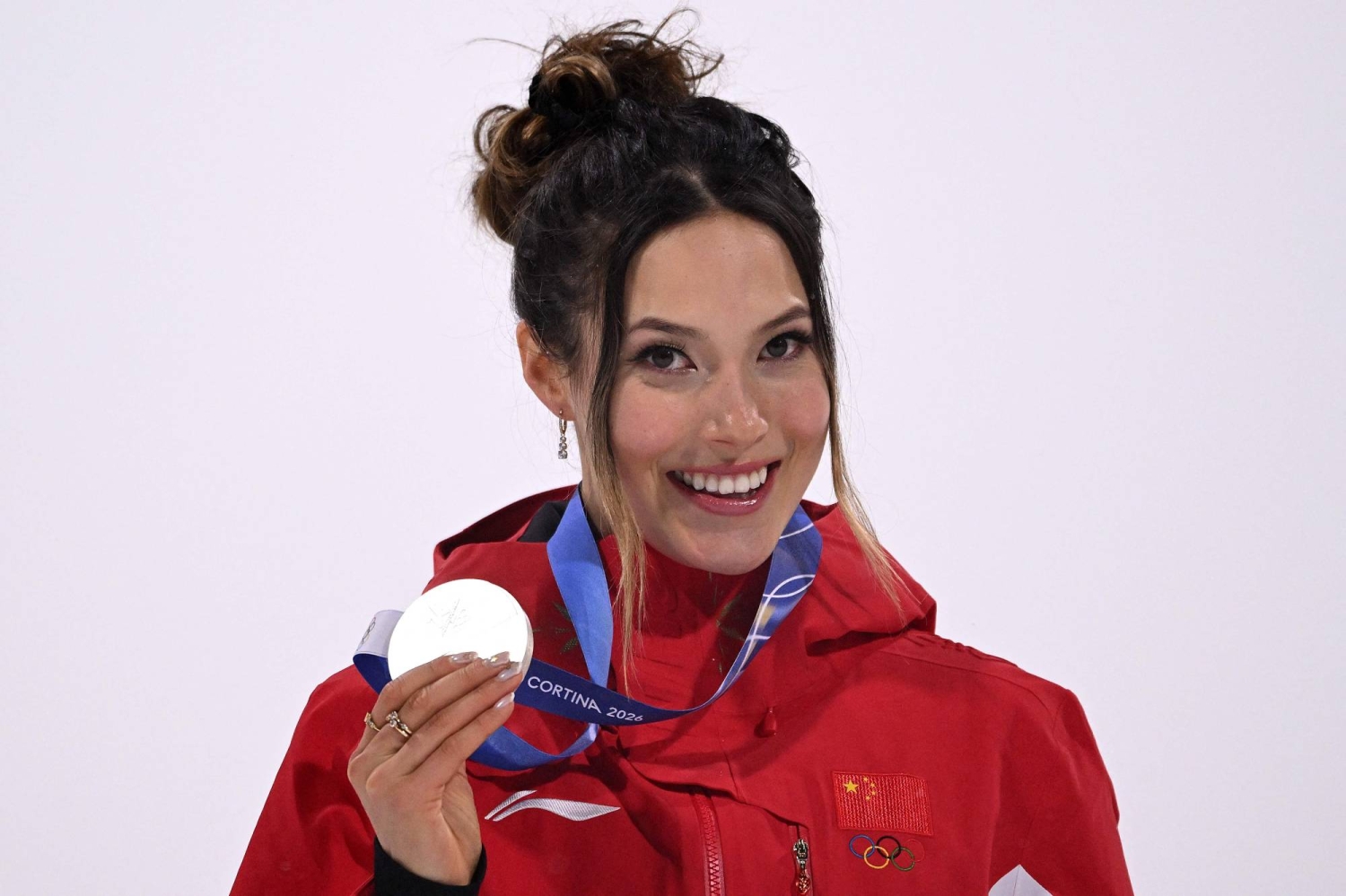
The 22-year-old freestyle skiing star, who was born in San Francisco, California, has once again found herself at the center of a political storm during the 2026 Winter Games in Milan. While Gu has been dominating headlines for her performances on the snow, questions about her national allegiance have resurfaced after comments from US Vice President JD Vance.
Gu, who represents China in international competition, has been in exceptional form at the Milano Games. She successfully qualified in the halfpipe earlier this week before advancing to the finals on 21 February, where she secured another gold medal to add to her growing list of achievements. Yet even as she stood atop the podium, attention quickly shifted from her athletic accomplishments to the long-running debate about her nationality.
The controversy intensified following remarks Vance made during an interview with Fox News on 17 February. When asked about Gu’s decision to compete for China rather than the United States, the Vice President said he believed that someone who grew up in America would naturally want to represent the country.
“I certainly think that somebody who grew up in the United States of America, who benefited from our education system, from the freedoms and liberties that make this country a great place, I would hope that they want to compete with the United States of America,” Vance said. He added that while he did not know what Gu’s official status “should be,” he personally would be supporting athletes who identify themselves as American.
“I’m going to root for American athletes,” he said. “I think part of that is people who identify themselves as Americans. That’s who I’m rooting for in this Olympics.”
His comments quickly circulated online and were put to Gu by reporters two days later, following her qualifying run. She was asked whether she felt like “a bit of a punching bag for a certain strand of American politics at the moment.”
“I do,” Gu responded candidly. “So many athletes compete for a different country. People only have a problem with me doing it because they kind of lump China into this monolithic entity, and they just hate China. So it’s not really about what they think it’s about.”
Gu suggested that the criticism aimed at her often extends beyond sports. In her view, the scrutiny reflects broader geopolitical tensions rather than a genuine concern about athletic representation. She also offered another explanation for why the debate persists.
“I win,” she said. “If I wasn’t doing well, I think they probably wouldn’t care as much, and that’s OK for me. People are entitled to their opinions.”
Her response struck a balance between defiance and pragmatism. Rather than engaging directly in a political argument, Gu appeared to frame the backlash as an inevitable byproduct of her success.
The issue of athletes switching national representation is not new. Across many sports, competitors choose to represent countries tied to their heritage, family background or personal identity. However, Gu’s case has drawn outsized attention because of the fraught political relationship between the United States and China.
Born to Yan Gu, a first-generation Chinese immigrant to the US, and an American father, Gu grew up in California and later attended Stanford University. Her multicultural upbringing has long been central to her identity. In previous interviews, she has described feeling equally connected to both countries and has said she hopes to build bridges between cultures rather than divide them.
Despite this, critics have repeatedly questioned her loyalty. For some, her choice to compete for China is viewed through a political lens, particularly at a time of heightened diplomatic tensions. Supporters, meanwhile, argue that athletes with dual heritage should be free to represent whichever nation they feel most connected to.
After winning gold in Milan, Gu addressed Vance’s remarks again in a conversation with USA TODAY. Rather than escalating the dispute, she responded with irony.
“I’m flattered. Thanks, JD! That’s sweet,” she said.
Her brief comment suggested she was unwilling to let political commentary overshadow her Olympic achievements.
The debate around Gu comes amid broader discussions about identity and representation in sport. National teams have long been symbols of pride, but in an increasingly globalized world, questions about who “belongs” to which country have grown more complex.
Gu also recently stepped into another political crossfire involving fellow American freeskier Hunter Hess. Hess had said he did not feel entirely comfortable representing the United States given the country’s current political climate. His remarks drew criticism from former President Donald Trump, who called him a “real loser” in a social media post.
Gu expressed sympathy for Hess, noting that athletes can become targets in political debates that extend far beyond their sport.
“As someone who’s been caught in the crossfire before, I feel sorry for the athletes,” she said.
Her comments underscored a recurring theme: that athletes often bear the brunt of national and political tensions despite primarily focusing on competition and performance.
For Gu, the spotlight has been both a blessing and a burden. Since bursting onto the international scene, she has become one of freestyle skiing’s most recognizable figures. Her technical skill, competitive composure and marketability have made her a global star. Yet her prominence has also ensured that every decision she makes — on or off the snow — is scrutinized.
At just 22, she has already navigated intense public debate about identity, citizenship and patriotism. Through it all, she has maintained that her choice to represent China reflects her personal background and sense of belonging.
In Milan, however, her focus has remained squarely on performance. Her gold medal in the halfpipe reaffirmed her dominance in the discipline and demonstrated that, regardless of political noise, she remains one of the sport’s premier talents.
As the Games continue, it is likely that discussion about Gu’s nationality will persist. But if her recent comments are any indication, she appears prepared to handle the attention with a mixture of resilience and humor.
For now, her results speak loudly. While critics debate allegiance and politicians weigh in from afar, Gu continues to deliver on the slopes — carving out victories and, in her own way, challenging conventional ideas about identity in modern sport.
Whether viewed as a lightning rod or a trailblazer, Eileen Gu’s story reflects the increasingly interconnected world of international athletics. And as she adds more medals to her name, the conversation around her is unlikely to fade anytime soon.