



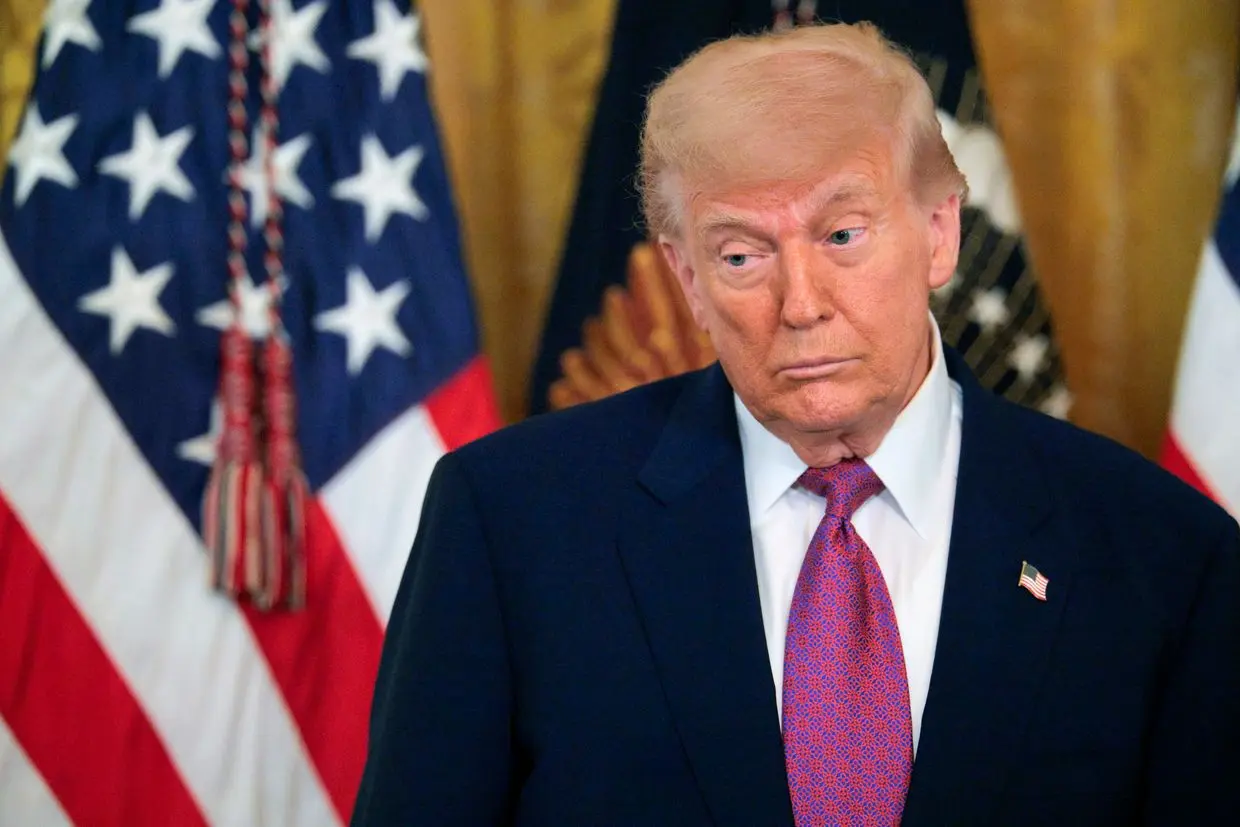
President Donald Trump’s ongoing disputes with the U.S. Supreme Court reached a new level of public attention on Monday, marking what many legal experts describe as an unusually sharp critique of the judiciary by a sitting president. While Trump has long railed against judicial rulings he views as counter to his policy goals, his most recent remarks have set the stage for a potentially significant legal confrontation between the executive branch and the nation’s highest court.
The president took to his social media platform on Monday morning to sharply criticize the Supreme Court following a recent adverse ruling, conveying deep distrust of the judicial body and raising expectations that the court may soon deliver another decision he disagrees with. Trump’s tone and language underscored the heightened tensions between his administration and the judiciary — a dynamic that has grown increasingly visible in recent months as a series of major legal battles have reached the federal courts.
Observers note that Trump’s criticism of the Supreme Court is not limited to isolated cases; it has become a recurring theme in his communication with the public. Over recent months, he has expressed frustration at multiple judicial outcomes, framing them not just as legal disagreements but as obstacles to his broader policy agenda. What sets his latest commentary apart, however, is the explicit suggestion that the court’s future decisions could undermine central elements of his administration’s priorities.
Last week, Trump faced a setback when the Supreme Court dealt a significant blow to one of his key economic initiatives, striking down the bulk of his expansive tariff program. In a 6–3 decision, the court concluded that many of the tariffs imposed under the International Emergency Economic Powers Act (IEEPA) exceeded presidential authority, reinforcing constitutional limits on executive action and emphasizing that tariff authority rests with Congress.
The ruling not only undercut a signature part of Trump’s economic strategy but also reverberated through financial markets and diplomatic channels. Trade partners and political allies reacted swiftly, with some foreign governments welcoming the court’s decision as a reaffirmation of constitutional governance while others expressed concern over the ripple effects on international commerce.
In his Monday post, Trump did not mince words. He lamented what he described as an “incompetent” court and suggested that its recent decisions favored interests he opposed. He also suggested that the Supreme Court’s future rulings might follow a similar trajectory, heightening anxiety among his supporters about the legal fate of pending cases tied to core elements of his policy agenda.
Critics, meanwhile, argue that the president’s rhetoric undermines public confidence in an independent judiciary, a cornerstone of the constitutional system of checks and balances. Legal scholars note that high‑profile tension between the executive and judicial branches is not unprecedented, but they also warn that increasingly partisan language directed at the courts can carry long‑term implications for institutional trust and democratic norms.
Throughout his presidency — and particularly during his current term — Trump has pursued an aggressive, controversial immigration policy, and that effort has become one of the most closely watched legal issues of the era. Central to that policy is the administration’s attempt to limit birthright citizenship — the constitutional guarantee that nearly all children born on U.S. soil are automatically citizens.
Last year, Trump signed an executive order attempting to end birthright citizenship for children born in the United States to parents who do not have lawful permanent status or citizenship. The executive order quickly sparked a wave of litigation, with multiple lawsuits challenging its legality on constitutional grounds. Plaintiffs included a coalition of states and civil rights organizations, which argued that the order directly conflicted with the Citizenship Clause of the 14th Amendment.
Lower federal courts responded swiftly, issuing preliminary injunctions that blocked enforcement of the executive order. Judges in several districts agreed that the administration’s attempt to curtail birthright citizenship raised serious constitutional questions and appeared to overstep presidential authority. One federal judge described the order as inconsistent with longstanding constitutional interpretation and legal precedent, including the Supreme Court’s 19th‑century United States v. Wong Kim Ark decision, which affirmed the principle that birthright citizenship is a foundational element of American law.
The administration appealed those rulings, and the legal battle eventually made its way toward the Supreme Court. The high court agreed to hear related appeals, consolidating several cases that challenged different aspects of the executive order.
Legal experts and advocates on both sides acknowledged that the Supreme Court’s involvement elevated the stakes of the dispute. Supporters of the executive order argued that the Constitution’s language has been misinterpreted for generations and that modern immigration dynamics demand reconsideration of long‑standing legal interpretations. Opponents countered that the 14th Amendment’s citizenship guarantee is clear, and that only Congress — not the president — has the authority to alter such fundamental rights.
It was against this backdrop of legal tension that Trump made his comments about the Supreme Court’s future actions. The president’s suggestion that the court “will” rule against him on the birthright citizenship matter sent shockwaves through political circles, prompting renewed focus on the legal proceedings and what they could mean for constitutional law and American society.
Until recently, much of the public discussion had centered on economic policy — particularly the tariff ruling that garnered widespread attention. That Supreme Court decision represented a clear repudiation of the administration’s interpretation of executive power, reinforcing the principle that significant policy decisions with broad economic impact generally require congressional authorization.
The court’s decision on the tariff case has now become a reference point for Trump’s warnings about the birthright citizenship lawsuit. In his social media commentary, he tied the legal outcomes together, framing a narrative in which the judiciary is systematically blocking key elements of his agenda. Whether or not the court ultimately reaches a definitive judgment on the birthright citizenship issue, the sequence of legal setbacks has already influenced political debate and voter discussions ahead of the 2026 election cycle.
Legal analysts say that the Supreme Court’s decision on birthright citizenship — once it is officially released — could have profound implications. A ruling that upholds the executive order would represent a fundamental reinterpretation of the Citizenship Clause and expand presidential authority in a manner that has not been seen in modern constitutional law. Conversely, a ruling against the executive order would reaffirm long‑standing interpretations of the 14th Amendment and limit the scope of executive power over citizenship policy.
Some proponents of the administration’s position have cautioned that strong language directed at the Supreme Court could backfire politically and legally. They argue that the president’s framing risks alienating moderate voters who value judicial independence. Critics on the left, meanwhile, have praised the court’s past rulings in similar cases as protective of constitutional rights.
Public opinion about birthright citizenship itself is complex, with polls showing varying viewpoints across different demographic and political segments. For many Americans, the issue touches on deep questions about national identity, immigration, and constitutional guarantees.
As the Supreme Court prepares to issue its ruling — now widely anticipated following oral arguments and extensive briefing — both sides are positioning for what could be a landmark decision. The court’s eventual judgment will not only resolve the legal question before it but could also influence broader discussions about the balance of power among the branches of government.
Whether the president’s public predictions about the ruling prove accurate remains to be seen. What is clear, however, is that the dispute has become one of the most consequential judicial confrontations of the moment, with implications for constitutional law, executive authority, and American citizenship itself.

Emily Johnson is a critically acclaimed essayist and novelist known for her thought-provoking works centered on feminism, women’s rights, and modern relationships. Born and raised in Portland, Oregon, Emily grew up with a deep love of books, often spending her afternoons at her local library. She went on to study literature and gender studies at UCLA, where she became deeply involved in activism and began publishing essays in campus journals. Her debut essay collection, Voices Unbound, struck a chord with readers nationwide for its fearless exploration of gender dynamics, identity, and the challenges faced by women in contemporary society. Emily later transitioned into fiction, writing novels that balance compelling storytelling with social commentary. Her protagonists are often strong, multidimensional women navigating love, ambition, and the struggles of everyday life, making her a favorite among readers who crave authentic, relatable narratives. Critics praise her ability to merge personal intimacy with universal themes. Off the page, Emily is an advocate for women in publishing, leading workshops that encourage young female writers to embrace their voices. She lives in Seattle with her partner and two rescue cats, where she continues to write, teach, and inspire a new generation of storytellers.