

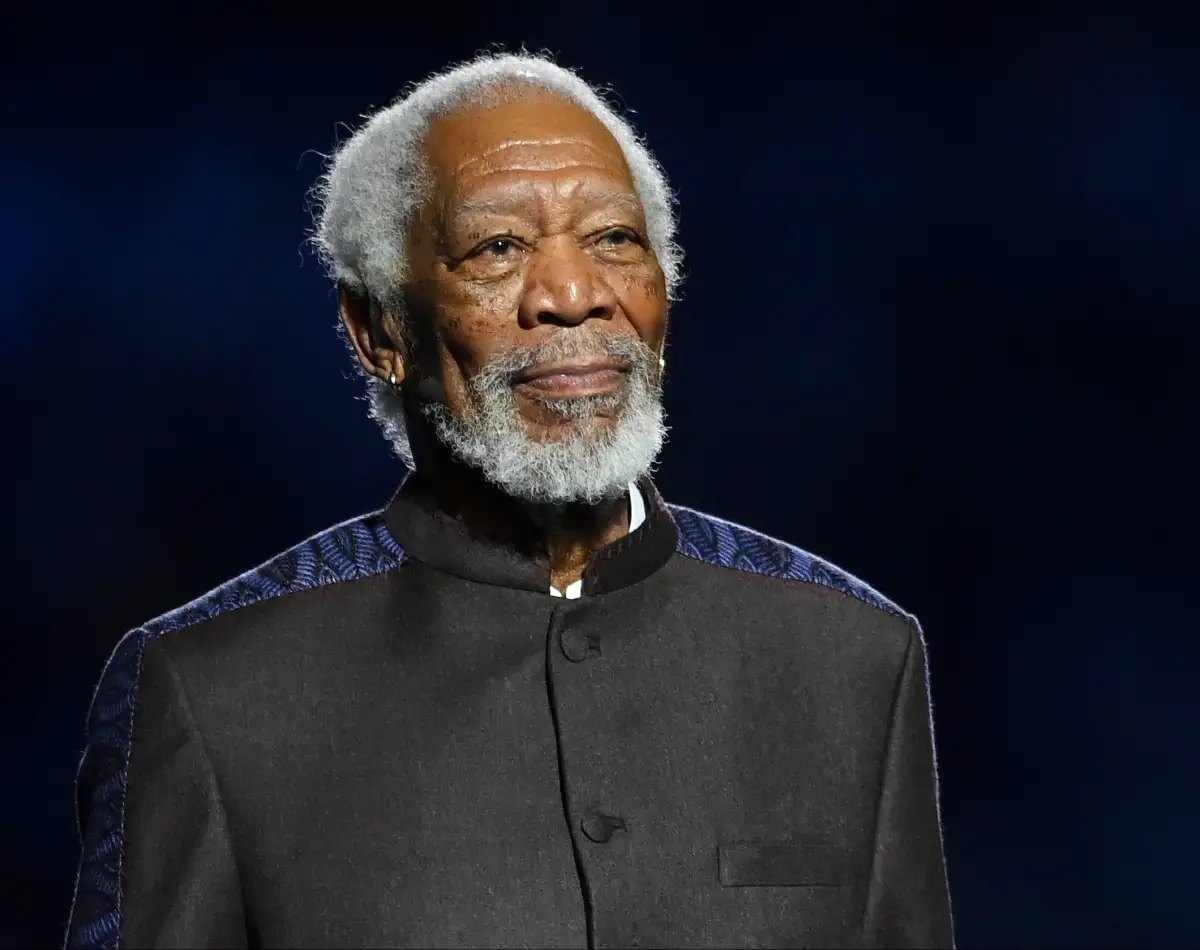
Oscar-winning actor Morgan Freeman has become the latest prominent Hollywood figure to publicly criticize President Donald Trump, adding his voice to an increasingly heated national conversation about foreign policy, political rhetoric, and accountability.
As President Trump continues his second term in office following his return to the White House in January 2025, his administration’s actions have drawn both staunch support and sharp opposition. From renewed immigration enforcement efforts through Immigration and Customs Enforcement to revived discussions about missile defense initiatives—dubbed by some as a “Golden Dome”—and controversial remarks about Greenland, the president has remained at the center of domestic and international debate.
In recent weeks, however, attention has shifted toward rising tensions between the United States and Iran. Reports have suggested that internal discussions within the administration have included possible military timelines, though no final decision has been publicly confirmed. At the same time, the White House has emphasized that diplomatic options remain on the table.
White House Press Secretary Karoline Leavitt recently stated that while President Trump hopes to resolve disputes peacefully, Iran would be “very wise” to negotiate a deal with the United States concerning Tehran’s nuclear program. The comments come amid renewed global concern about nuclear proliferation and broader instability in the Middle East.
Against that backdrop, Freeman took to social media with a brief but pointed post that quickly gained national attention. Rather than issuing a lengthy statement or delivering a speech, the 88-year-old actor shared a screenshot of an older message written by Trump years earlier. Freeman’s caption consisted of just two words.
The post spread rapidly across X, generating tens of thousands of replies and reigniting debates about political consistency and presidential rhetoric. Supporters of Freeman praised the actor for highlighting what they saw as hypocrisy. Critics, meanwhile, argued that the context surrounding current geopolitical tensions differs significantly from past political commentary.
Freeman’s two-word message read: “This you?”
https://twitter.com/mjfree/status/2024170993267147155
The phrase accompanied a resurfaced 2011 post by Trump that stated: “In order to get elected, @BarackObama will start a war with Iran.” By juxtaposing the decade-old remark with current headlines about potential military action, Freeman appeared to question whether the president’s present stance contradicted his earlier claims.
The response online was swift and polarized. One user pushed back, writing that President Trump “is elected” and therefore has no need to provoke conflict to secure votes. Another suggested Freeman should have directly tagged the president in his message if he wanted a response. Yet many applauded the simplicity of the statement, calling it one of the sharpest uses of the now-common “This you?” phrase in political discourse.
The exchange comes during a period of heightened global anxiety. The symbolic Doomsday Clock, maintained by the Bulletin of the Atomic Scientists, has been cited frequently in discussions about nuclear risk and geopolitical instability. While the clock itself is metaphorical, its proximity to “midnight” often reflects widespread concerns about escalating international tensions.
Although President Trump has not announced any decision to authorize military action, reports indicate that options have been reviewed. According to coverage by major news outlets, discussions within the administration have included potential strike scenarios, though officials stress that no final determination has been made.
Freeman’s post is not his first foray into political commentary. The actor, best known for his performances in films such as The Shawshank Redemption, has spoken publicly about U.S. politics in the past. During the 2016 election cycle and beyond, he appeared in a video for the Committee to Investigate Russia, where he criticized Trump’s relationship with Russian President Vladimir Putin and suggested that Russian interference posed a serious threat to American democracy. That advocacy ultimately led to Freeman being permanently banned from Russia in 2022.
More recently, in the lead-up to the 2024 election, Freeman appeared in a video alongside actors including Bill Pullman, Geena Davis, Michael Douglas, and Tony Goldwyn. In the video, President Joe Biden sought fictional advice from actors who had previously portrayed U.S. presidents on screen. The project underscored Freeman’s alignment with Biden during that campaign cycle.
Despite recurring rumors that Freeman might support Trump, a spokesperson for the actor previously denied any such claims, stating that he had not endorsed the president’s reelection efforts.
Freeman’s latest remarks place him among a growing number of high-profile entertainers willing to openly criticize the administration. Giancarlo Esposito, known for his role in Breaking Bad, recently called for what he described as a “revolution” in response to immigration enforcement policies. Woody Harrelson, in comments to the Associated Press, expressed frustration with the president in blunt terms.
At the same time, President Trump continues to enjoy support from several well-known figures in Hollywood. Actors such as Jon Voight and Mel Gibson have publicly voiced backing for the president, while Sylvester Stallone and Kelsey Grammer have also spoken favorably about his leadership.
The divide within the entertainment industry mirrors broader political polarization across the country. Public trust in institutions, the role of celebrity activism, and the impact of social media on political discourse remain central topics of debate.
Freeman’s concise message stands out precisely because of its brevity. In an era dominated by lengthy threads and televised interviews, two words were enough to ignite widespread discussion. The phrase “This you?”—often used online to call attention to perceived inconsistencies—has become a shorthand way of questioning past statements in light of current actions.
Whether the president will respond directly remains unclear. Historically, Trump has often addressed criticism from public figures, particularly when it trends widely online. However, as of now, there has been no official reply to Freeman’s post.
For supporters of the actor, the message underscores the importance of accountability in public office. For critics, it reflects what they see as oversimplification of complex geopolitical realities.
What is certain is that tensions surrounding Iran are real and evolving. Diplomatic negotiations, economic sanctions, and military preparedness all play roles in shaping the current situation. Any decision involving military force would carry significant global implications, particularly given existing regional alliances and rivalries.
In that context, Freeman’s post functions less as a policy proposal and more as a reminder of political memory. By resurfacing a statement from 2011, he highlighted how rhetoric can echo across years and administrations.
As debates continue over Iran, nuclear strategy, and America’s role on the world stage, the exchange illustrates how cultural figures remain deeply entwined with political conversation. In today’s media landscape, even a two-word question can reverberate far beyond Hollywood—reaching into the heart of national and international discourse.

Emily Johnson is a critically acclaimed essayist and novelist known for her thought-provoking works centered on feminism, women’s rights, and modern relationships. Born and raised in Portland, Oregon, Emily grew up with a deep love of books, often spending her afternoons at her local library. She went on to study literature and gender studies at UCLA, where she became deeply involved in activism and began publishing essays in campus journals. Her debut essay collection, Voices Unbound, struck a chord with readers nationwide for its fearless exploration of gender dynamics, identity, and the challenges faced by women in contemporary society. Emily later transitioned into fiction, writing novels that balance compelling storytelling with social commentary. Her protagonists are often strong, multidimensional women navigating love, ambition, and the struggles of everyday life, making her a favorite among readers who crave authentic, relatable narratives. Critics praise her ability to merge personal intimacy with universal themes. Off the page, Emily is an advocate for women in publishing, leading workshops that encourage young female writers to embrace their voices. She lives in Seattle with her partner and two rescue cats, where she continues to write, teach, and inspire a new generation of storytellers.