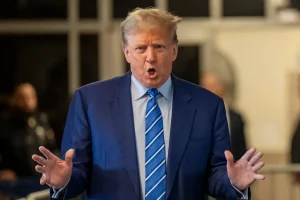



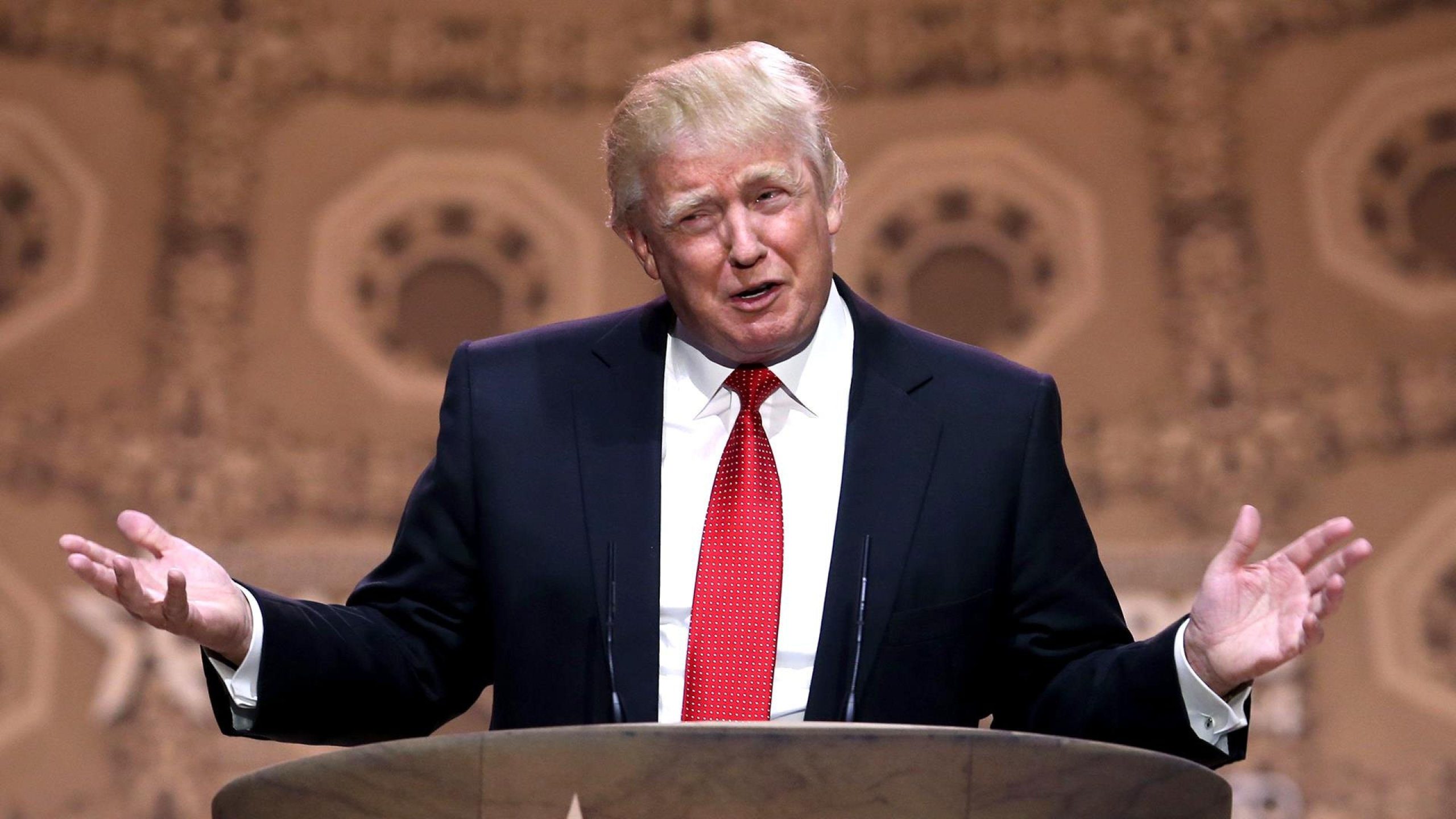
President Donald Trump has reacted forcefully after the U.S. Supreme Court delivered a major legal setback to one of the centerpieces of his economic agenda — his broad tariff regime. What had been a hallmark of his second term in office was struck down by the nation’s highest court, prompting the White House to signal it has a “backup plan” to retain leverage in global trade negotiations and maintain import duties while navigating constitutional limitations.
The Supreme Court’s decision, handed down in a 6–3 ruling, held that the president exceeded his authority by imposing sweeping tariffs under a law originally intended for emergency economic measures. The majority opinion, authored by Chief Justice John Roberts, concluded that the International Emergency Economic Powers Act (IEEPA) — the statute the White House relied upon — does not grant the executive branch unfettered power to levy broad tariffs without explicit congressional approval.
Trump, 79, described the ruling as “a disgrace” and a blow to American authority, criticizing the court’s interpretation and signaling that his administration would swiftly pursue alternative legal routes. Sources familiar with his response say that he communicated to state governors and aides that while the court’s verdict limits his ability to use the emergency powers statute, it does not mark the end of his trade policy ambitions.
Economists, trade experts, and legal scholars alike have been closely studying the ruling’s implications — not only for U.S. trade policy but for the broader separation of powers between Congress and the executive branch. The decision reaffirms that, under the Constitution, the authority to impose tariffs typically resides with Congress. At the same time, it acknowledges that presidents do retain some statutory tools for targeting imports — but those tools are more constrained and procedurally complex than the emergency powers Trump had invoked.
What the Supreme Court Ruled
The case, Learning Resources, Inc. v. Trump, centered on whether the administration could deploy IEEPA — a Cold War–era law — to impose tariffs on nearly all imported goods from around the world. The majority of justices agreed that while the statute authorizes the president to regulate certain foreign economic activities during a national emergency, it does not explicitly grant the power to levy taxes like tariffs on that scale. Roberts wrote that Congress alone retains that power under the Constitution’s tax and tariff clauses.
Justices Clarence Thomas, Brett Kavanaugh, and Samuel Alito dissented, arguing that the statute’s broad language and historical practice could support the president’s authority. They contended that the majority’s ruling could limit the ability of future administrations to respond to economic threats without explicit congressional statutes in place.
The ruling effectively invalidated the so‑called “global tariff” policy known as Trump’s “Liberation Day” tariff, which had applied duties — some as high as 50% — on imported goods from many trading partners. The decision underscores the constitutional principle that major economic tools such as tariffs require either clear legislative authorization or must be grounded in statutes that clearly grant that power.
Mid‑Article Reveal: Trump’s Backup Plan
In response to the setback, the Trump administration is rapidly pivoting to alternative legal mechanisms that could sustain tariff measures, albeit in different forms and with procedural requirements. Rather than abandoning his trade campaign, the president has issued a temporary global tariff of 10% under Section 122 of the Trade Act of 1974, effective for 150 days. This statute allows presidents to impose import duties of up to 15% within defined parameters and is legally distinct from the emergency powers statute rejected by the court.
This new tariff order is designed to provide continuity in trade policy while the administration initiates formal investigations under other statutory tools, such as Section 301 (unfair trade practices) and Section 232 (national security) of the Trade Act of 1974 and the Trade Expansion Act of 1962. These provisions allow the government to levy tariffs after conducting detailed probes into whether imported goods harm domestic industries or pose security concerns.
Officials say that by stacking these tools, the administration hopes to maintain pressure on trading partners, protect certain U.S. industries, and recapture some of the tariff revenues that were jeopardized by the Supreme Court’s decision. Sector‑specific tariffs — such as those on steel, aluminum, and certain auto parts — remain in place because they were imposed under separate legal authorities.
Legal and Practical Challenges
While the backup strategy provides a short‑term workaround, it comes with limitations. The Section 122 tariff is temporary, and the tariffs imposed under Section 301 or Section 232 typically require investigations that can take months to conclude. This procedural timeline means that any long‑term tariff regime may see delays or reduced coverage compared with the broad, executive‑driven approach Trump previously pursued.
Legal experts point out that these fallback statutes are more traditional and widely accepted bases for trade action. Section 301, for example, has been used for years to justify tariffs in response to unfair trade practices — most notably against Chinese imports — but it requires a formal finding by the Office of the U.S. Trade Representative that such practices harm American industry. Section 232, meanwhile, taps national security justifications, which also demand evidence and review by the Commerce Department.
Critics argue that by relying on these detailed statutory processes, the administration will lose some of the leverage and speed previously afforded by the emergency powers approach. Furthermore, some lawmakers are calling for Congress to reassert its authority over tariff policy through legislation that clarifies the executive’s scope, potentially constraining future presidential actions. Proposals like the Trade Review Act would require presidents to notify and obtain approval from Congress before imposing broad tariffs, aiming to prevent similar conflicts between the executive and judiciary.
Domestic and International Reactions
The Supreme Court’s ruling has drawn responses from across the political and economic spectrum. Supporters of the administration argue that tariffs are essential tools for addressing trade imbalances, protecting American jobs, and responding to global economic competition. They contend that the court’s decision hampers the United States’ ability to react swiftly to economic threats without cumbersome legislative processes.
Conversely, critics hailed the ruling as a reaffirmation of constitutional norms and separation of powers. Some members of Congress, including figures from both parties, applauded the decision as a necessary check on executive overreach. Agricultural groups and trade advocates pointed to the economic strain tariffs had placed on industries reliant on international supply chains and warned that prolonged uncertainty could hinder investment and growth.
Small business coalitions have also voiced concerns, particularly regarding the tariffs that were in place for months and collected billions in duties. Some groups are calling for refunds for tariffs now deemed unlawful, though legal experts note that the Supreme Court’s decision did not directly mandate repayment, leaving open questions about whether importers and consumers will seek restitution.
Internationally, allied governments and trading partners welcomed the ruling, viewing it as a step toward more predictable trade relations. Countries that had been targeted by the broad tariffs — including key U.S. partners in Europe and Asia — expressed hope that the shift to more conventional trade statutes could reduce tensions and open avenues for negotiation without large, sweeping duties.
Economic and Political Significance
The interplay between executive authority, judicial oversight, and legislative power lies at the heart of this conflict. Tariffs are not just economic instruments; they are political tools that shape diplomatic relations, supply chains, and domestic industry support. The Supreme Court’s ruling reinforces the constitutional framework that Congress holds primary authority over taxation and trade policy, a principle that could have ramifications beyond the current administration.
Trump’s backup plan, while strategic, underscores the inherent tension in U.S. governance: how to balance swift executive action with adherence to statutory limits and judicial interpretation. As the administration moves forward with its contingency strategy, the administration and Congress may find themselves negotiating not only trade policy but the very boundaries of presidential power.
What Comes Next
In the coming months, the administration is expected to formalize investigations under Sections 301 and 232, potentially leading to new tariff schedules and trade measures. At the same time, legislative efforts in Congress could crystallize around clarifying trade authority, potentially reshaping how future presidents navigate the legal landscape for tariffs.
For now, the president’s immediate actions — including the temporary global tariff and targeted investigations — signal a determination to maintain an assertive trade posture even following the Supreme Court’s rebuke. Whether that posture will translate into long‑term policy success or further legal and political battles remains a central question for American economic strategy in the years ahead.

Emily Johnson is a critically acclaimed essayist and novelist known for her thought-provoking works centered on feminism, women’s rights, and modern relationships. Born and raised in Portland, Oregon, Emily grew up with a deep love of books, often spending her afternoons at her local library. She went on to study literature and gender studies at UCLA, where she became deeply involved in activism and began publishing essays in campus journals. Her debut essay collection, Voices Unbound, struck a chord with readers nationwide for its fearless exploration of gender dynamics, identity, and the challenges faced by women in contemporary society. Emily later transitioned into fiction, writing novels that balance compelling storytelling with social commentary. Her protagonists are often strong, multidimensional women navigating love, ambition, and the struggles of everyday life, making her a favorite among readers who crave authentic, relatable narratives. Critics praise her ability to merge personal intimacy with universal themes. Off the page, Emily is an advocate for women in publishing, leading workshops that encourage young female writers to embrace their voices. She lives in Seattle with her partner and two rescue cats, where she continues to write, teach, and inspire a new generation of storytellers.