


Last year, the U.S. administration under President Donald Trump announced the reintroduction of a broad travel ban, reigniting debates over national security, immigration policy, and international diplomacy. The move, which affects multiple countries across Africa, the Middle East, and other regions, drew widespread attention after concerns emerged about its potential impact on upcoming global events. Among the most prominent of these is the 2026 FIFA World Cup, which will be co-hosted by the United States, Mexico, and Canada.
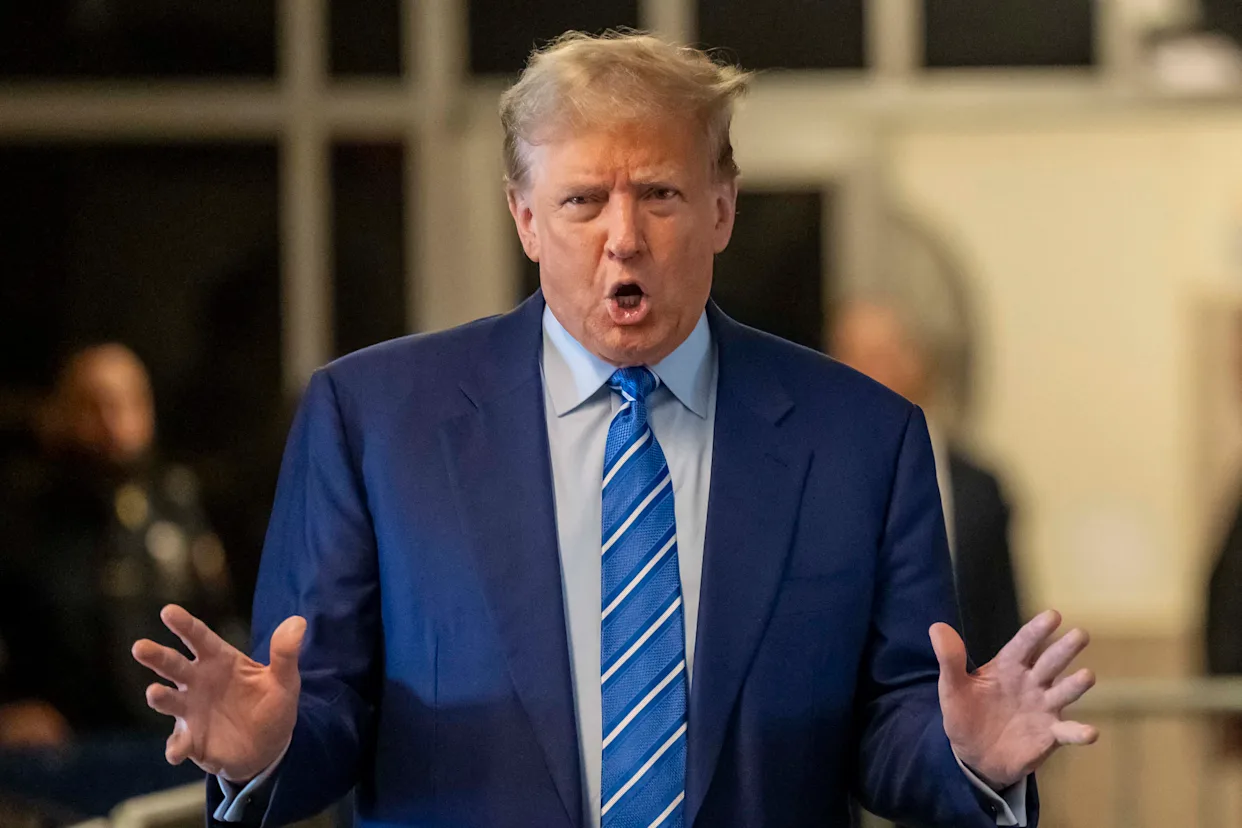
In June, President Trump unveiled the updated restrictions in a formal proclamation, emphasizing his administration’s focus on national security and public safety. According to Trump, the policies were designed to prevent foreign nationals who might pose a threat from entering the United States, while ensuring that the visa issuance process remains rigorous and thorough.
“During my first Administration, I restricted the entry of foreign nationals into the United States, which successfully prevented national security threats from reaching our borders and which the Supreme Court upheld,” Trump said in the proclamation. He outlined a series of principles guiding the policy, including the identification of potential threats before admission to the country, vigilance during the visa issuance process, and the protection of U.S. citizens and institutions from individuals who espouse violent or extremist ideologies.
Trump stressed that the United States must act proactively to ensure that anyone approved for entry does not harbor hostile intentions toward Americans, their government, or their culture. The proclamation cited the necessity of preventing foreign nationals from aiding or supporting terrorist organizations or other entities deemed threats to national security.
The announcement of the travel restrictions immediately sparked discussion across political, media, and diplomatic circles. Observers noted that, unlike some previous executive actions, the current policy combines outright bans on certain countries with partial restrictions on others. According to the administration, the goal was to balance national security concerns with practical considerations for international relations and commerce.
Policy Overview
While the broader principles of the travel restrictions are rooted in longstanding security concerns, the new measures also reflect a continuation of Trump’s previous approach to limiting entry from countries that the administration considers high-risk. Experts in immigration and national security have noted that the policy is consistent with earlier proclamations, though the scope and timing have reignited debates over fairness, human rights, and potential economic consequences.
Under the new restrictions, individuals from some nations are prohibited from entering the United States entirely, while those from other countries face specific limitations or additional vetting processes. In his proclamation, Trump referenced Executive Order 14161, signed in January 2025, which established the framework for assessing and restricting entry for foreign nationals considered a threat to public safety or national security.
The administration emphasized that these measures are not aimed at targeting any particular religion or ethnicity, but rather at preventing potential threats from reaching U.S. soil. Nevertheless, critics have argued that such bans may disproportionately affect certain populations and could complicate international relations.
Mid-Article Reveal: The Affected Countries
The travel ban imposes full restrictions on twelve countries, while a further seven nations face partial limitations. The twelve countries subject to the complete ban are:
-
Afghanistan
-
Iran
-
Somalia
-
Libya
-
Haiti
-
Chad
-
Congo-Brazzaville
-
Equatorial Guinea
-
Myanmar (referred to as Burma in the proclamation)
-
Eritrea
-
Sudan
-
Yemen
Countries with partial restrictions include:
-
Venezuela
-
Cuba
-
Burundi
-
Laos
-
Sierra Leone
-
Togo
-
Turkmenistan
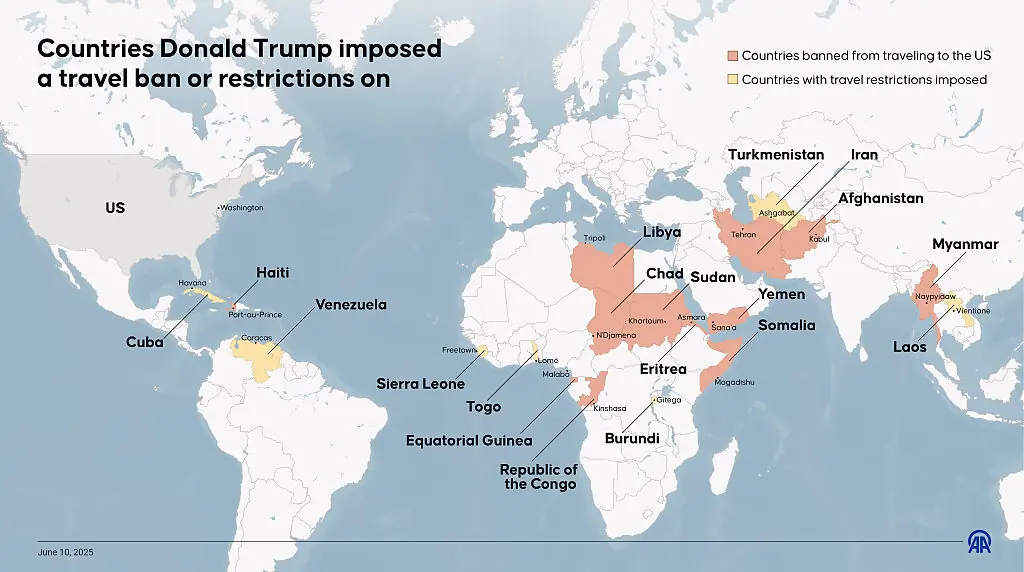
Officials have clarified that the restrictions apply broadly to both immigrant and non-immigrant visas, effectively barring most nationals from these nations from entering the United States. These measures extend to travelers seeking entry as tourists, students, or for business purposes, while carefully calibrated exemptions apply for certain categories, including government officials, diplomats, and athletes competing in international competitions.
Implications for the 2026 FIFA World Cup
One of the most immediate concerns arising from the travel ban is its potential impact on the 2026 FIFA World Cup. The expanded tournament, which will feature 48 teams and be co-hosted by the U.S., Mexico, and Canada, is expected to attract millions of fans from around the world. The travel restrictions could affect supporters, particularly from countries that have qualified for the event.
While athletes, coaches, and essential staff from affected countries are exempt from the ban to ensure the competition proceeds smoothly, fans from those nations may face additional bureaucratic hurdles. The U.S. government has acknowledged that these restrictions could complicate travel arrangements for supporters, requiring them to navigate an enhanced visa application process.
Notably, two countries on the full travel ban list have successfully qualified for the tournament: Iran and Haiti. Iran, which topped its Asian qualifying group with 23 points, will make its seventh World Cup appearance, while Haiti secured its second-ever qualification with a decisive 2-0 win over Nicaragua. U.S. authorities reportedly blocked the Iranian delegation from attending the preliminary World Cup draw in December, illustrating the tangible diplomatic complications stemming from the travel restrictions.
FIFA has emphasized that exemptions for athletes and essential personnel are intended to ensure the integrity of the tournament. Fans, however, are expected to apply through a newly established FIFA Prioritised Appointment Scheduling System (PASS), which provides verified ticket holders with expedited visa appointments. Despite this prioritization, all applicants remain subject to standard vetting procedures to ensure compliance with U.S. security requirements.
FIFA President Gianni Infantino commented that the system reflects efforts to make the 2026 World Cup as inclusive as possible, while U.S. Secretary of State Marco Rubio reiterated that the same rigorous standards will apply to all visa applicants, regardless of nationality.
Wider Implications
Beyond sports, the travel restrictions are likely to affect tourism, business travel, and diplomatic relations with the impacted nations. Critics argue that the policy may create logistical challenges for multinational companies, international students, and families attempting to travel to the United States. Proponents of the restrictions, meanwhile, insist that national security considerations must take precedence over convenience or public opinion.
The Trump administration has also warned host cities of potential consequences for failing to address crime, a separate policy focus, though the remarks have drawn attention in the context of planning for the influx of international visitors for major events like the World Cup.
Looking Ahead
With the 2026 World Cup just months away, U.S. officials, FIFA, and participating nations are actively coordinating to address the diplomatic and logistical challenges arising from the travel restrictions. Ticketing, visa processing, and security measures are being carefully managed to ensure that athletes and spectators alike can safely attend the tournament.
Meanwhile, the travel ban continues to spark debate across political, media, and diplomatic arenas. Questions remain regarding its long-term impact on international relations, immigration policy, and the United States’ global reputation. Observers note that the combination of security concerns, sports diplomacy, and high-profile international events creates a unique testing ground for assessing the practical effects of restrictive immigration measures.
Conclusion
President Trump’s reinstated travel ban highlights the enduring tension between national security imperatives and global engagement. While exemptions ensure that international competitions and critical personnel are not affected, millions of travelers and supporters face additional hurdles. The situation underscores the complexity of balancing safety, fairness, and inclusivity in an increasingly interconnected world — particularly when major global events coincide with politically sensitive policies.
As the FIFA World Cup approaches, U.S. authorities, sporting organizations, and foreign governments will continue navigating the challenges posed by the travel restrictions, illustrating the far-reaching consequences of domestic policy decisions in a global context.

Emily Johnson is a critically acclaimed essayist and novelist known for her thought-provoking works centered on feminism, women’s rights, and modern relationships. Born and raised in Portland, Oregon, Emily grew up with a deep love of books, often spending her afternoons at her local library. She went on to study literature and gender studies at UCLA, where she became deeply involved in activism and began publishing essays in campus journals. Her debut essay collection, Voices Unbound, struck a chord with readers nationwide for its fearless exploration of gender dynamics, identity, and the challenges faced by women in contemporary society. Emily later transitioned into fiction, writing novels that balance compelling storytelling with social commentary. Her protagonists are often strong, multidimensional women navigating love, ambition, and the struggles of everyday life, making her a favorite among readers who crave authentic, relatable narratives. Critics praise her ability to merge personal intimacy with universal themes. Off the page, Emily is an advocate for women in publishing, leading workshops that encourage young female writers to embrace their voices. She lives in Seattle with her partner and two rescue cats, where she continues to write, teach, and inspire a new generation of storytellers.