


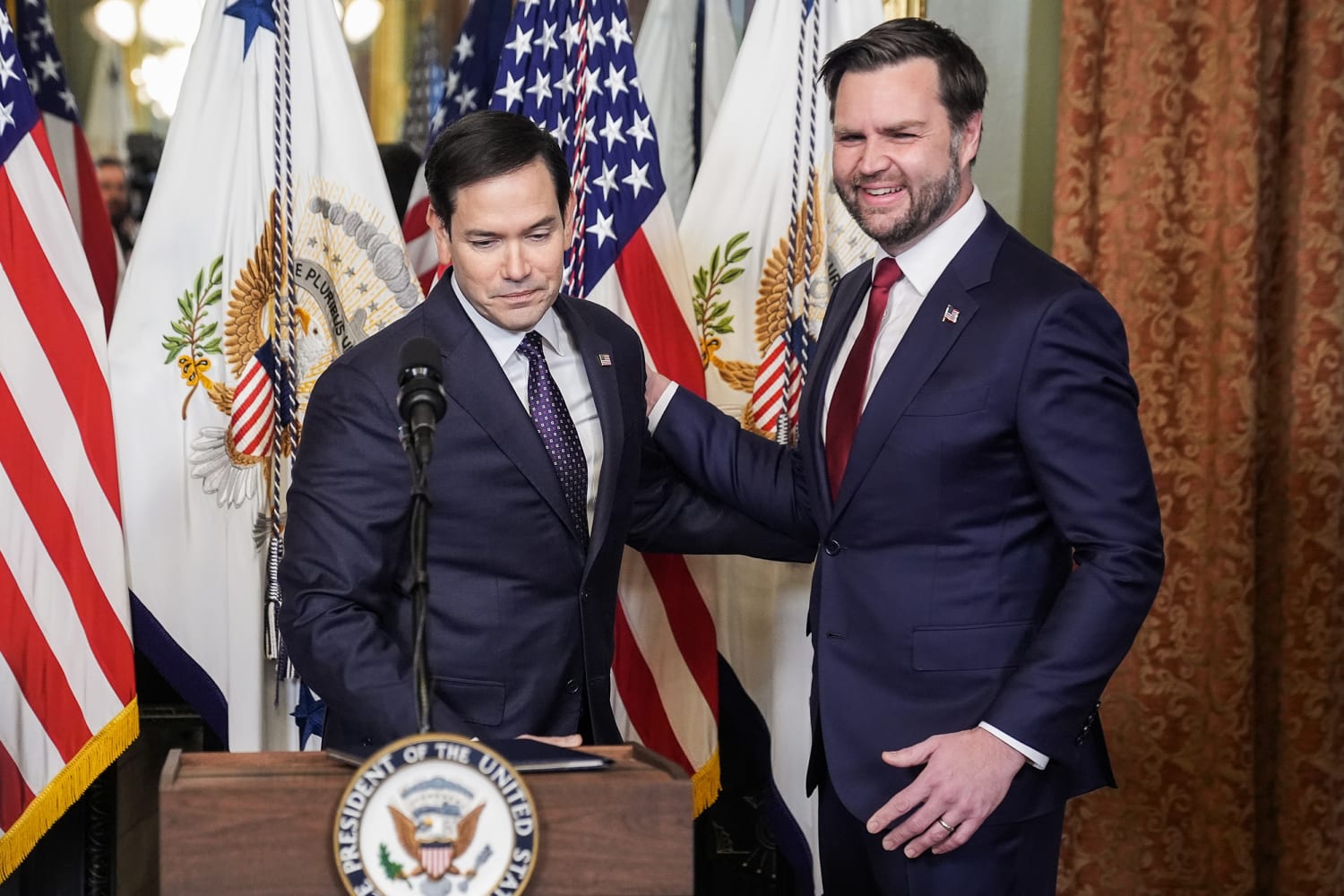
As the 2028 presidential election cycle slowly takes shape, talk within Republican circles increasingly centers on two names that once seemed unlikely partners on the national stage: Marco Rubio and J.D. Vance. Though a long way from a general election campaign — and even further from official declarations of candidacy — both men have emerged in speculation as possible heirs to a post-Trump GOP era. Their roles, roles that intersect at critical points, reflect deep questions steering the Republican Party’s future direction.
From First Runs to New Horizons: Political Journeys
Marco Rubio: The Veteran Strategist
Marco Rubio’s political trajectory has been remarkably adaptive. First rising to national prominence as a youthful conservative voice in the U.S. Senate, Rubio ran for president in 2016 with a message centered on generational change and optimism, only to be overshadowed by then-candidate Donald Trump’s insurgent campaign. Fast forward to 2026, and Rubio has reinvented himself as a seasoned statesman in the Trump administration, serving as both Secretary of State and interim National Security Adviser — a role that puts him at the center of U.S. foreign policy. This new profile projects a stark contrast to his earlier image as an insurgent Republican hopeful.
Rubio’s emphasis on bolstering U.S. alliances with Europe and managing global challenges reflects a more traditional Republican foreign policy disposition. His recent remarks at the Munich Security Conference, for example, underscored transatlantic unity and caution against what he calls the risks of “borderless ideals” — blending hawkish realism with a firm stance on national sovereignty.
Yet for all of these accomplishments, Rubio has been cautious when asked about personally pursuing the presidency in 2028. In public interviews he has repeatedly stressed his contentment with his diplomatic portfolio and has often deflected questions about ambitions beyond his current office. In some remarks, he has even endorsed Vice President Vance as “a great nominee” if Vance chooses to run.
J.D. Vance: The Populist Insider
By contrast, Ohio’s J.D. Vance has soared in national visibility largely through his role as Vice President. Formerly a U.S. Senator and before that an author, Vance’s rise was fueled by his outsized appeal within the modern conservative base and his alignment with Trump-era priorities. Long a favorite of populist Republicans, Vance has leveraged his vice-presidential platform to remain very much in the public eye.
Polling data — while still early and subject to change — underscore Vance’s prominence. In some hypothetical 2028 Republican primary matchups, he maintains a strong lead over rivals, including Rubio, signaling considerable grassroots support. One poll from mid-2025 showed him with roughly a 34-point edge over the next closest GOP contender.
Still, his support among Republicans has shown signs of fluctuation in more recent surveys, with some reporting a dip in majority backing compared to earlier polling peaks.
Friendship or Future Rivals? The Dynamic Between Rubio and Vance
One of the most intriguing aspects of 2028 speculation is not merely whether Rubio or Vance will run individually, but how the two relate to each other.
Much of the media narrative posited a brewing rivalry, given their overlapping timelines and potential aspirations. Yet both men have publicly rejected the notion of internal conflict. Vance, in particular, has called such rivalry narratives media inventions, stressing that he and Rubio remain close allies with a mutual focus on governing over politicking. In a recent interview, he explained that “there just isn’t any conflict,” noting their personal friendship and shared commitment to the current administration’s work.
Rubio’s own approach reinforces this dynamic. He has repeatedly expressed admiration for Vance’s performance as Vice President, often suggesting support for Vance’s potential nomination before entertaining the idea of a run of his own. Analysts have interpreted these remarks less as disinterest in a future presidential bid and more as strategic positioning — acknowledging Vance’s strong position within the GOP base while keeping his own options open.
President Donald Trump himself has further muddied the waters by declining to definitively endorse either figure for 2028, instead offering praise for both and characterizing them as “fantastic” leaders. Trump has even publicly mused that a Vance-Rubio ticket would be “unstoppable,” a sentiment that captures the curious fusion of populist and establishment wings within the party.
Strategic Strengths and Weaknesses
Rubio’s Craft: Establishment Gravitas and Foreign Policy Clout
Rubio’s greatest strengths stem from his lengthy political experience and reputation as a thoughtful policy actor. His foreign policy credentials, cultivated through global diplomacy and alliance-building, give him a breadth that could appeal to moderates and internationalists — demographics that Republicans have struggled to win over in national elections.
However, Rubio’s 2016 presidential loss and historical positioning as an establishment figure — often out of step with grass-roots populism — present liabilities in a primary environment that still prizes outsider credentials and cultural resonance. Moreover, his avowed affection for his diplomatic role suggests he might be more inclined to settle into that niche rather than pursue the grueling grind of a presidential campaign.
Vance’s Momentum: Populist Firepower and Base Appeal
Vance’s profile as a populist voice gives him undeniable strength within the Republican base, particularly among voters energized by Trumpism. His messaging, characterized by economic nationalism and cultural conservatism, resonates with core GOP constituencies. Early betting market odds also pointed to him as the front-runner for 2028 nomination prospects, with prediction analysts giving him nearly a 50 % shot relative to other Republicans.
Yet this very appeal could be double-edged. Vance’s deep identification with Trump loyalist politics might limit his ability to attract independents or moderate Republicans necessary to win a general election. And as some recent polls suggest, his support may not be as dominant as once thought, hinting at vulnerabilities if broader segments of the party or public seek an alternative direction.
What This Means for 2028 and Beyond
The presence of both Rubio and Vance in the speculative field illustrates the Republican Party’s broader struggle to define its identity in a post-Trump era. On one hand is the populist flame that propelled Trump and his allies like Vance; on the other is a more traditional conservative establishment figure in Rubio whose experience underscores stability and governance.
A Vance-Rubio alliance — suggested by Trump and floated informally by both men — would attempt to marry these wings, combining populist base loyalty with seasoned statesmanship. Yet it would not be without tensions. The success of such a ticket would hinge on a delicate balance: appealing to MAGA-aligned voters without alienating suburban or independent blocs that could decide the general election; reconciling foreign policy seriousness with domestic cultural concerns; and maintaining unity amid competing leadership ambitions.
As the next few years unfold, their public roles, media narratives, primary polling, and intra-party alliances will crystallize the reality behind today’s speculation. But from the current vantage point, Rubio and Vance are emblematic of a Republican Party at once defined by its past and wrestling with its future — and their interplay will be one of the defining political dramas of the upcoming decade.

Emily Johnson is a critically acclaimed essayist and novelist known for her thought-provoking works centered on feminism, women’s rights, and modern relationships. Born and raised in Portland, Oregon, Emily grew up with a deep love of books, often spending her afternoons at her local library. She went on to study literature and gender studies at UCLA, where she became deeply involved in activism and began publishing essays in campus journals. Her debut essay collection, Voices Unbound, struck a chord with readers nationwide for its fearless exploration of gender dynamics, identity, and the challenges faced by women in contemporary society. Emily later transitioned into fiction, writing novels that balance compelling storytelling with social commentary. Her protagonists are often strong, multidimensional women navigating love, ambition, and the struggles of everyday life, making her a favorite among readers who crave authentic, relatable narratives. Critics praise her ability to merge personal intimacy with universal themes. Off the page, Emily is an advocate for women in publishing, leading workshops that encourage young female writers to embrace their voices. She lives in Seattle with her partner and two rescue cats, where she continues to write, teach, and inspire a new generation of storytellers.