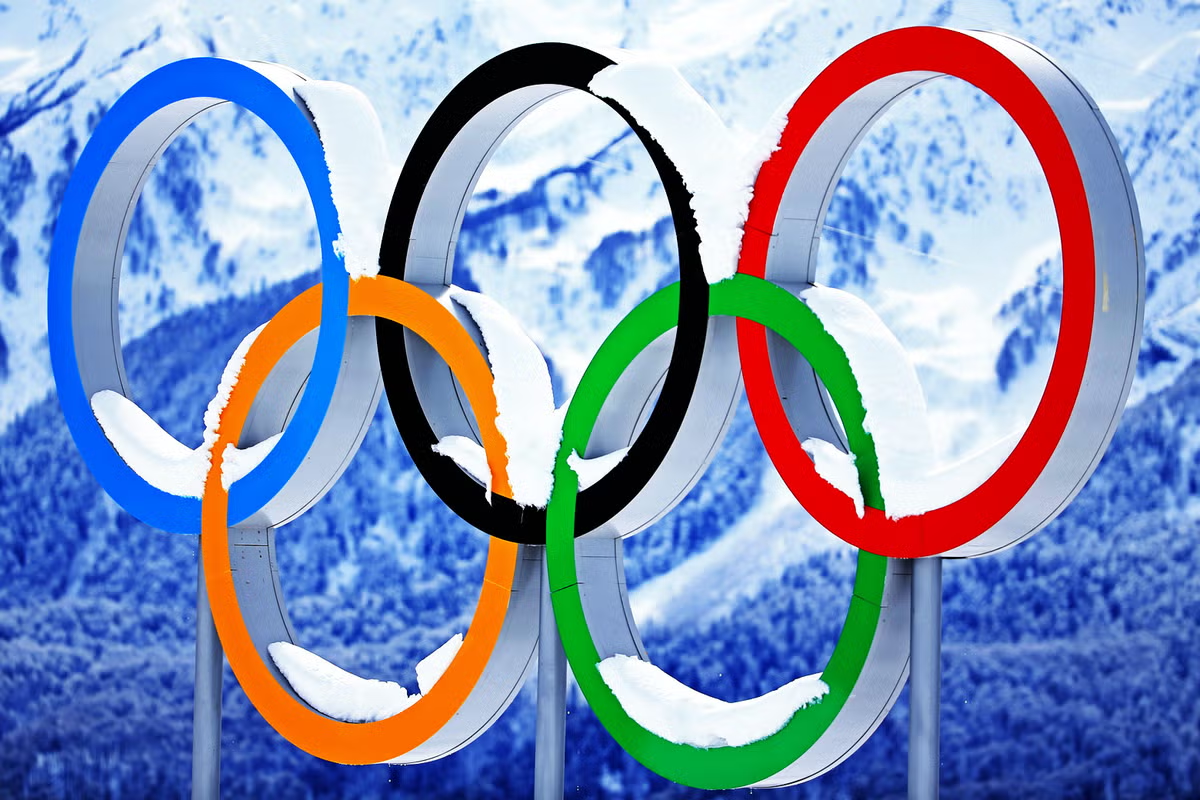
The 2026 Winter Olympic Games, hosted across the scenic cities of Milan and Cortina, have continued to captivate global audiences with a mix of elite athletic performances, dramatic finishes, and occasional controversy. While fans have been riveted by dazzling displays on ice and snow, this year’s Games have also been marked by an unusual disciplinary action that has sent shockwaves through the Olympic community.
Reports surfaced earlier this week that one of the participating athletes has been sent home by their own national federation after a violation during competition. Though disciplinary actions are not unheard of in international sports, the circumstances surrounding this particular case have drawn significant attention because of the high-profile nature of the incident and the prominence of the athlete involved.
The Games themselves have largely gone as expected in terms of competition. As of this week, Norway leads the medal table, having amassed an impressive 12 golds, seven silvers, and nine bronzes, underscoring their dominance in winter sports. Host nation Italy follows closely behind, securing eight gold medals, much to the delight of local fans. Other countries are also performing strongly; for instance, Team Great Britain sits in 12th place overall, having achieved gold in three events through the efforts of athletes Matt Weston, Tabby Stoecker, Charlotte Bankes, and Huw Nightingale.
Amid the celebrations of athletic prowess, a separate narrative unfolded on Tuesday morning that drew attention for less triumphant reasons. According to multiple media reports, one athlete had been removed from the Games following an incident during competition. The action taken by the athlete’s national federation went beyond the standard ejection or in-game penalty and instead involved sending the athlete home, effectively ending their participation in the remainder of the Olympic tournament.
The incident occurred during a high-stakes ice hockey match, a sport in which tensions can run particularly high given its fast pace and physical intensity. Reports indicate that a confrontation emerged between two players during a game against a formidable opponent. While physicality is a recognized component of hockey, the rules of the Winter Olympics strictly prohibit fighting or intentionally dangerous behavior on the ice, and this principle was at the center of the decision.
According to eyewitness accounts and media coverage, the altercation began when one player struck an opponent with an elbow, prompting a reaction from the other side. The situation escalated quickly, resulting in one of the athletes shoving the opposing player to the ground before any punches were thrown. Officials intervened immediately, ordering both players to leave the ice to prevent further escalation.
However, the disciplinary response did not end on the ice. The athlete’s national sports federation determined that the behavior violated not only the rules of the game but also the broader spirit of the Olympics. In a formal statement, the federation emphasized that every athlete representing the nation carries the responsibility to exemplify professionalism, sportsmanship, and respect for the values of the Olympic movement. The statement noted that the actions taken by the athlete were inconsistent with these expectations, particularly during a globally visible event like the Winter Games.
The federation concluded that the athlete would not be allowed to participate in any upcoming Olympic matches, effectively ending their role in the 2026 Games. The decision was framed as both a disciplinary measure and a reaffirmation of the organization’s commitment to upholding the integrity of its national team.
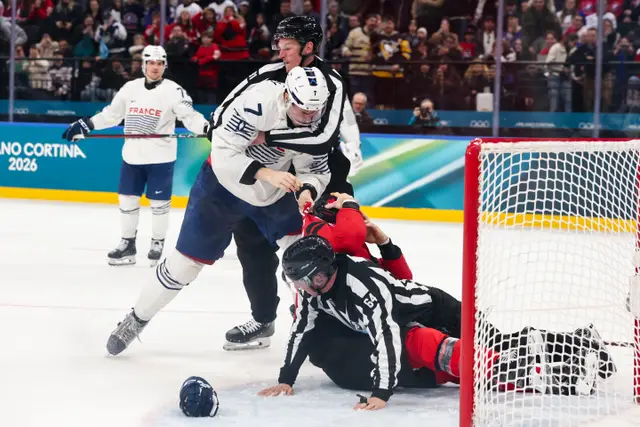
The athlete in question is Pierre Crinon, a prominent ice hockey player, representing France. The confrontation occurred during France’s match against Canada, and it quickly became a focal point for discussion among Olympic commentators, sports journalists, and fans worldwide.
The clash involved Canadian player Tom Wilson, who plays in the NHL for the Washington Capitals, and reportedly stemmed from Crinon’s earlier elbow to another Canadian player, Nathan MacKinnon. While both athletes were removed from the ice for the altercation, the French federation decided that sending Crinon home was a necessary step to maintain discipline and uphold the team’s values.
In its statement, the French Ice Hockey Federation (FFHG) underscored that the athlete’s behavior “constitutes a clear violation of the Olympic spirit and also undermines the values of our sport.” The organization reiterated the importance of sportsmanship, emphasizing that all players representing France must set a positive example during the Games.
This unprecedented action has prompted discussions about how national federations handle disciplinary matters during the Olympics. While in-game ejections and suspensions are routine, sending an athlete home during competition is relatively rare and often generates significant media attention. The case also highlights the intense scrutiny athletes face at events of this scale, where every action is observed by officials, the press, and a global audience.
The incident has also raised questions about how high-pressure environments influence behavior on the ice. Ice hockey is known for its intensity, and the combination of national pride, personal ambition, and physicality can sometimes produce conflict. However, the Olympics’ emphasis on fair play and respect for the rules places added responsibility on athletes to manage their conduct, particularly in moments of heightened tension.
Despite the controversy, the game itself concluded with Canada defeating France by a score of 10-2, underscoring the dominant performance of the Canadian team. The incident, however, overshadowed the match to some degree, drawing attention away from the on-ice results and toward questions of discipline, sportsmanship, and accountability.
International observers have noted that France’s decision to remove Crinon from the tournament reinforces the federation’s commitment to ethical standards in sport. By taking decisive action, the FFHG signaled that no athlete is above the rules and that representing a nation at the Olympics carries a profound responsibility to exemplify integrity both on and off the ice.
Reactions from fellow athletes, coaches, and fans have been mixed. Some applaud the federation for enforcing discipline and maintaining the Olympic values, while others suggest that emotions run high in competitive ice hockey and that such incidents are sometimes unavoidable. Nonetheless, the decision serves as a reminder that conduct at the Olympics is scrutinized not only for individual performance but also for its reflection on a nation and the Olympic movement itself.
As the 2026 Winter Olympics continue, the focus now returns to the remaining events and athletes striving for medals. Yet the Crinon incident will likely be remembered as one of the more dramatic moments of the Games — a cautionary tale about the balance between competitive aggression and the standards of behavior expected on the world stage.
In the broader context, this episode highlights the challenges faced by national federations in enforcing discipline while also supporting their athletes’ competitive ambitions. It serves as a vivid reminder that Olympic participation carries privileges as well as responsibilities — and that representing one’s country at the Games demands both excellence and exemplary conduct.
For now, the Winter Games continue across Milan and Cortina, with Norway leading the medal table and Italy maintaining strong performances as the host nation. Team France will compete in remaining events without one of its top ice hockey players, a reminder that the consequences of rule violations can extend beyond a single moment on the ice.
Ultimately, the Crinon incident underscores the delicate balance between competitiveness and sportsmanship at the Olympic level. While fans celebrate feats of skill, endurance, and strategy, athletes are also reminded that their behavior reflects not only on themselves but on their countries and the values of the Olympic movement as a whole.

Emily Johnson is a critically acclaimed essayist and novelist known for her thought-provoking works centered on feminism, women’s rights, and modern relationships. Born and raised in Portland, Oregon, Emily grew up with a deep love of books, often spending her afternoons at her local library. She went on to study literature and gender studies at UCLA, where she became deeply involved in activism and began publishing essays in campus journals. Her debut essay collection, Voices Unbound, struck a chord with readers nationwide for its fearless exploration of gender dynamics, identity, and the challenges faced by women in contemporary society. Emily later transitioned into fiction, writing novels that balance compelling storytelling with social commentary. Her protagonists are often strong, multidimensional women navigating love, ambition, and the struggles of everyday life, making her a favorite among readers who crave authentic, relatable narratives. Critics praise her ability to merge personal intimacy with universal themes. Off the page, Emily is an advocate for women in publishing, leading workshops that encourage young female writers to embrace their voices. She lives in Seattle with her partner and two rescue cats, where she continues to write, teach, and inspire a new generation of storytellers.