



One of the most recognizable faces in American television news has announced he will be stepping away from his long-running role at CBS’ flagship newsmagazine program, marking the end of a nearly 20-year chapter in broadcast journalism. The decision, revealed Monday, comes during a period of internal turbulence for the iconic program and reflects a broader shift in priorities for the veteran correspondent.
The award-winning journalist confirmed that he will exit 60 Minutes but will continue in his prominent role at CNN, where he has anchored a prime-time program for more than two decades. While the move signals a significant change, it does not represent a departure from television news altogether. Instead, it underscores a personal recalibration—placing family life at the forefront after years of balancing dual network responsibilities.
The correspondent’s final contributions to 60 Minutes will likely extend through the remainder of the current broadcast season, which concludes in May. He appeared on the program as recently as Sunday night, introducing a brief segment featuring acclaimed documentary filmmaker Ken Burns. Network officials indicated that viewers may still see him on air before the season wraps, but his long-term tenure with the program is coming to a close.
In a public statement, the journalist described his time with the CBS newsmagazine as “one of the great honors” of his career. Over nearly two decades, he reported on major global events, in-depth investigative stories, and human-interest features that became hallmarks of the program’s reputation for rigorous journalism. He credited the producers, editors, and camera crews with whom he collaborated, calling them among the best in the business.
For years, his presence on 60 Minutes represented a rare and unusual arrangement in the media landscape. He simultaneously anchored a nightly prime-time cable news program on CNN—one that has been on the air since 2003—while contributing long-form investigative pieces to CBS beginning in the 2006–2007 television season. The dual-network role required careful scheduling and coordination, but it allowed him to bridge the fast-paced world of cable news with the deeper storytelling format of a Sunday evening broadcast institution.
That balance, however, has become increasingly challenging in recent years—not professionally, but personally. In his statement, the correspondent made clear that his departure stems from a desire to spend more time with his young children. “For nearly 20 years, I’ve been able to balance my jobs at CNN and CBS,” he said. “But I have little kids now and I want to spend as much time with them as possible, while they still want to spend time with me.”
The sentiment reflects a growing trend among high-profile professionals reassessing demanding schedules in favor of family commitments. Television news, especially at the national level, requires unpredictable hours, international travel, and the constant possibility of breaking news coverage. Even for seasoned journalists, the pace can be relentless.
CBS News responded to the announcement with praise and gratitude. In a statement, the network thanked the correspondent for dedicating so much of his life to the broadcast and expressed understanding of his decision to focus more on family. The statement also left the door open for a possible return in the future, noting that the program would welcome him back if he ever chose to come back.
The departure arrives at a sensitive moment for 60 Minutes, which has experienced its share of internal challenges and public scrutiny in recent months. As one of the longest-running and most respected programs in American television history, the show has weathered many transitions over the decades. Changes in leadership, staffing shifts, and evolving audience expectations have tested the resilience of the institution before, and observers say this moment is no different.
For the departing correspondent, the move represents the closing of a distinctive era in his career. His contributions to 60 Minutes often showcased a different dimension of his journalistic style. While his CNN program is known for its immediacy—covering breaking political developments, global crises, and major domestic events—his work on the CBS program leaned toward immersive storytelling. He conducted in-depth interviews with world leaders, explored cultural phenomena, and examined complex social issues through carefully crafted segments.
Balancing those two formats required versatility. Cable news demands quick analysis and real-time reactions, while long-form broadcast journalism emphasizes patience, research, and narrative structure. Few journalists have successfully maintained such a high-profile presence in both arenas simultaneously.
The correspondent at the center of this announcement is Anderson Cooper.
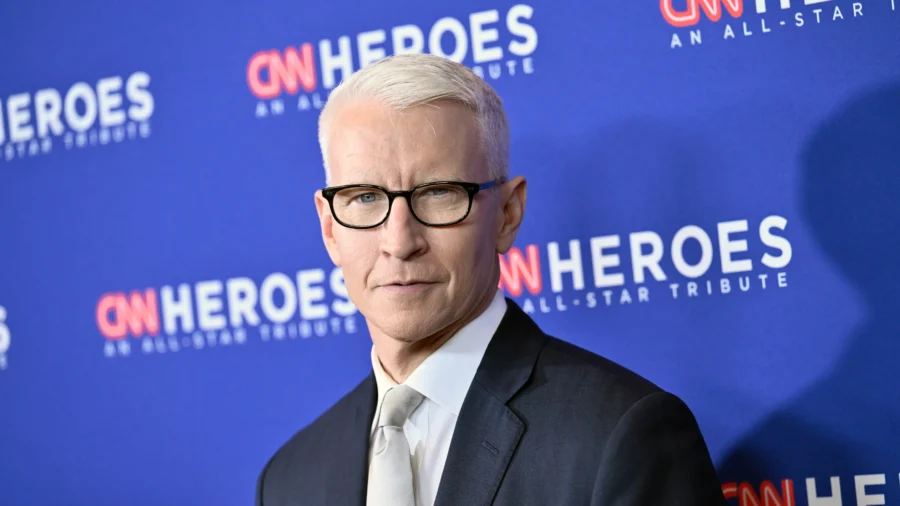
Cooper joined 60 Minutes in the mid-2000s after already establishing himself as a leading figure in cable news. His program, Anderson Cooper 360, premiered in 2003 and quickly became one of CNN’s flagship broadcasts. Known for his calm demeanor, incisive questioning, and field reporting from disaster zones and conflict regions, Cooper built a reputation as both anchor and on-the-ground correspondent.
Over the years, he has reported from war zones, natural disasters, and political conventions, often blending empathy with tough questioning. His work has earned numerous journalism awards and cemented his standing as one of the most recognizable figures in American media.
At 60 Minutes, Cooper added another layer to his professional portfolio. The program’s format allowed him to explore subjects in depth, often spending months developing a single segment. The combination of investigative rigor and cinematic storytelling aligned well with his journalistic instincts.
His most recent appearance on the broadcast involved introducing a piece about filmmaker Ken Burns, whose documentaries have chronicled major chapters of American history. The segment served as a reminder of the breadth of stories Cooper has helped bring to audiences over the years.
Industry analysts note that Cooper’s departure does not signal retirement or withdrawal from public life. His ongoing commitment to CNN ensures that he will remain a visible and influential voice in national and international news coverage. Rather, the shift appears to be a narrowing of focus—choosing to maintain one demanding role instead of two.
The media environment itself has transformed dramatically since Cooper first joined 60 Minutes. The rise of digital platforms, social media, streaming services, and on-demand content has reshaped how audiences consume news. Traditional broadcast programs face new competition for attention, while cable networks adapt to changing viewer habits.
In that evolving landscape, Cooper’s ability to navigate both broadcast and cable news helped bridge generational divides in viewership. His exit from CBS may prompt questions about how 60 Minutes will continue adapting while maintaining its legacy.
For now, CBS appears intent on framing the change as amicable and respectful. The network’s public statement emphasized gratitude rather than controversy. Observers say that tone is significant, especially at a time when high-profile departures in media often carry undertones of conflict or corporate restructuring.
Ultimately, Cooper’s decision highlights a universal reality: even the most accomplished careers must coexist with personal priorities. The demands of national journalism are immense, and the opportunity to recalibrate while still actively working in the field is one not every journalist receives.
As the current season of 60 Minutes concludes in May, viewers may find themselves reflecting on Cooper’s contributions to the storied broadcast. From investigative deep dives to interviews with cultural figures, his presence has been a steady feature of Sunday evenings for nearly two decades.
Yet his voice will not disappear from television screens. Each weeknight, he will continue anchoring Anderson Cooper 360 on CNN, guiding viewers through breaking developments and in-depth discussions.
In stepping away from one platform while remaining committed to another, Anderson Cooper is not ending his career—he is reshaping it. And in doing so, he joins a growing number of professionals redefining success not solely by the number of roles they hold, but by the balance they strike between public life and private time.

Emily Johnson is a critically acclaimed essayist and novelist known for her thought-provoking works centered on feminism, women’s rights, and modern relationships. Born and raised in Portland, Oregon, Emily grew up with a deep love of books, often spending her afternoons at her local library. She went on to study literature and gender studies at UCLA, where she became deeply involved in activism and began publishing essays in campus journals. Her debut essay collection, Voices Unbound, struck a chord with readers nationwide for its fearless exploration of gender dynamics, identity, and the challenges faced by women in contemporary society. Emily later transitioned into fiction, writing novels that balance compelling storytelling with social commentary. Her protagonists are often strong, multidimensional women navigating love, ambition, and the struggles of everyday life, making her a favorite among readers who crave authentic, relatable narratives. Critics praise her ability to merge personal intimacy with universal themes. Off the page, Emily is an advocate for women in publishing, leading workshops that encourage young female writers to embrace their voices. She lives in Seattle with her partner and two rescue cats, where she continues to write, teach, and inspire a new generation of storytellers.