



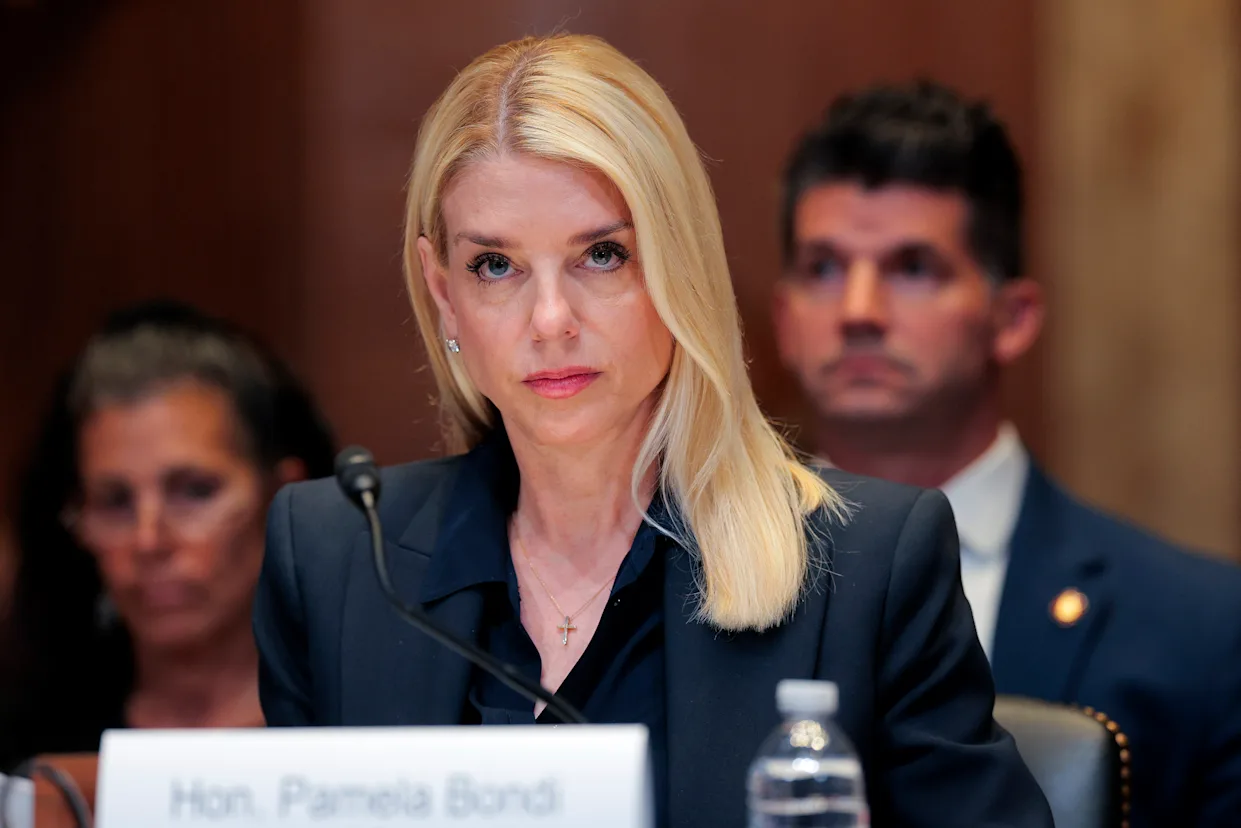
A fresh wave of political and public backlash has erupted following the full release of documents tied to disgraced financier Jeffrey Epstein, after Attorney General Pam Bondi confirmed that all remaining records had been made public under the Epstein Files Transparency Act.
While the disclosure was billed as a landmark moment for transparency, critics across the political spectrum say the way the material was presented has instead created confusion, reputational harm, and renewed distrust in how the Department of Justice handled the case.
A Massive Disclosure — But With Controversy
The newly released materials include emails, photographs, flight records, and internal documents connected to Epstein’s network. A central point of controversy is a list of more than 300 public figures whose names appear at least once somewhere within the files.
According to Bondi, the list was compiled to comply with congressional reporting requirements, and inclusion on it does not imply any wrongdoing. However, the absence of clear context explaining why each individual was mentioned has drawn intense criticism.
Lawmakers and commentators argue that placing individuals with vastly different levels of connection—ranging from alleged co-conspirators to incidental references—into a single undifferentiated list risks misleading the public and unfairly damaging reputations.
The Janis Joplin Flashpoint
The criticism reached a tipping point when it emerged that Janis Joplin was among the names included in the files, despite the fact that she died in 1970—when Epstein himself was still a teenager.
Representative Ro Khanna seized on that example as evidence that the list had been compiled without adequate explanation or filtering.
Khanna argued that placing Joplin’s name alongside convicted abusers creates a false equivalence that “muddies the waters” between perpetrators and individuals who may have been mentioned incidentally or historically.
He called on the Department of Justice to release the full unredacted context of each reference, with only victims’ names withheld for privacy reasons.
Bipartisan Frustration Emerges
The backlash has not been limited to one party. Figures from both sides of the aisle have criticized the way the disclosure was handled.
Republican Representative Marjorie Taylor Greene publicly objected after discovering her own name appeared in a heavily redacted section of the files, despite there being no indication of any wrongdoing connected to her.
Greene argued that including her name in a summary list while redacting the surrounding material creates ambiguity and fuels speculation. Her response reflected a broader complaint shared by multiple public figures—that the list, without context, invites public misinterpretation.
Even individuals not named in the documents have raised concerns that the format of the release may undermine confidence in legitimate findings by blending them with irrelevant or incidental references.
The Broader Context of the Epstein Case
The renewed controversy comes amid sustained global attention on Epstein’s crimes and the network of powerful associates linked to him over the years.
Epstein, who died in federal custody in 2019 while awaiting trial on sex trafficking charges, had long been connected to influential figures in politics, business, entertainment, and academia. His associate Ghislaine Maxwell was later convicted of facilitating abuse.
The scale and reach of Epstein’s contacts has made any disclosure of names politically explosive. However, experts warn that failing to clearly distinguish between levels of association risks obscuring rather than clarifying the truth.
Survivors’ Voices Risk Being Lost
Amid the political infighting and media attention on high-profile names, advocates say the focus has drifted away from the survivors of Epstein’s abuse.
Several victim advocacy groups have expressed concern that the debate over the list’s contents—who is on it, who is missing, and how names are categorized—has overshadowed the experiences of those harmed by Epstein and his network.
Critics argue that transparency should not only involve releasing documents but also ensuring that the information is presented in a way that is accurate, responsible, and centered on accountability.
What Bondi’s Office Says
In her formal notification to Congress, Bondi stated that the Department of Justice complied fully with the transparency law and that no names were withheld or redacted due to political sensitivity or reputational concerns.
She explained that the only materials withheld were those protected by legal privileges—such as attorney-client communications or internal deliberations—that could not be separated from relevant content.
Bondi has not directly addressed the criticism over the list’s format, but officials have emphasized that the documents themselves contain the necessary context for those who review them in full.
A Transparency Debate That Isn’t Over
The controversy over the Epstein files is unlikely to subside quickly. Lawmakers from both parties are already calling for additional hearings, further disclosures, and clearer explanations of how the Department of Justice compiled and categorized the released material.
At the heart of the dispute is a fundamental tension: how to balance transparency with accuracy, and how to inform the public without creating misleading associations.
For now, the release has achieved one goal—making a vast trove of material publicly accessible. But the backlash demonstrates that how information is presented can be just as consequential as whether it is released at all.
As political pressure mounts, the Epstein files are poised to remain a major flashpoint in Washington, with implications not only for those named in the documents but also for public trust in the institutions responsible for investigating and disclosing one of the most disturbing criminal cases in recent history.

Emily Johnson is a critically acclaimed essayist and novelist known for her thought-provoking works centered on feminism, women’s rights, and modern relationships. Born and raised in Portland, Oregon, Emily grew up with a deep love of books, often spending her afternoons at her local library. She went on to study literature and gender studies at UCLA, where she became deeply involved in activism and began publishing essays in campus journals. Her debut essay collection, Voices Unbound, struck a chord with readers nationwide for its fearless exploration of gender dynamics, identity, and the challenges faced by women in contemporary society. Emily later transitioned into fiction, writing novels that balance compelling storytelling with social commentary. Her protagonists are often strong, multidimensional women navigating love, ambition, and the struggles of everyday life, making her a favorite among readers who crave authentic, relatable narratives. Critics praise her ability to merge personal intimacy with universal themes. Off the page, Emily is an advocate for women in publishing, leading workshops that encourage young female writers to embrace their voices. She lives in Seattle with her partner and two rescue cats, where she continues to write, teach, and inspire a new generation of storytellers.