A heated dispute between Canada and Sweden has become one of the defining controversies of the Winter Olympics, after cheating allegations and an on-ice confrontation overshadowed what should have been a routine round-robin curling match.
The incident unfolded during a men’s preliminary game in Cortina, where Canada secured an 8–6 victory over Sweden. But the scoreline quickly became secondary to a dispute over whether a Canadian player illegally touched a curling stone during delivery—an accusation that triggered a sharp exchange between athletes and drew official scrutiny from the sport’s governing bodies.
The Moment That Sparked the Dispute
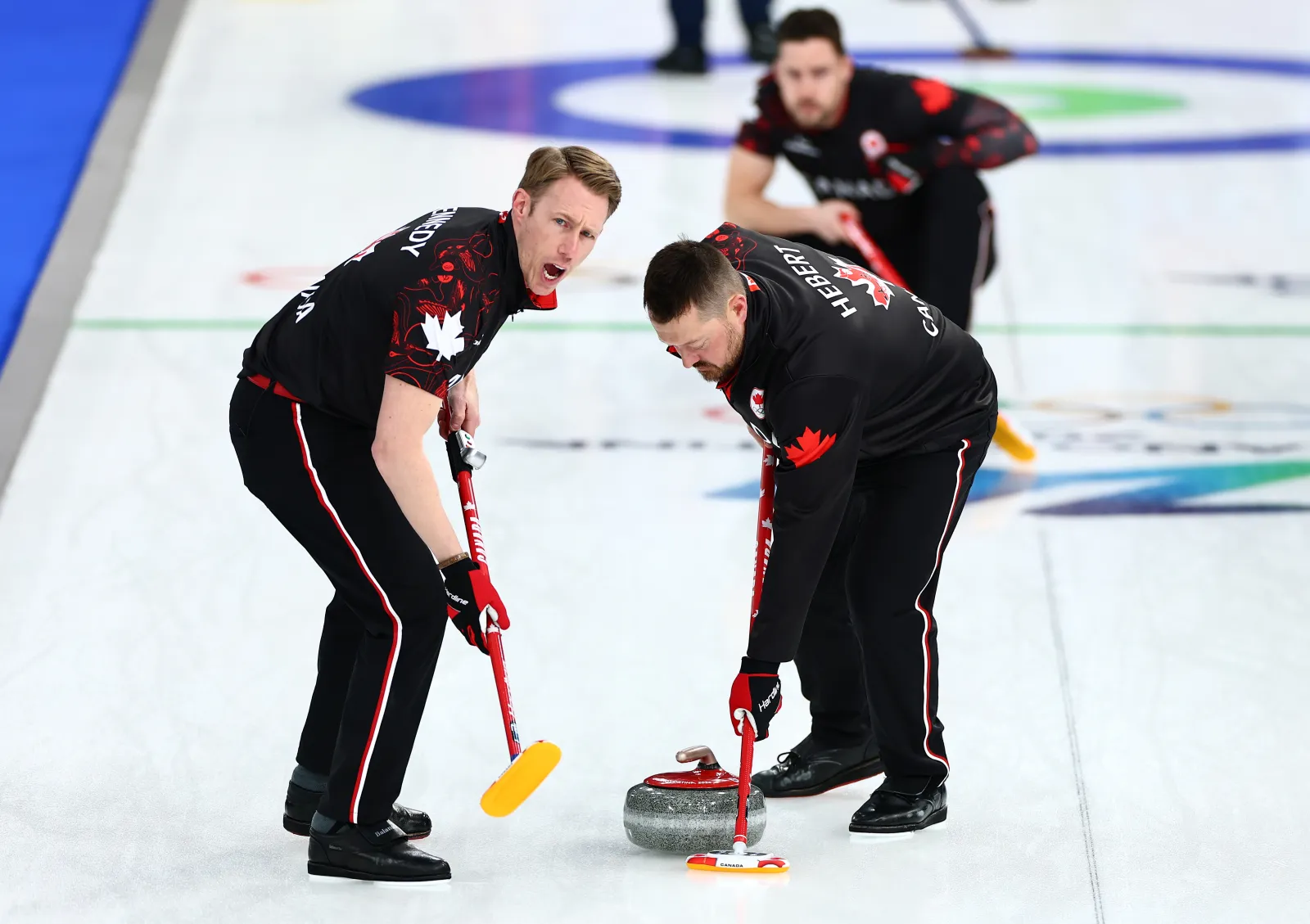
At the center of the controversy was Canadian curler Marc Kennedy, who Swedish player Oskar Eriksson accused of committing a “double touch.” The allegation was that Kennedy made contact with the stone after releasing the handle, potentially influencing its trajectory.
Curling rules governing delivery are precise. A player must release the stone before it crosses the hog line, and while limited contact with the handle prior to that point can be permissible, touching the stone after release—especially beyond the hog line—can be a violation if it affects play.
Sweden believed that Kennedy’s finger made a second contact with the stone, prompting immediate concern and a request for officials to closely observe subsequent deliveries. The tension escalated further as the match progressed, culminating in a heated verbal exchange captured by broadcast microphones.
Kennedy forcefully denied the accusation and responded with a profanity directed at his opponent, an outburst that quickly circulated online and intensified scrutiny of the match.
Curling Canada’s Official Position
Following the match, Curling Canada released a detailed statement defending its team while acknowledging the inappropriate language used during the confrontation.
The organization emphasized that officials had been called onto the ice to monitor the situation and found no evidence of rule violations:
“Officials were called to the field of play and closely monitored for any release rule infractions, including those involving touching the granite following a complaint by Team Sweden. After three ends of careful observation, no hogline violations or stone retouches were found.”
Curling Canada reiterated its commitment to sportsmanship and fair play, stating that while it supported the verbal warning issued to its team for language used during the game, it stood firmly behind the legitimacy of Canada’s performance.
World Curling’s Clarification and Response
The sport’s global authority, World Curling, also issued a statement addressing both the rule interpretation and the conduct displayed during the match.
World Curling clarified several key aspects of the rules:
-
A double touch of the handle before the hog line is permitted.
-
Re-touching the handle after the hog line is prohibited.
-
Any contact with the granite of the stone during forward motion is not allowed and results in the stone being removed from play.
After reviewing the situation as it unfolded during the match, officials concluded that no violation occurred.
However, the governing body did issue a verbal warning to the Canadian team under its code of conduct for the language used during the confrontation. It also signaled procedural changes moving forward, announcing that officials will rotate between sheets during matches to more closely monitor deliveries and prevent similar disputes.
Sweden Chooses Not to Escalate
Despite the intensity of the accusations during the game, Sweden ultimately opted not to pursue a formal investigation.
Swedish team leader Fredrik Lindberg confirmed that the Swedish Olympic Committee would not seek further action regarding the match. The decision effectively closes the matter from a disciplinary standpoint, though the debate continues among fans and commentators.
Sweden’s choice not to escalate suggests an acknowledgment of the officials’ findings, even if frustration over the incident remains within the team.
A Broader Pattern of Olympic Drama
The curling controversy is part of a wider pattern of high-profile incidents at this year’s Winter Olympics. The Games have been marked by unusual levels of tension and off-field drama, ranging from athlete disqualifications to personal controversies that have dominated headlines.
Within this broader context, the Canada–Sweden curling clash stands out not only because of the cheating allegation itself but also because curling is traditionally regarded as one of the most sportsmanlike and respectful disciplines in the Olympic program.
The visible breakdown in decorum—particularly the use of profanity during competition—has sparked discussion within the sport about maintaining its cultural standards while competing under the intense pressure of the Olympic stage.
Officiating and Technology Under Scrutiny
The incident has also reignited debate over officiating standards in curling. Unlike some sports, curling does not rely on video replay to re-adjudicate calls made during live play. Decisions made on the ice are considered final.
Additionally, it is not always feasible for officials to be positioned at every hog line for every delivery across multiple sheets of ice simultaneously. This structural limitation has now come under renewed scrutiny following the dispute.
World Curling’s decision to increase observational coverage by rotating officials is a direct response to these concerns, signaling a willingness to adapt procedures in order to preserve confidence in officiating.
The Road Ahead for Both Teams
For Canada, the focus now shifts back to competition. The team’s victory over Sweden stands, and there have been no penalties affecting its tournament standing. Maintaining composure and discipline in future matches will be critical as the stakes rise in later rounds.
For Sweden, the decision not to pursue further action allows the team to move forward without a prolonged administrative dispute. However, the emotional impact of the incident may linger, potentially adding intensity to any future meetings between the two sides.
Conclusion
In the end, officials determined that no cheating occurred in the Canada–Sweden curling match, and the result remains unchanged. Yet the controversy has left a lasting imprint on the 2026 Winter Olympics, highlighting how quickly tensions can escalate even in sports known for civility.
The episode underscores three key realities: the importance of clear and enforceable rules, the challenges of officiating in real time without full technological support, and the need for athletes to maintain professionalism even in the face of high-pressure accusations.
While the immediate dispute may be resolved, its broader implications—for sportsmanship, officiating, and Olympic competition culture—are likely to be debated long after the final stones have been thrown.

Emily Johnson is a critically acclaimed essayist and novelist known for her thought-provoking works centered on feminism, women’s rights, and modern relationships. Born and raised in Portland, Oregon, Emily grew up with a deep love of books, often spending her afternoons at her local library. She went on to study literature and gender studies at UCLA, where she became deeply involved in activism and began publishing essays in campus journals. Her debut essay collection, Voices Unbound, struck a chord with readers nationwide for its fearless exploration of gender dynamics, identity, and the challenges faced by women in contemporary society. Emily later transitioned into fiction, writing novels that balance compelling storytelling with social commentary. Her protagonists are often strong, multidimensional women navigating love, ambition, and the struggles of everyday life, making her a favorite among readers who crave authentic, relatable narratives. Critics praise her ability to merge personal intimacy with universal themes. Off the page, Emily is an advocate for women in publishing, leading workshops that encourage young female writers to embrace their voices. She lives in Seattle with her partner and two rescue cats, where she continues to write, teach, and inspire a new generation of storytellers.