


Officials at World Curling have intervened after a tense and controversial men’s round-robin match between Canada and Sweden sparked allegations of rule violations and unsportsmanlike conduct at the Winter Olympics in Cortina. The governing body moved quickly to address the fallout, issuing warnings and implementing new officiating measures designed to prevent similar incidents for the remainder of the competition.
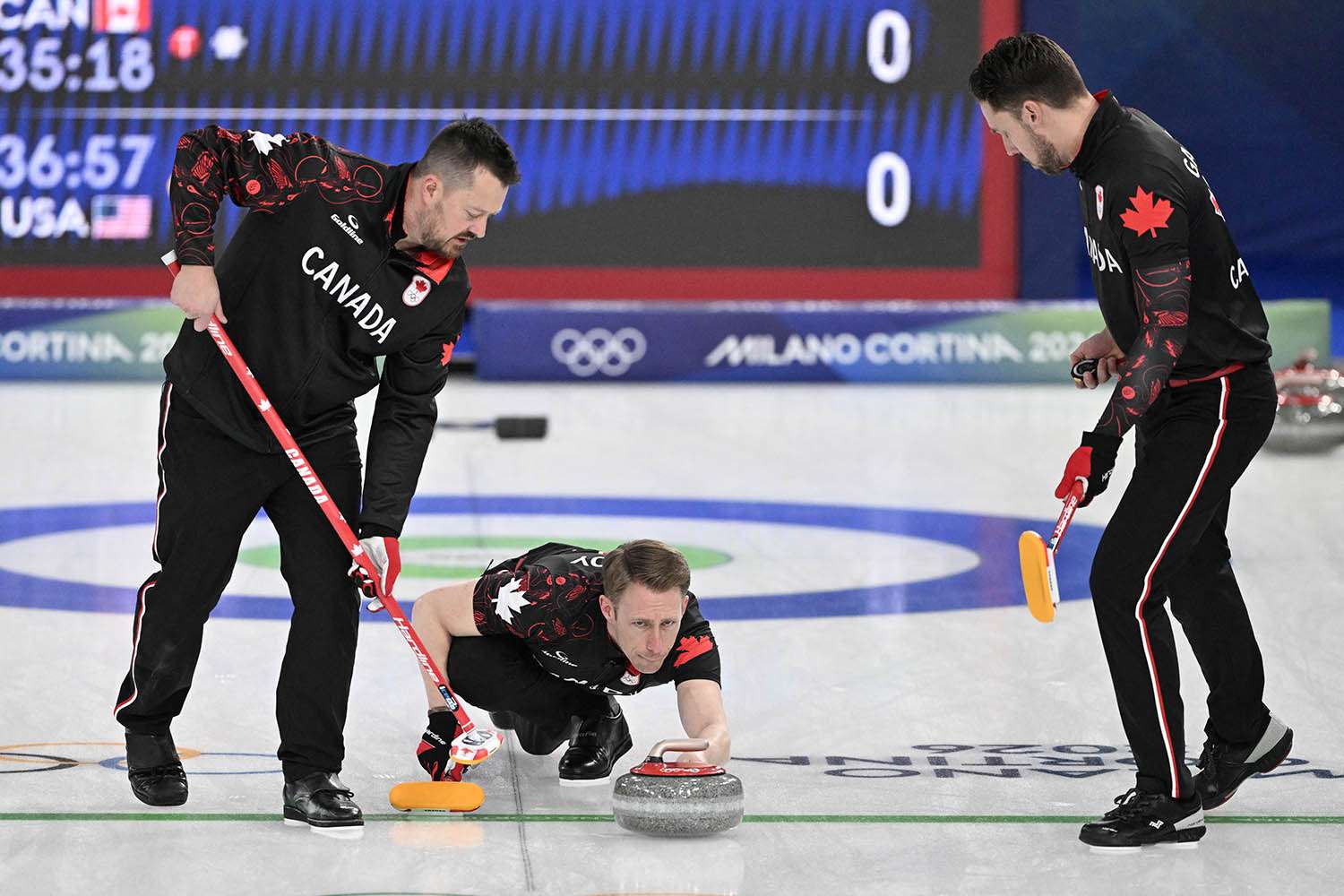
The dispute centers on Sweden’s claim that Canadian players illegally double-touched a stone during delivery—an infraction under curling’s strict delivery rules. According to the regulations, athletes may adjust the handle of the stone before it reaches the hog line, but once the stone crosses that line, any further contact with the granite is prohibited. Violations of this rule can lead to penalties, though enforcement relies heavily on on-ice observation rather than video review.
The controversy emerged early in the match when a Swedish player was seen on broadcast footage raising concerns to officials between the second and third ends. Swedish athletes believed that a Canadian player had made impermissible contact with the stone after release. While no formal call was made at the time—because in-game officiating decisions are final and not subject to replay review—the allegation simmered throughout the match and escalated as the contest progressed.
Emotions boiled over in the closing stages of the game. Canadian curler Marc Kennedy reacted angrily to the accusations, directing profanity toward a Swedish opponent. The outburst further intensified the already charged atmosphere on the ice, shifting attention away from the competition itself and toward questions of sportsmanship and rule enforcement.
Canada ultimately secured an 8–6 victory, but the result was overshadowed by the dispute. In the aftermath, World Curling issued a formal statement confirming it had spoken with Canadian officials about the incident and delivered a verbal warning regarding the inappropriate language used during the match. The organization made clear that any further breaches of conduct, as defined under its rulebook provisions governing player behavior, could trigger additional sanctions.
Kennedy later addressed reporters, acknowledging that his reaction was driven by frustration over having his integrity questioned. He emphasized that athletes invest years in building reputations for fair play and that accusations of cheating can provoke emotional responses. While he did not concede any rule violation, he expressed a desire to move forward and refocus on the competition itself.
The episode has reignited long-standing debates about how curling officiating should function at the highest level of the sport. Unlike many modern sports, curling does not use video replay to overturn or reassess decisions made on the ice. World Curling maintains that it is impractical to position umpires to observe every delivery on every sheet simultaneously, given the pace and structure of tournament play. As a result, much of the enforcement depends on trust, player self-policing, and the vigilance of roaming officials.
However, in response to the controversy, the governing body announced an immediate procedural adjustment. Two additional officials will now rotate between all four sheets of ice to observe stone deliveries more closely, particularly at the hog lines where infractions are most likely to occur. The change is intended to provide greater oversight and reassurance to competing teams that rules are being applied consistently and fairly.
For Sweden, the outcome has been frustrating. While they did not secure a formal ruling in their favor during the match, their complaint has prompted a tangible change in officiating protocol. From their perspective, the new measures implicitly acknowledge that the existing system left room for doubt or inconsistency. For Canada, meanwhile, the focus remains on preserving their competitive momentum while addressing concerns about player conduct and perception.
The broader significance of the incident extends beyond a single game. Curling prides itself on a culture of respect, honesty, and self-regulation—values often cited as distinguishing the sport from more adversarial disciplines. Episodes like this test those ideals, especially on the Olympic stage where stakes, scrutiny, and national pride are at their highest.
World Curling’s response reflects a balancing act between maintaining tradition and adapting to modern expectations of transparency and accountability. While the organization has stopped short of introducing video replay or more invasive oversight, the addition of roaming officials represents a meaningful step toward tighter monitoring. Whether that adjustment will be sufficient to prevent further disputes remains to be seen.
As the tournament continues, attention will likely remain fixed not only on the standings but also on how the sport navigates this moment. Teams will be under increased scrutiny, officials will operate with heightened vigilance, and governing bodies will be judged on their ability to uphold both the letter and the spirit of the rules.
In the end, the hope for organizers and competitors alike is that the focus can return to athletic performance and strategy rather than controversy. Yet the Canada–Sweden clash has already left a mark on the competition, serving as a reminder that even in a sport built on trust, questions of fairness and integrity can quickly come to the forefront when the stakes are highest.

James Jenkins is a celebrated Pulitzer Prize-winning author whose work has reshaped the way readers think about social justice and human rights in America. Raised in Atlanta, Georgia, James grew up in a community that instilled in him both resilience and a strong sense of responsibility toward others. After studying political science and creative writing at Howard University, he worked as a journalist covering civil rights issues before dedicating himself fully to fiction. His novels are known for their sharp, empathetic portraits of marginalized communities and for weaving personal stories with broader political realities. Jenkins’s breakout novel, Shadows of Freedom, won national acclaim for its unflinching look at systemic inequality, while his more recent works explore themes of identity, resilience, and the fight for dignity in the face of oppression. Beyond his novels, James is an active public speaker, lecturing at universities and participating in nonprofit initiatives that support literacy and community empowerment. He believes that storytelling is a way to preserve history and inspire change. When not writing, James enjoys jazz music, mentoring young writers, and traveling with his family to explore cultures and stories around the world.