A closely divided U.S. House vote this week underscored deepening fractures within both major political parties, as lawmakers passed a 219–211 resolution aimed at curbing President Donald Trump’s tariffs on Canadian imports. While much of the attention centered on a group of Republicans who broke with the White House, the vote also featured a notable Democratic defection that added an unexpected twist to the outcome.
The measure, approved in the United States House of Representatives, seeks to overturn the national emergency declaration that forms the legal basis for tariffs imposed on certain Canadian goods. Supporters of the resolution argue that Congress must reassert its constitutional authority over trade policy, while critics warn that dismantling the tariffs could weaken the administration’s leverage in ongoing negotiations.
The vote total reflected a narrow but meaningful bipartisan coalition. Several Republicans crossed party lines to support the resolution, joining nearly all Democrats in opposition to the tariffs. Their decision signaled growing unease among some GOP lawmakers regarding the economic impact of the trade measures, particularly in districts heavily reliant on cross-border commerce.
At the same time, the White House has defended the tariffs as a necessary tool to address trade imbalances and national security concerns. President Donald Trump has argued that the measures are part of a broader strategy to protect American industries and respond to issues tied to border enforcement and the flow of illicit substances.
The resolution passed despite strong opposition from many Republican leaders, who contend that Congress should not undermine executive authority in matters of trade enforcement. Some GOP members characterized the vote as symbolic, noting that any attempt to formally revoke the tariffs would likely face a presidential veto.
Still, the debate on the House floor reflected broader anxieties about the economic ripple effects of prolonged trade tensions between the United States and Canada. Business groups have raised concerns about increased costs for manufacturers and consumers, while agricultural stakeholders in border states have warned of retaliatory measures affecting exports.
The political drama surrounding the vote was heightened by the rare spectacle of cross-party defections. While most Democrats voted to rein in the tariffs, and several Republicans joined them, one Democrat broke ranks and sided with the majority of Republicans in opposing the resolution.
That Democrat was Rep. Jared Golden of Maine.
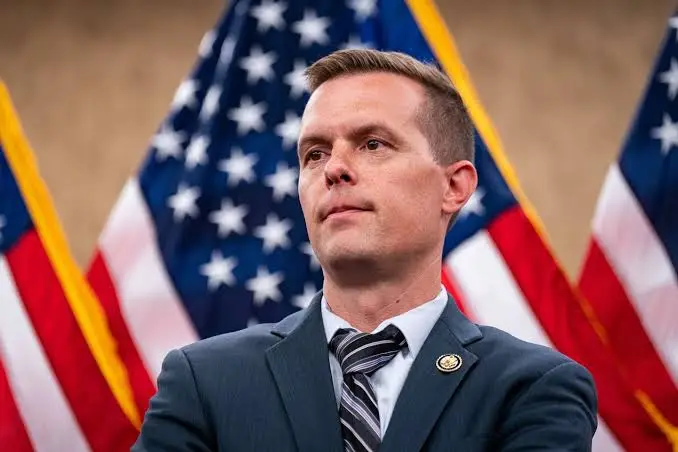
Golden’s vote stood out not only because it diverged from his party’s overwhelming position but also because of his district’s unique economic profile. Representing a largely rural and working-class constituency with strong ties to manufacturing and resource industries, Golden has frequently emphasized a pragmatic approach to trade policy.
In statements following the vote, Golden has previously indicated support for certain targeted tariffs when he believes they serve to protect domestic industries. His record reflects a willingness to deviate from party orthodoxy on economic matters, particularly when he views federal trade policy as insufficiently protective of American workers.
The Maine congressman’s decision illustrates the complexity of trade politics in an era when traditional party alignments are less predictable. While Democrats have generally advocated for multilateral trade frameworks and have criticized the administration’s use of emergency powers, some members representing industrial or economically vulnerable districts have expressed openness to protectionist measures.
Golden’s defection also underscores the broader strategic calculus facing lawmakers from politically competitive districts. In swing areas where voters may hold mixed views on trade and globalization, members of Congress often seek to position themselves as independent-minded rather than strictly partisan.
Meanwhile, the six Republicans who supported the resolution drew attention for challenging their party’s leadership and the White House. Among them was Rep. Thomas Massie of Kentucky, who has frequently expressed concerns about the scope of executive authority and federal spending. Their votes signaled that skepticism about tariff policy exists within Republican ranks, particularly among members wary of expanded presidential emergency powers.
The 219–211 tally reflects the razor-thin margins that have come to define legislative battles in the current Congress. With party control closely divided, even a small number of defections can shape outcomes and elevate individual lawmakers into pivotal roles.
Although the resolution passed the House, its future remains uncertain. Any binding change to tariff policy would require action by the Senate and, ultimately, presidential approval. Given the administration’s strong defense of its trade strategy, observers widely anticipate a veto if the measure advances further.
Nonetheless, the vote carries symbolic and political weight. It demonstrates congressional willingness — at least within the House — to challenge executive trade actions. It also highlights the fluid nature of alliances on economic issues that cut across traditional ideological lines.
Trade policy has long been an area where party labels fail to capture the full spectrum of views. Over the past decade, both Republicans and Democrats have shifted positions in response to evolving political coalitions and economic pressures. The current dispute over Canadian tariffs exemplifies this dynamic, with lawmakers balancing concerns about global competitiveness, domestic job protection, and diplomatic relationships.
For Golden, the vote may reinforce his reputation as an independent Democrat willing to depart from party leadership when he believes his constituents’ interests demand it. For Republican defectors, the decision may signal a broader debate within the GOP about the long-term implications of aggressive tariff strategies.
The outcome also reflects the broader national conversation about Congress’s constitutional role in trade. While the executive branch has increasingly relied on emergency authorities to impose tariffs, some lawmakers argue that such actions sidestep legislative oversight.
As debate continues, the House vote serves as a reminder that economic policy remains one of the most unpredictable arenas in American politics. Lawmakers must navigate not only partisan expectations but also the economic realities facing their districts.
Whether the resolution ultimately alters tariff policy or remains a symbolic gesture, the 219–211 vote marks a significant moment in the ongoing discussion about trade, executive authority, and bipartisan cooperation. It reveals a Congress grappling with competing priorities and shifting alliances — and a political landscape where party unity can no longer be taken for granted.

Emily Johnson is a critically acclaimed essayist and novelist known for her thought-provoking works centered on feminism, women’s rights, and modern relationships. Born and raised in Portland, Oregon, Emily grew up with a deep love of books, often spending her afternoons at her local library. She went on to study literature and gender studies at UCLA, where she became deeply involved in activism and began publishing essays in campus journals. Her debut essay collection, Voices Unbound, struck a chord with readers nationwide for its fearless exploration of gender dynamics, identity, and the challenges faced by women in contemporary society. Emily later transitioned into fiction, writing novels that balance compelling storytelling with social commentary. Her protagonists are often strong, multidimensional women navigating love, ambition, and the struggles of everyday life, making her a favorite among readers who crave authentic, relatable narratives. Critics praise her ability to merge personal intimacy with universal themes. Off the page, Emily is an advocate for women in publishing, leading workshops that encourage young female writers to embrace their voices. She lives in Seattle with her partner and two rescue cats, where she continues to write, teach, and inspire a new generation of storytellers.