
I Came Home After Five Years. My Sister Laughed at My “Low” Rank. My Parents Said I Was an Embarrassment. Then Police Showed Up to Arrest Me. I Stayed Quiet — Until a Four-Star General Walked In and Saluted Me.
I pulled into the driveway and cut the engine before anyone inside could hear it.
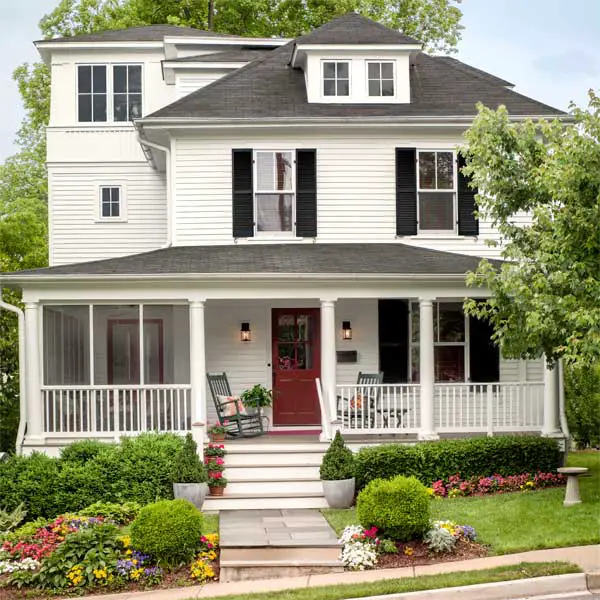
The house looked exactly the same — fresh paint, trimmed hedges, the kind of place that worked hard to look successful. Music thumped through the walls. Laughter spilled out whenever the front door opened.
I checked my reflection in the rearview mirror. No makeup. Hair pulled back. Plain jacket, plain boots. No medals. No ribbons. Just a name tape sewn inside my collar where no one could see it.
I got out and shut the door quietly.
Inside, the smell of catered food hit me first. Champagne, grilled meat, something sweet and expensive. The living room was packed — people I recognized, people I didn’t, phones already out, recording everything that moved.
In the middle of it all stood my sister, Tiffany.
She was glowing under ring lights like she was born with a filter attached to her face. Her fiancé Brad stood nearby in a tailored jacket, wearing the practiced smile of a man who had rehearsed it in the mirror. Someone had introduced him to a cluster of guests as a military man. He was nodding along like he’d just received a promotion.
I slipped in along the wall. I’d learned how to do that a long time ago — move through spaces without disturbing them.
Tiffany noticed me anyway. She always did.
Her smile froze for half a second before reshaping itself into something sharp.
“Oh my God,” she said loudly. “You actually showed up.”
Heads turned. Phones tilted.
“This is my sister Sarah,” she announced, wrapping an arm around my shoulder like we were close. “She’s been away five years. No calls, no posts, no updates. We hardly knew where she was.”
“Good to see you too,” I said.
Her eyes moved down my clothes. “So,” she said, drawing the word out, “what rank are you now?”
“Still working,” I said.
Brad leaned in, curious and amused. “You army or something like that? You don’t look it. No offense. Where’s the uniform?”
The smile widened on his face.
“Brad’s in the reserves,” Tiffany said, patting his arm. “They’re grooming him for big things. Leadership. Visibility.”
Brad straightened slightly.
“And Sarah,” Tiffany went on, “she does logistics or cleaning on base. Something like that.”
Someone snorted. Another person laughed too loud.
I felt that familiar pressure build behind my eyes. I let it pass.
Tiffany reached into her clutch and pulled out a twenty-dollar bill. She pressed it against my chest. “Here. Go buy yourself something nice. We might need extra hands serving drinks at the wedding.”
The bill slid down my jacket and fluttered to the floor.
The room went quiet in the way rooms do when people aren’t sure yet whether to be uncomfortable.
I bent down, picked up the money, and handed it back to her. “Keep it,” I said. “Looks like you’ll need it.”
A few eyebrows lifted.
“Oh my God, you’re still so sensitive,” she laughed, waving it off.
My father cleared his throat. “Tiffany’s just joking. You know how she is.”
“I do,” I said.
Brad raised his glass. “No hard feelings, right? Military’s military. We all serve in our own way.”
“Sure,” I said. “Some louder than others.”
Tiffany didn’t catch that. Or maybe she did and decided not to. She was already turning back to the camera, explaining how Brad had essentially put his life on hold for the country.
I slipped into the kitchen, grabbed a bottle of water, and leaned against the counter.
My mother followed.
“You could have dressed up,” she said, keeping her voice low. “People are watching. This is important for Tiffany. For the family.”
“I know,” I said.
She sighed. “Your father and I just don’t understand why you chose such a quiet path.”
“It worked for me,” I said.
From across the room, Tiffany raised her phone again. “Everyone say hi to my sister. She’s back from playing soldier.”
Half-hearted waves followed.
I looked around the room — at the furniture my grandmother used to polish by hand, at the walls that used to hold her photographs, at the people celebrating inside a house they didn’t know the full story of.
Something settled in my chest.
Not anger. Not sadness.
A decision clicking into place.
I followed the sound of my father’s voice down the hall later that night. His office door was half open, light spilling out in a thin line.
A man in a gray suit had a leather folder open on the desk. My father sat across from him. My mother stood behind, arms crossed.
The framed photo of my grandmother was gone from the desk.
I stepped inside without knocking.
Three heads turned.
“Sarah,” my father said, surprised. “We’re in the middle of something.”
“I can see that.”
My eyes moved to the paperwork. Numbers. Dates. The word transfer jumping out at me.
The man in the suit excused himself and left.
“What’s being transferred?” I asked.
“Assets,” my mother said.
“Which ones?”
She hesitated. “Property investments.”
I looked at the bare wall where the photograph used to hang. “Did you sell Grandma’s house?”
My father leaned back, exhaling like he’d been waiting for this conversation. “It was just sitting there. Empty. Costing money.”
“That house wasn’t empty,” I said. “It was hers.”
“And now it’s helping your sister,” my mother snapped. “Which is what family does.”
“For Tiffany,” I said.
“For her future,” my mother corrected. “New York isn’t cheap.”
I thought about the old place — the creaky stairs, the backyard where my grandmother drank tea every morning, the attic full of boxes no one had touched since the funeral. All of it reduced to a line item.
“And the will?” I asked.
My father’s jaw tightened. “You’re not listed.”
He spread his hands. “Your career doesn’t add value to the family name. Tiffany’s platform does. Her marriage does.”
“So I don’t count.”
“That’s not what I said.”
“It’s what you meant.”
My mother stepped closer. “You chose to disappear for five years. No presence. No proof of success. We had to make practical decisions.”
A folder near the bottom of the stack caught my eye — an old unit patch on the corner, faded.
“What’s that?” I asked.
My father followed my gaze. “Just memorabilia.”
I opened it without asking. Inside were certificates, commendations, a folded flag receipt. Everything marked as collateral.
“You used his service record to get better loan terms,” I said.
My father didn’t deny it.
“The ring Tiffany’s been flashing at the camera,” I said. “That was his.”
“He earned it,” my father snapped, standing up. “Enough. We’re done discussing this.”
“Are we? Because I see debt schedules here that don’t look good.”
He stiffened. “You don’t understand finances.”
“I understand numbers,” I said. “These are bad ones. You’re overleveraged. You sold off everything solid to keep up appearances.”
He reached for the papers, stacking them quickly. “This is not your concern.”
“You made it my concern when you used my name as a tax shield.”
Both of them froze.
I pointed to a document near the bottom. “That one. You listed me as an overseas dependent. Claimed exemptions based on my deployment status.”
“It’s legal,” my father said quietly.
“It’s sloppy,” I said.
From the hallway, laughter burst out as someone popped another bottle of champagne. The sound felt wrong in that room.
My mother softened her voice. “You’ll be fine,” she said. “You’re resourceful. You always were.”
I closed the folder and slid it back across the desk. “You sold the past to rent the future,” I said. “And you put it all in her name.”
My father didn’t argue.
That told me everything.
I turned to leave. At the door, I stopped and looked at the empty wall where my grandmother’s photo had been.
“She deserved better,” I said.
No one answered.
I stepped back into the noise of the party, the music hitting me all at once.
Two days later, I was sitting in a quiet office with fluorescent lights and fast-typing clerks when I asked for a copy of my full credit history.
The woman behind the counter frowned at the screen. “You’ve been busy,” she said.
“I haven’t,” I replied.
She printed the pages and handed them to me with a look that said she wasn’t buying my calm.
Lines of debt stared back. Short-term loans, high interest, multiple signatures — all dated while I had been overseas. Another continent. Another time zone. Another world entirely.
“That’s not mine,” I said.
She tapped one line. “The signature matches.”
“It’s forged.”
She shrugged. “Then you’ll want a lawyer.”
I already had one.
I called him from the car. One ring. Then a voice I hadn’t heard in months.
“I was wondering when you’d check,” he said.
“I have the paperwork,” I told him. “She signed my name.”
“Of course she did,” he said. “She needed speed, not permission.”
“How bad?”
“Bad enough to ruin you if you stay quiet. Not bad enough to scare me.”
I hung up and drove back to the house.
But first, I adjusted the small camera I’d placed behind the kitchen microwave two days earlier — angled just enough to catch the table and the doorway.
That night, through my phone’s camera feed, I watched my mother pour coffee while Tiffany paced.
“She knows something,” Tiffany said. “I can tell.”
“She doesn’t know enough,” my mother replied. “And even if she did, no one would believe her.”
Tiffany stopped pacing. “What if she talks?”
“She won’t. She doesn’t want trouble.”
I watched my sister lean on the counter. “The loans are due soon.”
“We’ll handle it. There’s still her insurance.”
Tiffany’s voice dropped. “You mean if she has another episode?”
“Don’t say it like that. She’s unstable. Everyone knows that. Five years gone, no records, no social media. It’s believable.”
A pause.
“And the doctor?” Tiffany asked.
“He owes us. He’ll sign the evaluation.”
Tiffany completed the thought slowly. “Temporary hold. We take control. And the policy pays out.”
“There it is,” my mother said.
Clean. Planned. Said out loud like they were discussing what to make for dinner.
I clipped the recording and saved it in two separate places.
When I walked into the kitchen thirty seconds later, they both jumped.
“How long have you been standing there?” Tiffany asked.
“Long enough,” I said.
I found the notice taped inside my old bedroom door the next morning. An appointment slip. Psychiatric evaluation. Mandatory.
I took it down and folded it carefully.
That evening, two men in plain clothes knocked. Polite, smiling, papers in hand.
“Sarah Carter?”
“That’s me.”
“We’re here to escort you for a brief evaluation.”
I glanced past them at my mother, who stood in the hallway wringing her hands. Tiffany hovered behind her phone.
“I’ll go,” I said.
They looked surprised.
At the facility, a woman with a clipboard smiled like she’d practiced it. “We just want to ask a few questions.”
I answered them — calm, direct, nothing to grab onto.
After twenty minutes, she excused herself.
My phone buzzed once. A single word: Handled.
Ten minutes later, the door opened again. The smile was gone.
“There seems to be a mistake,” she said. “You’re free to go.”
When I returned to the house, my mother sat at the kitchen table, pale. Tiffany stood by the sink, shaking.
“They can’t just let you go,” Tiffany said.
“They can,” I said. “And they did.”
My mother looked up. “What did you do?”
“I listened,” I said. “And I made a call.”
The wedding day arrived.
Tiffany threw a garment bag onto my kitchen table before nine a.m. Cheap fabric. Black and white. Maid of honor without the honor.
“You’re wearing this,” she said. “If you want Dad’s accounts unfrozen, you’re going to help today.”
I looked at the bag. Then at her.
“Fine,” I said.
She blinked. “Really? No attitude?”
“Not today.”
I took the bag to the guest room and locked the door.
Then I took out my phone.
The first call canceled the florist. Calm voice. Correct account number. Authorized signature.
The second call paused the catering delivery.
The third voided the band’s contract.
By noon, the calls were coming in from every direction. The florist. The caterer. The venue coordinator. Tiffany’s voice climbed with each one.
“Fix it,” she snapped at everyone. “Do you know who I am?”
She spun on me. “You. What did you do?”
I showed her the contracts on my phone. “You were busy,” I said. “I signed.”
Her face went pale. “You can’t just—”
“I can. I did.”
Brad arrived an hour later, already frustrated. “What’s going on? The venue’s empty.”
Tiffany rounded on him. “She sabotaged everything.”
He looked at me. “Is that true?”
“Yes,” I said.
He stepped closer. “I’ll call the police.”
“For canceling my own contracts?” I asked.
He stopped.
Outside, the grounds sat bare. No flowers. No chairs. Just grass and mud from last night’s rain. Guests were arriving, heels sinking, confusion spreading.
My mother grabbed my arm. “You’ve made your point,” she whispered. “Undo it.”
I pulled free. “You taught me leverage,” I said. “I’m using it.”
Tiffany sank into a chair. “You’re ruining my life,” she said.
I leaned close enough that only she could hear. “You rented it,” I said. “You didn’t own it.”
I went upstairs, changed into something else — silk black — and came back down.
Tiffany saw me and laughed, high and unhinged. “You think you’re the main character now?”
“I think this is your day,” I said. “I’m just respecting it.”
I set the manila envelope on the signing table — the one where the officiant would have stood if there had been an officiant.
Brad scoffed. “What is this? Paperwork?”
“The kind that doesn’t care about your timeline,” I said.
I slid the first packet across the table.
“Loan applications,” I said. “Signed in my name while I was deployed.”
Brad frowned. “That doesn’t make sense.”
“It does if you’re Tiffany. She needed cash. Fast.”
Tiffany laughed weakly. “You’re lying.”
I slid the next page forward. “Signature comparison. Forensic match. Independent lab.”
Brad’s jaw tightened. He looked at Tiffany. “You forged her signature.”
She spun on him. “I had to. It was temporary.”
“Temporary,” he repeated.
I pulled out another packet. “And this is the insurance paperwork you tried to activate by declaring me unfit.”
Murmurs rolled through the guests. Phones tilted toward me.
Then I reached into the envelope and pulled out Tiffany’s old phone — the one she’d left charging the night she thought no one was listening.
Tiffany lunged. “Give me that.”
I tapped the screen.
A photograph filled the display. Then another. Then messages. Dates.
The room went very quiet.
A woman near the back turned pale and tried to slip away. Someone gently stopped her.
An older man stepped forward from the crowd — broad-shouldered, gray-haired, military posture that never fully leaves a person. He took the phone from my hand and scrolled through everything slowly, carefully, the way a man does when he needs to be certain.
When he looked up, his eyes were cold.
“Bradley,” he said.
Brad stiffened. “Dad —”
Colonel Harris didn’t raise his voice. He never needed to. His hand moved once, clean and sharp. The sound echoed in the room.
Gasps followed.
“The wedding is canceled,” the colonel said. “Effective now.”
Tiffany made a sound like air leaving a balloon. She grabbed the table to keep herself upright.
“You can’t do this. We have guests.”
“We had standards,” the colonel said. “You failed them.”
He turned to me. “You’re the sister.”
“I am.”
“You didn’t exaggerate,” he said.
“No,” I said. “I didn’t.”
The first officer stepped inside, scanning the room. Then a second. Their radios crackled.
Tiffany shot to her feet. “Arrest her!” she shouted. “She did all of this. She’s unstable. She needs to be detained.”
The word hung in the air.
Unstable. Her favorite one.
The officer looked at me. I handed him a plain card — no title, no flourish, just a name and a code.
He stepped aside to make a call.
Then the ground started to vibrate.
At first, it sounded like distant traffic. Then it grew heavier. Windows rattled. A low, steady thrum rolled through the entire venue.
People turned toward the back lawn.
A helicopter descended behind the building, wind tearing through the trees, sending programs and napkins spiraling into the air. Black SUVs followed, rolling in with the kind of quiet purpose that doesn’t need to announce itself.
The room went completely silent.
The helicopter touched down. Powered down slowly.
When the door opened, a man in full dress uniform stepped out.
Four stars on his shoulders.
He walked forward with steady, unhurried steps, boots firm on the grass, eyes fixed on one point.
Me.
My parents rushed toward him, panic flipping into opportunism.
“General, there’s been a terrible misunderstanding —”
He didn’t slow. Didn’t look at them.
He stopped directly in front of me, heels clicking together.
He came to full attention.
Then he bowed.
“Welcome back, Commander Carter,” he said, his voice carrying across the entire venue. “The operation is complete.”
You could hear people breathing. Nothing else.
Tiffany’s mouth opened. No sound came out.
The general straightened and turned to the officers. “Stand down. This matter falls under federal jurisdiction.”
The officers came to attention without a word of protest.
My mother grabbed my arm, nails digging in. “What did he just call you?”
I gently removed her hand. “My name,” I said.
Tiffany stumbled forward. “This is fake. You paid him. This is a stunt.”
The general finally looked at her. “Ma’am,” he said, with the patience of someone who has delivered bad news in worse situations, “you are speaking about a commanding officer who has overseen classified operations for the past five years.”
Tiffany shook her head hard. “No. She was nobody. She drove a junk car. She didn’t even have medals.”
I spoke before he could. “Medals make noise,” I said. “My work didn’t.”
The general nodded once. “She was ordered to remain unmarked. No public record. No visible rank.”
The colonel stepped forward quietly. “Commander. Everything she presented today — was it accurate?”
“Yes,” I said. “All of it.”
He nodded once and stepped back.
Brad stared at the floor. “You let me make a fool of myself.”
“I didn’t let you,” I said. “You volunteered.”
Tiffany dropped — not dramatically, just suddenly, as though her legs had quietly resigned. “I didn’t know,” she sobbed. “I swear I would have never —”
I looked down at her. “You knew enough.”
The general turned to a woman from his team. “Begin the audit.”
Two military police officers stepped forward.
“Richard Carter. Sandra Carter. You’re being detained for questioning regarding financial fraud and falsification of federal documents.”
My parents froze.
“This is insane,” my father said. “We didn’t know who she was.”
“That’s not a defense,” the officer replied.
Tiffany crawled toward me, fingers reaching for my dress. “Please. I’m your sister.”
I stepped back. The silk moved easily out of her reach.
“You treated me like a tool,” I said. “Tools get put away.”
I reached into my clutch and set something on the table in front of her.
The ring Brad had given her. Glass. Cheap. The kind that looks expensive in dim lighting.
“I don’t keep trash in my house,” I said.
Outside, the helicopter blades began to turn again — slow, patient, waiting.
I didn’t watch them get taken away. I’d seen enough of those rooms to know how the rest of that part goes.
I walked out through the empty venue, past the mud and the bare grass that never got its decorations, past the guests already on their phones, already shaping the story into something they could tell later.
The air outside was cooler than I expected.
I stood there for a moment, hands at my sides, and let the quiet arrive.
Two weeks later, the house was sealed — federal tape across the doors, inventory notices where family photos used to hang.
The penthouse didn’t fare much better. Frozen accounts have a way of shrinking everything that once looked permanent. The glass and steel folded quickly once the audit started. Banks get cooperative fast when the words federal review appear in writing.
Brad disappeared from the news cycle within a week. His father issued a short, clean statement. No excuses. Just distance.
Tiffany’s accounts went quiet. Sponsorships don’t survive fraud investigations. Neither do friendships built on borrowed proximity to money.
The last message she sent came through an attorney. Four sentences. No apology. Just a request for leniency.
I didn’t respond.
Instead, I signed paperwork of my own.
The foundation took shape quickly. Simple name — Truth and Honor. Legal aid for veterans whose records had been used without their knowledge. Financial counseling. Mental health resources that didn’t start with locking someone in a room and calling it care.
I didn’t put my name on the website.
I put the work there.
A month later, I drove back through the old neighborhood. Different car — nothing flashy, just reliable. I slowed when I reached the house. Empty now. Federal signs gone. Just a structure waiting for its next chapter.
I parked. Got out. The yard was overgrown, the fence leaning.
I rolled up my sleeves and started pulling weeds by hand.
Dirt under my nails. The good kind.
A neighbor wandered over. “You buying the place?”
“Something like that,” I said.
“Needs work.”
“Most things do,” I said.
By late afternoon the sun had dipped low enough to take the edge off the heat. I sat on the front steps where my grandmother used to sit with her tea and let myself breathe.
I thought about Tiffany pressing that twenty-dollar bill against my chest. About the laughter that followed. About the way a room full of people can look right at you and see nothing — because you let them. Because you knew their moment was borrowed and yours was still being built.
I stood up and brushed the dirt from my hands.
There was a board meeting in two days. A veteran in Arizona fighting a lien that wasn’t his. A widow in Ohio denied benefits over a form misfiled twenty years ago.
Real problems. Real stakes.
I got back in the car and drove away from the house for the last time.
Not because it hurt.
Because it didn’t own me anymore.
Some people wait their whole lives for the moment when everyone in the room finally understands who they were looking at.
I stopped waiting for that a long time ago.
The moment stopped mattering when I realized something that changed everything.
I already knew.
That was always enough.

James Jenkins is a celebrated Pulitzer Prize-winning author whose work has reshaped the way readers think about social justice and human rights in America. Raised in Atlanta, Georgia, James grew up in a community that instilled in him both resilience and a strong sense of responsibility toward others. After studying political science and creative writing at Howard University, he worked as a journalist covering civil rights issues before dedicating himself fully to fiction. His novels are known for their sharp, empathetic portraits of marginalized communities and for weaving personal stories with broader political realities. Jenkins’s breakout novel, Shadows of Freedom, won national acclaim for its unflinching look at systemic inequality, while his more recent works explore themes of identity, resilience, and the fight for dignity in the face of oppression. Beyond his novels, James is an active public speaker, lecturing at universities and participating in nonprofit initiatives that support literacy and community empowerment. He believes that storytelling is a way to preserve history and inspire change. When not writing, James enjoys jazz music, mentoring young writers, and traveling with his family to explore cultures and stories around the world.