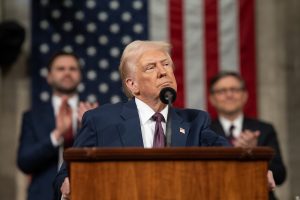


A federal court in Florida has ruled that the British Broadcasting Corporation (BBC) cannot delay discovery in a high-profile defamation lawsuit brought by former President Donald Trump. The case stems from a controversial BBC documentary that Trump alleges misrepresented his January 6, 2021, speech ahead of the Capitol protests.
U.S. District Judge Roy K. Altman of the Southern District of Florida described the BBC’s request to stay discovery as “premature.” According to the judge, the broadcaster had not demonstrated sufficient prejudice to justify halting the process at this early stage. The ruling paves the way for Trump’s legal team to request internal BBC documents related to the disputed documentary.
Judge Altman also set a trial date for February 15, 2027, scheduling a two-week proceeding in Miami. The BBC has indicated plans to file a motion to dismiss the lawsuit by March 17, arguing that the court lacks jurisdiction and that the venue is improper. Thursday’s ruling, however, means discovery will move forward without delay.
BBC Seeks to Limit Discovery
The broadcaster had asked the court to restrict discovery to jurisdictional issues only, citing concerns over the burdens of producing documents while simultaneously challenging the court’s authority. Trump’s legal team rejected this approach, arguing that a phased discovery process would hinder the timely collection of evidence relevant to the claims of defamation.
A BBC spokesperson stated, “As we have made clear previously, we will be defending this case.” While the denial of the stay advances the procedural timeline, it does not address the substance of the president’s claims, which will be considered in the upcoming dismissal motion.
The Documentary at the Center of the Dispute
The lawsuit originates from a BBC Panorama documentary titled Trump: A Second Chance?, which aired in the UK on October 28, 2024, just days before the U.S. presidential election. Trump’s legal complaint focuses on the way two separate segments of his January 6 speech were edited together to appear as one.
Specifically, the documentary combined Trump’s statements, “We’re going to walk down to the Capitol,” with “fight like hell,” while omitting an intervening section in which he instructed supporters to protest “peacefully and patriotically.” According to the lawsuit, this edit created a “false, defamatory, deceptive, disparaging, inflammatory, and malicious depiction” intended to portray the former president as directly inciting violence.
Trump’s team also alleges that the documentary was accessible to Florida residents through online streaming services. They further emphasize that scenes were filmed in Florida, including around Trump’s Mar-a-Lago resort, bolstering their argument for the court’s jurisdiction over the matter.
Past Defamation Successes
Trump’s legal team points to several prior victories in defamation cases as context for this lawsuit. In December 2024, ABC News settled a defamation claim for $15 million to the Trump Presidential Library and $1 million in legal fees. The case involved repeated on-air claims by anchor George Stephanopoulos that Trump had been “liable for rape” in the E. Jean Carroll case—a characterization deemed false, as the court determined Trump was only liable for defamation.
In another high-profile example, Paramount Global, the parent company of CBS, settled a $10 billion lawsuit in July 2025 for $16 million. That case arose from a 60 Minutes interview with then-Vice President Kamala Harris, in which two separate answers were deceptively edited to appear as one, misrepresenting Harris’s statements.
These previous settlements have been highlighted by Trump’s legal team as evidence of the necessity of accountability for deceptive or misleading reporting by major media outlets.
Legal and Journalistic Implications
Legal experts say the case raises significant questions about the responsibilities of international media organizations reporting on U.S. politics. By editing segments in a way that allegedly misrepresents a speaker’s intent, broadcasters could face liability in jurisdictions where the subject of the reporting resides.
BBC’s defense will likely center on claims of lack of jurisdiction and improper venue, arguing that the company is headquartered in the UK and that the alleged defamation occurred outside U.S. territory. However, the ongoing discovery process could unearth internal communications, production notes, and editorial decisions that may influence the court’s determination on both jurisdictional and substantive grounds.
Next Steps in Discovery
With discovery now moving forward, Trump’s legal team is expected to request emails, internal memos, and editorial guidance related to the production of the Panorama documentary. These documents could reveal the decision-making process behind the controversial edits and whether the BBC acted with disregard for journalistic standards.
The ruling also allows for depositions of key personnel involved in the documentary’s production. Both sides are preparing for extensive pre-trial proceedings, and legal analysts predict that the February 2027 trial could set a precedent regarding cross-border defamation claims involving major media outlets.
Public and Political Reactions
The case has drawn significant attention from both U.S. and international media. Supporters of Trump have criticized the BBC’s reporting as biased and misleading, while critics argue that holding foreign broadcasters accountable for editorial decisions in a U.S. court could have far-reaching implications for press freedom.
Observers note that this lawsuit comes amid broader scrutiny of misinformation, deceptive editing, and ethical standards in journalism, particularly in politically charged contexts. If the court permits the case to proceed to trial, it could have implications not only for the BBC but for international news organizations operating in an increasingly interconnected media landscape.
Potential Impacts on Media Practices
Media law experts emphasize that the case highlights the importance of rigorous fact-checking, clear attribution, and context in reporting. Splicing statements from separate segments to create a misleading narrative can carry both legal and reputational consequences, particularly when covering figures in positions of political power.
“This case could serve as a warning to media organizations that editorial shortcuts or sensationalized edits may invite serious legal scrutiny,” said a media law analyst.
Conclusion
The denial of the BBC’s motion to stay discovery marks a procedural victory for Trump’s legal team and underscores the seriousness of allegations surrounding the Panorama documentary. As discovery proceeds, the court will consider evidence on both jurisdictional and substantive claims, with the February 2027 trial now firmly on the calendar.
The unfolding case represents a complex intersection of media responsibility, legal accountability, and political sensitivity, emphasizing the high stakes for both international news organizations and public figures whose reputations are at issue.

Emily Johnson is a critically acclaimed essayist and novelist known for her thought-provoking works centered on feminism, women’s rights, and modern relationships. Born and raised in Portland, Oregon, Emily grew up with a deep love of books, often spending her afternoons at her local library. She went on to study literature and gender studies at UCLA, where she became deeply involved in activism and began publishing essays in campus journals. Her debut essay collection, Voices Unbound, struck a chord with readers nationwide for its fearless exploration of gender dynamics, identity, and the challenges faced by women in contemporary society. Emily later transitioned into fiction, writing novels that balance compelling storytelling with social commentary. Her protagonists are often strong, multidimensional women navigating love, ambition, and the struggles of everyday life, making her a favorite among readers who crave authentic, relatable narratives. Critics praise her ability to merge personal intimacy with universal themes. Off the page, Emily is an advocate for women in publishing, leading workshops that encourage young female writers to embrace their voices. She lives in Seattle with her partner and two rescue cats, where she continues to write, teach, and inspire a new generation of storytellers.