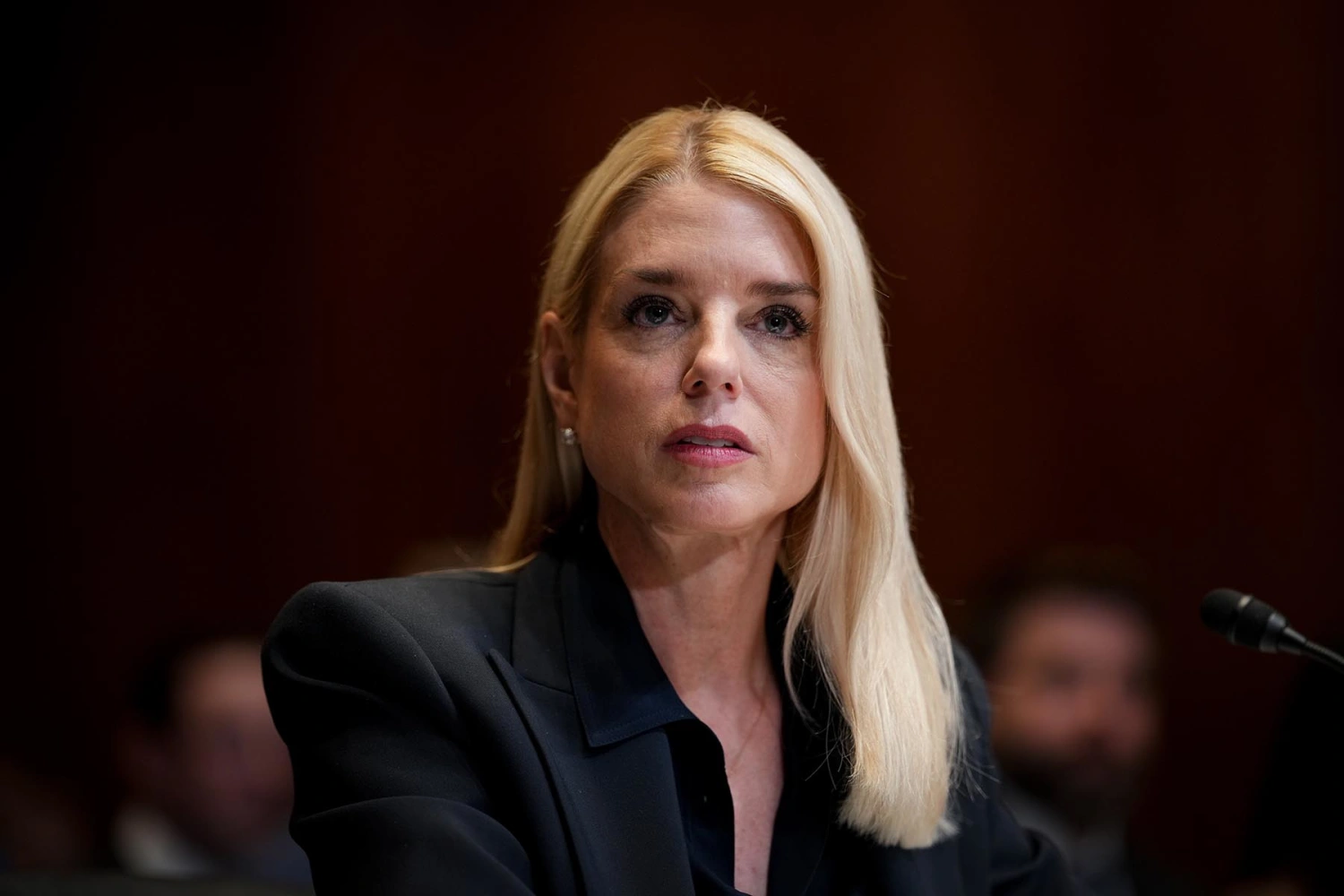
A heated congressional hearing this week put the nation’s top law enforcement official under intense scrutiny after it was revealed that a pardoned participant in the January 6, 2021 attack on the U.S. Capitol is now serving in a senior advisory role at the Department of Justice.
The controversy erupted during a Feb. 11 oversight session before the House Judiciary Committee, where lawmakers questioned Attorney General Pam Bondi on a wide range of issues, including internal hiring decisions at the DOJ and the administration’s broader approach to law enforcement accountability.
At the center of the exchange was Jared Wise, a former law enforcement officer who was captured on police body camera footage during the Capitol riot shouting “kill ’em, kill ’em, get ’em, get ’em” toward U.S. Capitol Police officers as the building was being overrun by rioters.
During the hearing, Rep. Joe Neguse pressed Bondi directly, asking her to confirm whether Wise is currently employed by the Department of Justice. Bondi acknowledged that he is now serving as a senior adviser, noting that he had been pardoned by Donald Trump as part of a sweeping clemency action at the start of the president’s second term.
Neguse then laid out the seriousness of Wise’s prior charges, noting that a federal grand jury had indicted him on multiple counts related to the attack, including allegations of assaulting, resisting, and interfering with police officers. The congressman questioned how hiring an individual seen on video encouraging violence against law enforcement aligns with the DOJ’s stated mission to uphold the rule of law and support police officers nationwide.
Bondi responded by reiterating that Wise had been pardoned, effectively restoring his legal standing. But Neguse countered that the legal pardon did not erase the conduct captured on video, arguing that employing such an individual sends a troubling signal to law enforcement personnel across the country.
The exchange quickly became one of the most widely discussed moments of the hearing, highlighting a broader debate in Washington about the consequences of presidential pardons and how they intersect with public trust in federal institutions.
Broader Context of the Hearing
The hearing itself was already expected to be contentious. Members of Congress questioned Bondi on multiple fronts, including the Justice Department’s handling of immigration-related incidents and its approach to releasing files tied to convicted sex offender Jeffrey Epstein.
At one point during the proceedings, a group of Epstein survivors present in the hearing room stood and raised their hands when asked whether they had been able to meet with officials from the current administration. Bondi did not acknowledge them, a moment that drew criticism from several lawmakers and advocacy groups.
The attorney general’s tone during the hearing also drew attention. She engaged in several sharp exchanges with committee members, at times raising her voice and directing personal criticism at both Democratic and Republican lawmakers. Among those targeted were Rep. Jamie Raskin, a senior Democrat on the committee, and Rep. Thomas Massie, a Republican who has pressed for greater transparency regarding the Epstein files.
The contentious atmosphere underscored the increasingly polarized nature of congressional oversight hearings, particularly when they involve politically sensitive subjects such as January 6 and presidential pardons.
The Role of Presidential Pardons
The controversy surrounding Wise’s hiring also brings renewed attention to the scope and impact of presidential clemency powers. On his first day back in office, President Trump granted clemency to nearly 1,600 individuals connected to the January 6 riot. Supporters of the move argued it was necessary to correct what they saw as politically motivated prosecutions, while critics warned it could undermine accountability for attacks on democratic institutions.
In Wise’s case, the pardon cleared his criminal record, allowing him to seek employment without the legal barriers that would normally accompany felony convictions. However, critics argue that hiring decisions for senior advisory roles should consider not only legal eligibility but also ethical and reputational factors.
Law Enforcement Reaction
While there has been no official nationwide response from law enforcement organizations, some current and former officers have expressed concern publicly about the message the hiring could send. The Justice Department regularly works in close coordination with federal, state, and local law enforcement agencies, and maintaining trust between those entities is widely viewed as essential for effective policing and prosecution.
Neguse emphasized this point during the hearing, stating that officers across the country might question whether their safety and sacrifices are being taken seriously if individuals who called for violence against police are later brought into the federal law enforcement apparatus.
Political Fallout
The issue is likely to continue reverberating on Capitol Hill in the coming weeks. Democrats have already signaled they may pursue additional oversight or request further documentation regarding Wise’s hiring and role within the DOJ. Some Republicans, meanwhile, have defended the administration’s actions, pointing to the legal validity of presidential pardons and arguing that individuals who have received clemency should be allowed to reintegrate into public life.
For Bondi, the hearing marked one of the most challenging public appearances of her tenure so far. As attorney general, she serves as the chief law enforcement officer of the United States, and her decisions—both operational and symbolic—carry significant weight in shaping public confidence in the justice system.
Whether the controversy will have lasting political or institutional consequences remains to be seen. But the exchange has already intensified the ongoing national debate over accountability, clemency, and the standards expected of those who serve within the federal government’s most powerful law enforcement agency.