


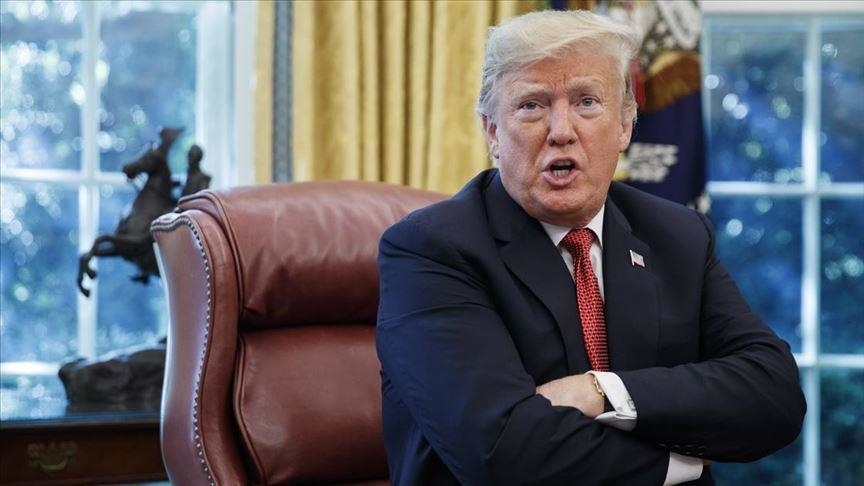
President Donald Trump on February 12 issued a sharp warning to Republican lawmakers who voted against his tariff agenda, signaling that those who opposed his policies could face electoral repercussions, including in primary contests. The comments come in the aftermath of a House vote on February 11 in which several GOP members joined Democrats to pass a resolution aimed at overturning an executive order imposing tariffs on Canada.
“Any Republican, in the House or the Senate, that votes against TARIFFS will seriously suffer the consequences come Election time, and that includes Primaries!” Trump declared in a Truth Social post, emphasizing his continued influence over the party’s base and congressional allies.
The vote in question represented a rare congressional challenge to the Trump administration’s trade policy, particularly tariffs imposed last year under the 1977 Trade Act emergency powers. Trump has maintained that these tariffs were essential to protecting American economic and national security interests, and he highlighted gains in the stock market as evidence of their effectiveness.
“The mere mention of the word has Countries agreeing to our strongest wishes. TARIFFS have given us Economic and National Security, and no Republican should be responsible for destroying this privilege,” Trump added in a separate post. The president has frequently framed his tariffs as a tool for negotiation leverage, particularly against neighboring countries like Canada.
In the February 11 vote, House Republicans who opposed Trump’s tariffs joined Democrats in supporting a measure introduced by Rep. Gregory Meeks (D-N.Y.), the top Democrat on the House Foreign Affairs Committee. Meeks criticized the tariffs as unnecessary, pointing out that Canada is a close ally of the United States. “Canada isn’t a threat, it’s our ally,” Meeks said during floor debate prior to the vote.
The resolution is now pending in the Senate, where it is unlikely to advance. Overcoming a presidential veto would require a two-thirds majority in both chambers—a threshold that seems improbable given Republican support for Trump’s trade policies and the party’s historical reluctance to oppose the former president.
Trump’s tariffs on Canada are part of a broader trade strategy that has also targeted Mexico and China. The administration has linked the tariffs to national security concerns and efforts to curb the flow of illegal drugs, including fentanyl, into the United States. After his second term began in January 2025, Trump imposed 25 percent tariffs on Canadian imports, later increasing the rate to 35 percent in August 2025 for goods not covered under the U.S.–Mexico–Canada trade agreement.
The measures have sparked legal scrutiny. The Supreme Court is set to rule later this year on the legality of Trump’s tariff policies, raising questions about congressional authority versus executive powers in trade enforcement. Some lawmakers, such as Rep. Dan Newhouse (R-Wash.), have indicated that while they respect the president’s trade objectives, tariff impositions fall within Congress’s constitutional prerogatives. “I think that we have a say in some of these issues, like tariffs on imports. That’s Congress’s realm,” Newhouse told The Epoch Times after the vote, noting that his district hosts numerous Canadian-owned businesses affected by the tariffs.
Trump’s warning to Republicans follows a pattern of using his influence over the party’s base to enforce loyalty, particularly on high-profile economic policies. The president framed the tariffs not merely as economic tools but as instruments of national security, asserting that the United States now holds leverage over other countries through his policies. He specifically called out Canada as having historically taken advantage of the United States in trade and border security matters, adding that the tariffs give the U.S. an upper hand.
The president also suggested that the tariffs serve a dual purpose: driving economic gains at home while maintaining pressure internationally. He credited the policies with market gains, noting that both the Dow Jones Industrial Average and the S&P 500 have reached new highs despite ongoing concerns over global supply chains and inflationary pressures.
Political analysts have interpreted Trump’s statements as part of a broader strategy to maintain influence over the Republican caucus heading into upcoming midterm elections. By signaling consequences for lawmakers who oppose him, Trump is attempting to consolidate support among conservative voters who remain enthusiastic about his economic and trade policies.
Meanwhile, House Democrats, while in a minority on trade authority issues, leveraged bipartisan Republican dissent to push a symbolic rebuke of the Canadian tariffs. Their broader argument emphasized that tariffs on an allied nation like Canada could damage long-term diplomatic relations while delivering only marginal economic benefit to American consumers.
Canadian Prime Minister Mark Carney addressed the issue during a visit to Beijing last month, stressing that Canada has no intention of deepening trade ties with China in ways that would undermine U.S. relations. Carney highlighted ongoing efforts to “rectify some issues that developed in the last couple of years” with China but emphasized Canada’s commitment to its trade partnership with the United States.
The House vote represents the first time Congress has formally weighed in on the tariffs since their imposition, highlighting a growing tension between executive authority and legislative oversight in trade policy. While Trump maintains that the tariffs are lawful under the 1977 emergency provision, the Supreme Court’s upcoming ruling may provide clarity on whether the president exceeded his statutory authority.
Economic observers have noted that the tariffs, while politically popular in some quarters, have a mixed record in terms of impact on domestic industries. U.S. manufacturers and certain agricultural sectors have benefited from protection against Canadian imports, but the policy has also raised costs for American consumers on a range of goods, from lumber to dairy products.
For House Republicans who voted against the tariffs, the political calculus is complex. Lawmakers like Rep. Newhouse represent districts with significant Canadian business interests, making opposition to the tariffs a reflection of constituent needs rather than a direct rebuke of Trump. Nevertheless, the president’s warning signals that he intends to prioritize loyalty over nuance in economic policy debates.
Looking forward, the Senate will weigh the House-passed measure, but most legal analysts agree that overriding a presidential veto is unlikely. Trump’s firm stance underscores the continuing influence he wields over trade policy and the Republican Party, even after leaving office. The issue also demonstrates the interplay between domestic politics, international trade, and executive authority, particularly when national security and economic arguments are intertwined.
For now, the tariffs remain in effect, and Republican lawmakers face a choice: align with Trump and his trade agenda or risk political consequences in primaries and general elections. With midterms approaching and debates over economic and foreign policy intensifying, the Canadian tariffs are likely to remain a flashpoint in U.S. politics.

Emily Johnson is a critically acclaimed essayist and novelist known for her thought-provoking works centered on feminism, women’s rights, and modern relationships. Born and raised in Portland, Oregon, Emily grew up with a deep love of books, often spending her afternoons at her local library. She went on to study literature and gender studies at UCLA, where she became deeply involved in activism and began publishing essays in campus journals. Her debut essay collection, Voices Unbound, struck a chord with readers nationwide for its fearless exploration of gender dynamics, identity, and the challenges faced by women in contemporary society. Emily later transitioned into fiction, writing novels that balance compelling storytelling with social commentary. Her protagonists are often strong, multidimensional women navigating love, ambition, and the struggles of everyday life, making her a favorite among readers who crave authentic, relatable narratives. Critics praise her ability to merge personal intimacy with universal themes. Off the page, Emily is an advocate for women in publishing, leading workshops that encourage young female writers to embrace their voices. She lives in Seattle with her partner and two rescue cats, where she continues to write, teach, and inspire a new generation of storytellers.