


Washington, D.C. – The United States stands on the brink of a partial government shutdown after Senate Democrats blocked a motion on Thursday to advance a House-passed bill funding the Department of Homeland Security (DHS), putting more than 260,000 federal employees at risk of furlough.
The motion, which required a 60-vote supermajority to proceed, failed by a 52-47 margin, with only centrist Sen. John Fetterman (D-Pa.) breaking ranks to vote in favor. Senate Majority Leader John Thune (R-S.D.) voted no on procedural grounds, intending to bring the bill back to the floor quickly in a future session.
Shortly after the vote, Sen. Katie Britt (R-Ala.) attempted to move a two-week stopgap measure through unanimous consent to avoid disruption, but Sen. Chris Murphy (D-Conn.) objected, effectively blocking the measure. The impasse puts critical DHS functions in jeopardy, with funding lapsing for the Transportation Security Administration (TSA), the Federal Emergency Management Agency (FEMA), and the Coast Guard beginning Saturday unless Congress acts.
However, key targets of Democratic ire—Immigration and Customs Enforcement (ICE) and Customs and Border Protection (CBP)—will largely continue operations. Both agencies previously received tens of billions of dollars under the One Big Beautiful Bill Act signed into law by President Donald Trump last year.
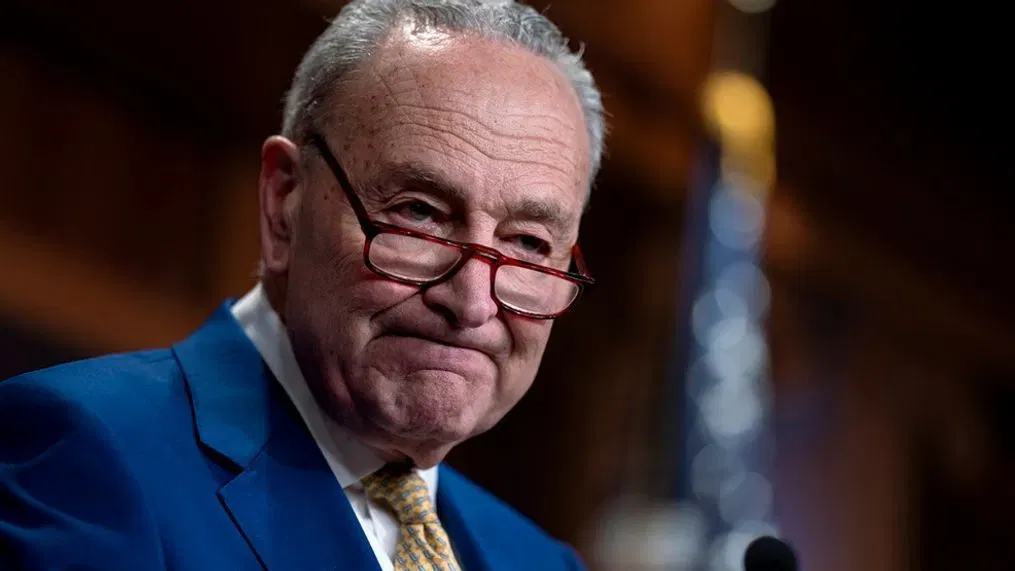
“Democrats have been very clear. We will not support an extension of the status quo, a status quo that permits masked secret police to barge into people’s homes without warrants, no guardrails, zero oversight from independent authorities,” said Senate Democratic Leader Chuck Schumer (D-N.Y.) prior to the vote.
Schumer acknowledged that the White House’s border czar, Tom Homan, had announced the cessation of a surge deployment of ICE officers in Minnesota on Thursday. Still, the Senate Democrat declared that the action fell short of comprehensive reform, warning that the measures could easily be reversed without legislative action. “We need legislation to rein in ICE and end the violence,” he said. “Without legislation, what Tom Homan says today could be reversed tomorrow on a whim from a Donald Trump.”
The potential shutdown has already prompted appropriators to review contingency plans for affected agencies. TSA agents and FEMA personnel may continue working in a limited capacity, though the scope of their operational capabilities will be constrained. Airport delays are anticipated as one of the first tangible effects on the public, and disruptions at FEMA and Coast Guard operations could follow.
Republicans criticized Democrats for blocking what had been a bipartisan agreement. Senate Republican Whip John Barrasso (R-Wyo.) accused Democrats of flip-flopping after signing off on the DHS funding measure last month. “What we see are Democrats flip-flopping on funding the government. This was a bipartisan bill. Democrats helped negotiate it,” Barrasso said, emphasizing Republican frustration with the legislative gridlock.
Sen. Patty Murray (D-Wash.), the ranking member of the Senate Appropriations Committee, explained that the political dynamic shifted after Jan. 24, when video surfaced showing federal officers fatally shooting 37-year-old nurse Alex Pretti in Minneapolis. The footage depicted Pretti kneeling while holding a phone and glasses, moments after another officer confiscated his legally carried firearm. The incident sparked national outrage and became the focal point of Democratic demands for reform of ICE and CBP operations.
“It is clear to just about everyone in every part of the country that ICE and CBP are out of control and must be reined in,” Murray said on the Senate floor before the vote.
Democrats unveiled a 10-point reform plan for immigration enforcement, seeking to implement a range of safeguards designed to prevent abuses by federal officers. Key proposals include requiring search warrants before entering private homes, ending roving patrols, prohibiting masked officers, standardizing uniforms, mandating body cameras, and creating universal use-of-force guidelines.
The White House responded with a one-page letter and legislative text offering partial concessions, but Democrats quickly rejected the proposal, arguing that it failed to address the “major concerns” of the reform package. “They did not address our major concerns. We’re going through it right now and intend to offer a counteroffer,” Murray told The Hill.
Sen. Jeanne Shaheen (D-N.H.), a centrist who voted in November to end the record 43-day government shutdown, emphasized that she would not support another temporary funding extension unless meaningful reform was enacted. “I’m not going to vote for a CR until we see some progress on reforms. It’s not acceptable that we have a federal agency killing American citizens in the streets and we’re not taking any action,” Shaheen said. When asked about the White House’s willingness to rein in ICE officers, she responded, “Nothing that I’ve heard.”
If Congress fails to pass a funding bill or temporary resolution, TSA operations are likely to be curtailed, creating delays at airports nationwide. FEMA’s disaster preparedness and response capacity could also be impacted, particularly as the U.S. enters hurricane season. Coast Guard missions, including maritime safety and national security patrols, may continue at a reduced scale.
Despite the looming shutdown, ICE and CBP officers will remain operational, a consequence of the funding levels they received under last year’s omnibus appropriations legislation. However, Democrats argue that the agency’s operational autonomy, particularly in enforcement operations in Minnesota and other states, underscores the urgency for legislative reform.
The current standoff highlights the broader tension between Congress and the executive branch over immigration enforcement policy. Democrats have emphasized oversight and accountability as essential components of federal enforcement, particularly in light of incidents involving civilian fatalities. Republicans, meanwhile, stress the need to ensure uninterrupted funding for critical national security operations.
With both sides entrenched, the likelihood of a resolution before Saturday appears uncertain. Lawmakers on both sides of the aisle have indicated that negotiations could continue, but political divisions over immigration reform and oversight measures complicate the path forward.
Analysts note that the partial shutdown could have ripple effects on federal operations beyond DHS, including federal contract work, airport security staffing, and disaster response readiness. While ICE and CBP are less affected in the short term, the public perception of the shutdown could intensify scrutiny of federal priorities and legislative gridlock.
As Washington navigates the crisis, both parties face mounting pressure from constituents and the media. Democrats are focused on reforming agencies implicated in fatal incidents, while Republicans highlight the risks of operational disruption to TSA, FEMA, and the Coast Guard. The situation underscores the complex interplay of public safety, national security, and political accountability in the legislative process.
For now, the nation watches as the Senate remains at an impasse, with the clock ticking toward a weekend deadline. Without a compromise, thousands of federal workers will face furlough, travel disruptions may escalate, and public confidence in government efficiency will likely erode further.
The DHS shutdown standoff marks yet another example of how partisan tensions, high-profile enforcement incidents, and broader immigration policy disputes can converge to threaten continuity of federal operations. Whether a resolution will emerge in time remains uncertain, but the political and operational stakes are unmistakably high.

Emily Johnson is a critically acclaimed essayist and novelist known for her thought-provoking works centered on feminism, women’s rights, and modern relationships. Born and raised in Portland, Oregon, Emily grew up with a deep love of books, often spending her afternoons at her local library. She went on to study literature and gender studies at UCLA, where she became deeply involved in activism and began publishing essays in campus journals. Her debut essay collection, Voices Unbound, struck a chord with readers nationwide for its fearless exploration of gender dynamics, identity, and the challenges faced by women in contemporary society. Emily later transitioned into fiction, writing novels that balance compelling storytelling with social commentary. Her protagonists are often strong, multidimensional women navigating love, ambition, and the struggles of everyday life, making her a favorite among readers who crave authentic, relatable narratives. Critics praise her ability to merge personal intimacy with universal themes. Off the page, Emily is an advocate for women in publishing, leading workshops that encourage young female writers to embrace their voices. She lives in Seattle with her partner and two rescue cats, where she continues to write, teach, and inspire a new generation of storytellers.