

Federal authorities are preparing to release a surveillance image they believe could play a significant role in the ongoing investigation into the disappearance of Nancy Guthrie, an 84-year-old Arizona resident whose sudden absence has drawn national attention and intensified concern among law enforcement and the public alike.
According to senior law enforcement officials briefed on the matter, the image is expected to be made public as investigators seek new leads in a case that has so far produced few definitive answers. Officials have been cautious in how they describe the individual captured in the footage, referring only to a “potential subject” connected to the investigation. The wording has fueled speculation, while also underscoring how carefully authorities are handling the next phase of the search.
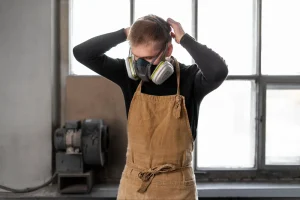
The image reportedly comes from a surveillance camera positioned outside Guthrie’s home in the Catalina Foothills area of Tucson, a quiet and well-established neighborhood where she had lived for decades. Early descriptions of the footage indicate it shows a masked individual near the residence during the early morning hours, carrying what appears to be a backpack or tools. Investigators have not confirmed whether the person is a suspect, a witness, or otherwise connected to the case, but the decision to release the image suggests officials believe the public may be able to help identify the individual or provide critical context.
The disappearance itself has troubled investigators since it was first reported. Guthrie was last seen on the evening of January 31, after returning home from dinner with family members. According to authorities, she entered her house through the garage at around 9:45 p.m. Nothing seemed out of the ordinary at the time, and there were no immediate signs of distress or disruption.
The following morning raised alarms. Guthrie failed to log on to a virtual church service she regularly attended with friends, something family members say was highly uncharacteristic. By late morning, concern had grown, and a missing person report was filed shortly after noon. A search of the home revealed troubling details: her phone, wallet, car, and essential daily medications were all still inside the house.
As deputies from the Pima County Sheriff’s Office began examining the property, they discovered evidence that suggested something had gone wrong overnight. Drops of blood were found on the front porch and later confirmed to belong to Guthrie. Investigators also determined that the home’s doorbell camera had been disconnected at approximately 1:45 a.m. Less than half an hour later, a separate security camera recorded movement near the property.
Additional data raised further concerns. Guthrie’s pacemaker stopped transmitting information to her connected devices shortly afterward, leading investigators to believe she may have been taken beyond the range of her phone and watch. Given her medical needs, the interruption in monitoring and the absence of medication have remained among the most urgent aspects of the case.
Despite extensive searches of the home and surrounding area, authorities initially said they had no identified suspects. The lack of immediate answers, combined with the apparent signs of forced or clandestine activity, shifted the investigation from a missing person inquiry toward a possible abduction scenario.
Public attention intensified when reports emerged that ransom messages had been sent to multiple news organizations. The notes included deadlines and referenced details about the home that were not publicly known, suggesting the author may have had direct knowledge of the property or the events surrounding Guthrie’s disappearance. However, law enforcement has not confirmed the authenticity of the messages or whether they were sent by someone actually involved in the case.
Efforts to verify the ransom demands reportedly stalled when a digital wallet referenced for payment showed no activity. After the final deadline passed, the FBI stated it was not aware of any continued communication between the Guthrie family and the individuals claiming responsibility. At that point, federal authorities formally took over leadership of the investigation, including analysis of the alleged ransom notes.
The case has also carried a deeply personal dimension for Guthrie’s family. Her daughter, a nationally recognized television journalist, has made public appeals for information, urging anyone who may have seen something unusual to come forward. Those pleas have resonated widely, turning what began as a local investigation into a story followed closely across the country.
As days turned into weeks, the search effort continued to escalate. Forensic teams returned to the home multiple times, collecting additional evidence and re-examining areas that might have been overlooked in the initial response. Investigators removed items from the property, including a vehicle from the garage and equipment from the roof, signaling that new information or theories were being explored.
Local officials have been measured but candid about the stakes. While expressing hope that Guthrie is still alive, authorities have acknowledged that time is a critical factor. Each passing day without confirmed contact raises new challenges, particularly given her age and medical condition.
It is against this backdrop that the anticipated release of the surveillance image takes on heightened significance. Law enforcement officials say public assistance has often proven decisive in complex cases, especially when a single image jogs someone’s memory or prompts a tip that connects previously unrelated details.
The decision to release such material is not taken lightly. Investigators must weigh the potential benefits against the risk of misinformation, false accusations, or interference with ongoing operations. By moving forward with the image, authorities appear to believe the potential upside outweighs those concerns.
For now, officials are urging anyone with information, no matter how small it may seem, to contact law enforcement. They stress that even routine observations, such as an unfamiliar vehicle or person seen in the area during the early morning hours, could help piece together a clearer timeline.
As the investigation enters this new phase, the surveillance image may become a pivotal element in a case that has already raised difficult questions about safety, vulnerability, and the limits of technology in preventing crime. Whether it leads directly to answers or simply narrows the field of possibilities, authorities hope it will bring them one step closer to resolving the mystery of what happened inside a quiet Tucson neighborhood in the early hours of February 1.
For Guthrie’s family and for those following the case closely, the release represents both renewed hope and a sobering reminder of how much remains unknown.

Emily Johnson is a critically acclaimed essayist and novelist known for her thought-provoking works centered on feminism, women’s rights, and modern relationships. Born and raised in Portland, Oregon, Emily grew up with a deep love of books, often spending her afternoons at her local library. She went on to study literature and gender studies at UCLA, where she became deeply involved in activism and began publishing essays in campus journals. Her debut essay collection, Voices Unbound, struck a chord with readers nationwide for its fearless exploration of gender dynamics, identity, and the challenges faced by women in contemporary society. Emily later transitioned into fiction, writing novels that balance compelling storytelling with social commentary. Her protagonists are often strong, multidimensional women navigating love, ambition, and the struggles of everyday life, making her a favorite among readers who crave authentic, relatable narratives. Critics praise her ability to merge personal intimacy with universal themes. Off the page, Emily is an advocate for women in publishing, leading workshops that encourage young female writers to embrace their voices. She lives in Seattle with her partner and two rescue cats, where she continues to write, teach, and inspire a new generation of storytellers.