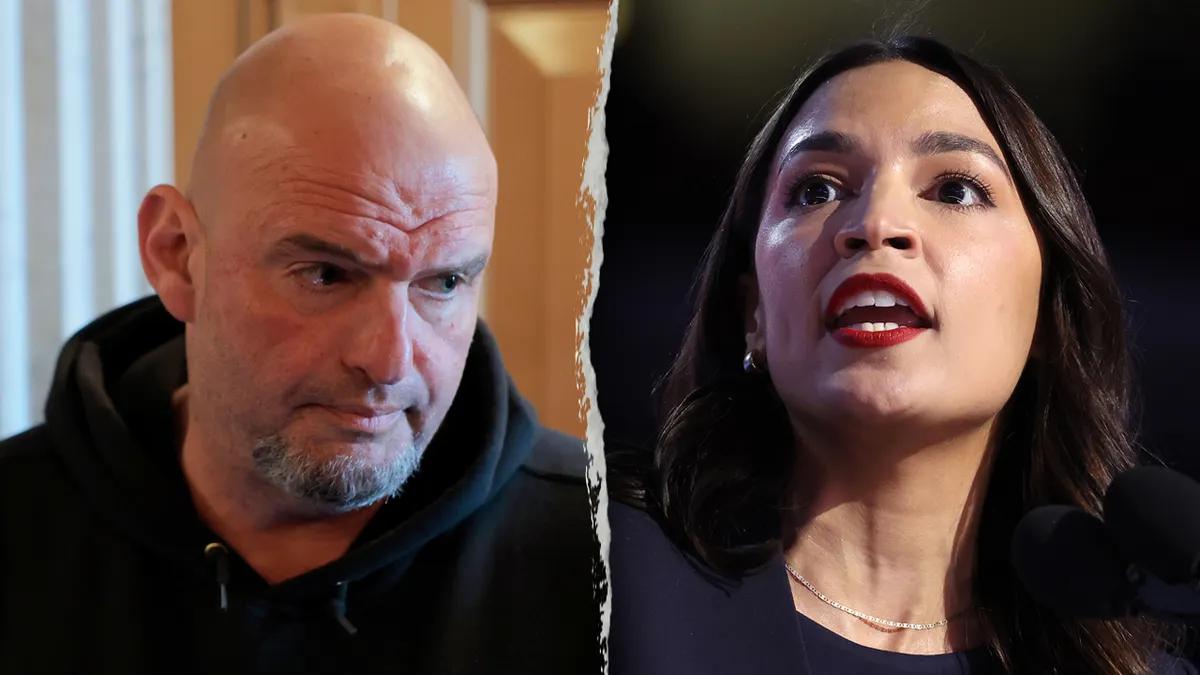
Senator John Fetterman of Pennsylvania has recently drawn national attention not for a routine legislative vote or a committee decision, but for a stance that puts him at odds with many leaders in his own party. As a prominent Democratic senator from a key battleground state, Fetterman has often been in the spotlight — but a recent comment about election procedures has ignited discussion across the political spectrum.
The comment came during a high‑profile television appearance on a Sunday political news program, where Fetterman was discussing a host of issues facing Congress, including funding negotiations for the Department of Homeland Security. The conversation delved into broader questions about border security, federal spending priorities, and the ongoing partisan tensions that have shaped legislative debates in recent months.
Throughout the exchange, Fetterman emphasized the importance of bipartisan cooperation on issues he described as fundamental to both public safety and the functioning of government. He warned that continued deadlock could result in a shutdown of key agencies, affecting everything from airport security to emergency response operations. It was in this broader context of fiscal and policy disagreements that he made a statement about voting requirements that immediately became a flashpoint.
For years, debates over voting requirements — especially those involving identification at the polls — have been deeply contentious and highly politicized. Advocates for stricter ID requirements argue they help safeguard election security and bolster voter confidence, while opponents contend that such measures can disproportionately impact older citizens, minority groups, and low‑income voters who may not have ready access to acceptable forms of ID. Regardless of one’s position, the topic frequently turns into a proxy for broader arguments about electoral access and fairness.
Against this backdrop, Fetterman’s comment stood out precisely because it did not reflect the familiar party line.
A Notable Departure on Voter ID
Midway through the interview, Fetterman was asked about his views on voter identification requirements — a subject that has been championed by many Republicans and resisted by many Democrats in recent years. The discussion referenced ongoing legislative efforts, including GOP‑led proposals such as the Safeguard American Voter Eligibility Act, which would impose stricter requirements for voters to provide documentation in order to register for federal elections.
To the surprise of many observers, Fetterman responded that he did not believe it was “unreasonable” for citizens to show photo identification to vote. He pointed to recent state actions — such as a referendum in Wisconsin in which voters approved a constitutional amendment requiring ID at the polls — as evidence that such measures could coexist with broader civic participation. He rejected comparisons of modern voting requirements to historical discriminatory practices, saying that “it’s not a radical idea for regular Americans to show your ID to vote.”
That comment immediately sparked debate within his own party and among political commentators. Many Democrats have long characterized strict voter ID laws as barriers that can suppress turnout, particularly among communities that face structural obstacles to obtaining certain forms of identification. Senate Democratic leadership has resisted federal efforts to mandate these kinds of requirements, with leaders like Senate Minority Leader Chuck Schumer comparing some proposals to a new form of discriminatory practice.
Fetterman’s stance represents a clear break from that narrative, marking a vote of confidence in the idea that voter ID could be part of efforts to strengthen the integrity of elections without necessarily disenfranchising voters. His position aligns more closely with arguments made by Republicans, who assert that requiring identification is a reasonable safeguard that most Americans already accept in other aspects of civic life.
Reaction From Across the Political Spectrum
Unsurprisingly, Fetterman’s comments drew a wide range of reactions.
On the conservative side, internet personalities and political commentators broadly welcomed his remarks. Some highlighted the senator’s use of a Wisconsin example as evidence that ID requirements have bipartisan support at the state level, even electing liberal officials in the same election that approved voter ID measures. Supporters of the idea also pointed out that poll data in recent years shows overwhelming majorities of Americans — across racial, age, and partisan categories — favor requiring some form of identification at the polls.
Tech billionaire Elon Musk weighed in as well, signaling approval on social media for Fetterman’s support of voter ID, which he and other advocates have described as essential to maintaining public confidence in democratic processes. Musk reposted content framing Fetterman’s stance as aligning with Republican efforts to pass voter identification legislation.
Within the Democratic Party, reactions have been more mixed. Some fellow lawmakers expressed surprise or disappointment, suggesting that Fetterman’s comments diverge from the party’s broader strategy on election issues. Others, however, offered a softer response, framing his position as part of a larger, ongoing internal conversation about how best to balance voter access with election security.
Political analysts noted that Fetterman is not the first Democrat to occasionally stray from party orthodoxy on individual issues, particularly those that intersect with broader public sentiment. Moderate Democrats and some independents had previously voiced positions emphasizing a pragmatic approach to voter ID that focuses on accessibility and equity alongside security. Fetterman’s statement may reflect that same impulse to find common ground on an issue that is typically cast in stark partisan terms.
Context Within Broader Legislative Battles
Fetterman’s comments came at a time of heightened tension in Washington, where negotiations over federal spending and immigration have intersected with broader discussions about governance, public safety, and national priorities. Several lawmakers from both parties have warned of potential government shutdowns if funding bills for agencies such as the Department of Homeland Security are not finalized. Fetterman himself acknowledged the very real possibility of a shutdown if partisan deadlock persists, underscoring the fragility of current policymaking.
That context is significant because discussions about voter ID cannot be entirely separated from these larger debates about governance and fiscal responsibility. In the current congressional environment, even procedural issues like voter identification become intertwined with negotiations over spending, border security, and legislative strategy.
For Fetterman, this environment has meant navigating between party loyalty and what he portrays as practical solutions that resonate with a wider swath of the electorate. Pennsylvania, his home state, is a politically diverse battleground where messaging on issues such as election integrity can carry significant weight with voters from across the ideological spectrum.
A Broader Shift in Political Messaging?
Fetterman’s move has prompted questions about whether other Democratic lawmakers might shift their positions on electoral issues as they seek to appeal to broader constituencies in the lead‑up to future elections. While many in the party remain opposed to strict federal voter ID mandates — arguing that they can disproportionately affect marginalized voters — some centrists have acknowledged that framing the conversation around inclusion and accessibility could make voter ID less controversial.
Whether Fetterman’s stance presages a wider shift within the Democratic caucus remains to be seen. What is clear, however, is that his comments have expanded the discussion beyond traditional partisan talking points, forcing both parties to engage with the substance of what voter ID means in practice and how it is perceived by the public.
Looking Ahead
As the debate continues, lawmakers will likely revisit questions of voter access, election integrity, and federal versus state roles in setting voting requirements. Legislative proposals such as the Safeguard American Voter Eligibility Act continue to move through Congress, facing opposition in the Senate even as they garner support from Republicans in the House. Fetterman’s comments may influence that dialogue, especially if other lawmakers feel pressure from their constituents to find common ground.
Ultimately, the debate over voter ID is not only about checks and balances at the ballot box, but about how democracy is practiced and protected in a diverse nation. Fetterman’s willingness to express a position that crosses traditional party lines — for better or worse in the eyes of different observers — highlights the complexities lawmakers face as they try to balance principle, pragmatism, and political reality in an increasingly polarized environment.

Emily Johnson is a critically acclaimed essayist and novelist known for her thought-provoking works centered on feminism, women’s rights, and modern relationships. Born and raised in Portland, Oregon, Emily grew up with a deep love of books, often spending her afternoons at her local library. She went on to study literature and gender studies at UCLA, where she became deeply involved in activism and began publishing essays in campus journals. Her debut essay collection, Voices Unbound, struck a chord with readers nationwide for its fearless exploration of gender dynamics, identity, and the challenges faced by women in contemporary society. Emily later transitioned into fiction, writing novels that balance compelling storytelling with social commentary. Her protagonists are often strong, multidimensional women navigating love, ambition, and the struggles of everyday life, making her a favorite among readers who crave authentic, relatable narratives. Critics praise her ability to merge personal intimacy with universal themes. Off the page, Emily is an advocate for women in publishing, leading workshops that encourage young female writers to embrace their voices. She lives in Seattle with her partner and two rescue cats, where she continues to write, teach, and inspire a new generation of storytellers.