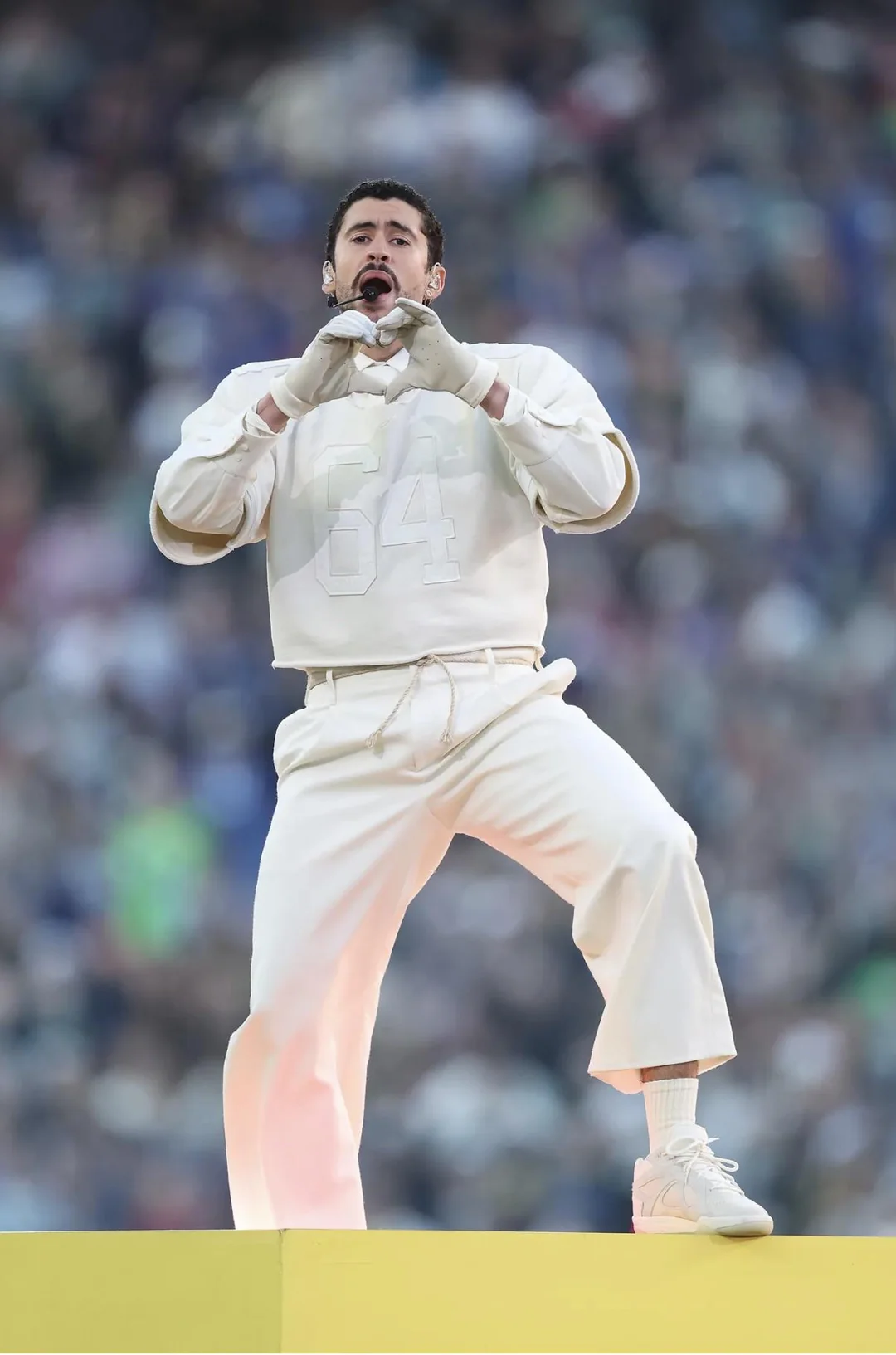
Bad Bunny’s Super Bowl LX halftime performance was one of the most anticipated entertainment events of the year. As one of the most streamed artists in the world and a global cultural figure, expectations were exceptionally high. When the Puerto Rican superstar finally took the stage at Levi’s Stadium, the result was a visually striking, high-energy spectacle that immediately sparked widespread discussion. While many viewers praised the performance for its vibrancy and cultural significance, others came away feeling it fell short of what they had hoped to see on one of the world’s biggest stages.
The halftime show unfolded as a celebration of color, movement, and sound. Bad Bunny delivered a tightly choreographed set featuring a medley of his most recognizable songs, backed by elaborate staging and a large ensemble of dancers. The production leaned heavily into Latin rhythms and aesthetics, transforming the field into a lively festival atmosphere. For fans familiar with his work, the performance felt authentic and unmistakably his. For others, however, the show did not resonate as strongly, revealing once again how difficult it is for a single performance to satisfy an audience of millions with vastly different musical tastes.
One of the most talked-about moments of the night came with a surprise appearance by Lady Gaga. Her brief collaboration with Bad Bunny drew an immediate reaction from the crowd and became a focal point of online conversation in the minutes that followed. Many viewers described the moment as unexpected and thrilling, praising the blend of two global pop icons from different musical worlds. The cameo added star power to the performance and briefly shifted the conversation from critique to excitement, even among those who were otherwise lukewarm about the show.
In the hours after the game, social media platforms filled with mixed reactions. Supporters highlighted the performance’s energy, choreography, and bold production choices, calling it a refreshing departure from more traditional halftime shows. Critics, on the other hand, argued that the performance lacked a clear emotional arc or standout moment that would make it instantly memorable. Some viewers compared it unfavorably to past halftime performances that featured dramatic visuals, powerful sing-along moments, or unexpected storytelling elements.
Much of the debate surrounding the performance was already brewing well before kickoff. In the weeks leading up to the Super Bowl, some commentators questioned the NFL’s decision to select Bad Bunny as the headliner. Others organized alternative entertainment events aimed at audiences who preferred different musical styles. The pregame discussion reflected broader cultural conversations about representation, generational shifts in music, and what the Super Bowl halftime show is meant to accomplish in an increasingly fragmented media landscape.
Bad Bunny’s selection, however, was hardly a gamble from a global perspective. He is among the most commercially successful artists of his era, with record-breaking streaming numbers and sold-out stadium tours across multiple continents. His music regularly tops international charts, and his influence extends beyond music into fashion, film, and social activism. For many fans, his presence at the Super Bowl represented the continued evolution of the event into a more globally inclusive showcase, reflecting the diverse tastes of modern audiences.
One of the most prominent points of discussion during and after the performance centered on language. Bad Bunny performed primarily in Spanish, staying true to the musical style that brought him international success. Supporters applauded this decision, viewing it as a powerful statement about the global reach of Latin music and its place on one of the largest entertainment platforms in the world. They argued that the performance demonstrated how music can transcend language barriers through rhythm, emotion, and visual storytelling.
Others, however, expressed frustration that they could not fully understand the lyrics, saying it made it harder to connect with the performance. Some viewers felt that a Super Bowl halftime show should cater more directly to a broad English-speaking audience. This divide highlighted an ongoing tension in mainstream entertainment between appealing to traditional expectations and embracing cultural diversity in an increasingly interconnected world.
Despite the differing opinions, many acknowledged that halftime shows have always been polarizing. With an audience that spans age groups, cultures, and musical preferences, it is nearly impossible for any single artist to deliver a universally praised performance. In that sense, the reaction to Bad Bunny’s show followed a familiar pattern. Every year, the halftime performance becomes a mirror reflecting broader debates about culture, taste, and change.
Inside the stadium, the energy appeared unmistakably positive. Fans in attendance responded enthusiastically, cheering throughout the performance and reacting strongly to the surprise guest appearance. For those experiencing the show live, the combination of music, visuals, and crowd energy created a celebratory atmosphere that translated differently than it did on television screens. This contrast between in-person and at-home viewing experiences may have contributed to the varied reactions online.
From a production standpoint, the halftime show was widely regarded as ambitious. The staging, lighting, and choreography were carefully coordinated to maximize visual impact within the tight time constraints of the halftime window. The NFL’s halftime shows have increasingly leaned into spectacle over narrative, and this year was no exception. Whether that approach resonates depends largely on individual viewer expectations.
For Bad Bunny, the performance marked another milestone in a career defined by breaking boundaries. Appearing at the Super Bowl halftime show placed him in a rare category of artists whose influence extends beyond traditional genre lines. Regardless of the mixed reactions, the sheer scale of the platform ensured that the performance would be discussed, analyzed, and debated long after the final whistle.
As conversations continue online and in the media, the halftime show serves as a reminder of the Super Bowl’s unique role at the intersection of sports and entertainment. It is not merely a musical performance but a cultural event that reflects shifting demographics, evolving tastes, and ongoing discussions about representation. While not everyone walked away satisfied, the performance succeeded in one crucial respect: it captured attention and sparked conversation.
In the end, Bad Bunny’s Super Bowl LX halftime show may not be remembered as universally beloved, but it will likely be remembered as a moment that highlighted the changing face of mainstream entertainment. Whether viewed as a bold success or a missed opportunity, the performance underscored the enduring power of the halftime show to provoke debate and bring together audiences from around the world, even when they do not all agree on what makes a performance truly great.