


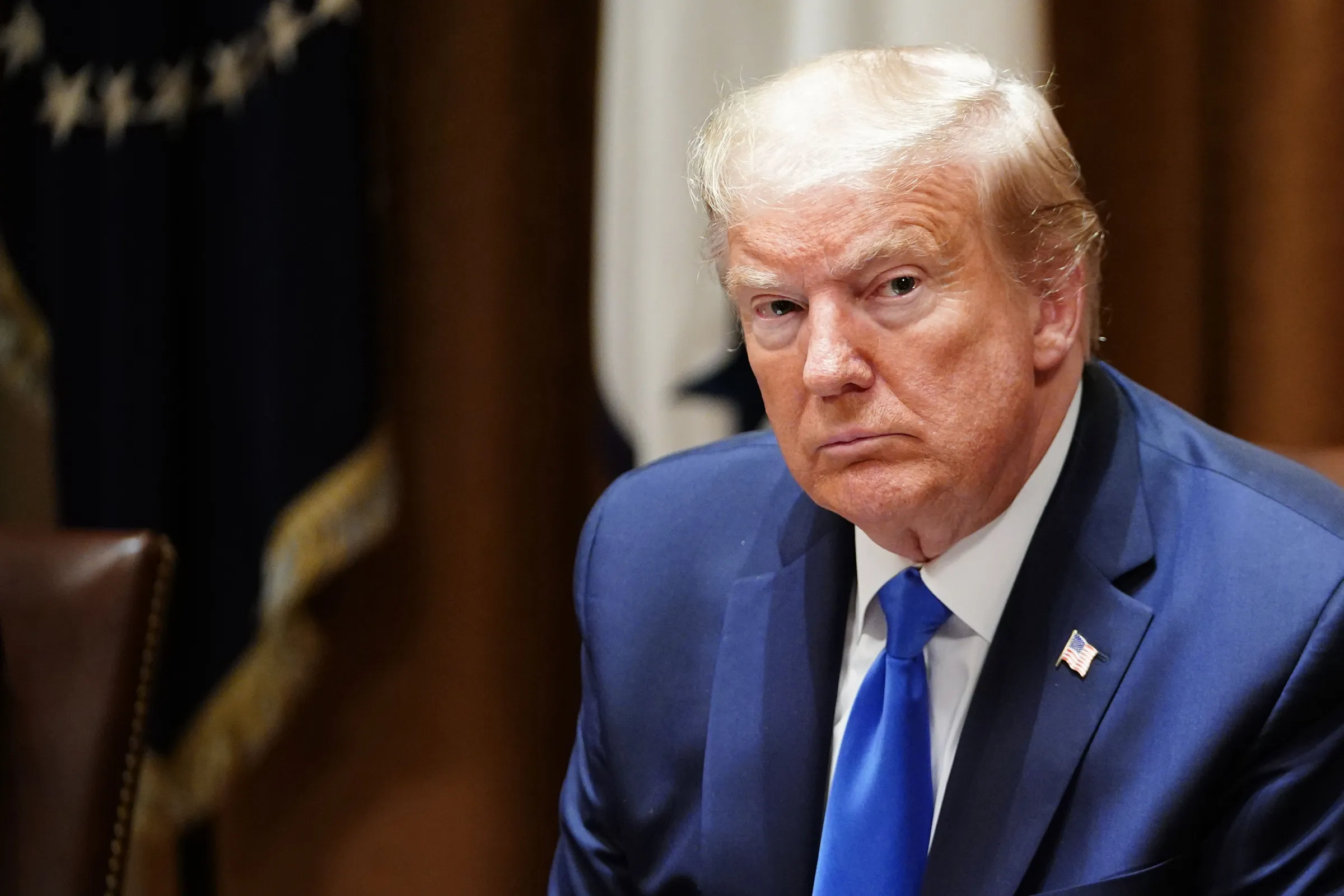
President Donald Trump ignited a fresh cultural and political firestorm this week after sharply criticizing Bad Bunny’s Super Bowl halftime performance, calling the largely Spanish-language show a “slap in the face” to American “greatness.” The remarks, delivered in a public statement shortly after the game, quickly reverberated across political, entertainment, and social media spheres, fueling a broader debate about culture, language, and national identity in the United States.
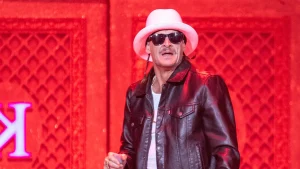
The Super Bowl halftime show, long considered one of the most visible entertainment platforms in the world, drew record viewership this year. Bad Bunny, the Puerto Rican global superstar known for blending reggaeton, Latin trap, and pop influences, delivered a high-energy performance featuring predominantly Spanish-language lyrics, elaborate choreography, and prominent nods to Latin culture. For many viewers, it was a celebration of diversity and the evolving face of American entertainment. For others, including the president, it represented something more contentious.
In his comments, Trump described the performance as inconsistent with what he characterized as traditional American values. “The Super Bowl is an American event watched by millions around the world,” he said. “It should showcase American greatness. What we saw was a performance that felt like a slap in the face to that tradition.”
The phrasing was deliberate and immediately provocative. Trump has long positioned himself as a defender of what he describes as “America First” principles, often framing cultural moments through the lens of national pride and identity. His critique of the halftime show appears consistent with that broader rhetorical strategy, particularly as cultural symbolism continues to play a central role in national politics.
Supporters of the president echoed his concerns. Some argued that the Super Bowl, as a quintessentially American sporting event, should prioritize English-language performances or artists perceived as more reflective of mainstream American culture. They framed the issue as one of tradition rather than ethnicity, suggesting that the halftime show should reinforce national cohesion rather than highlight linguistic or cultural differences.
Critics, however, were swift and forceful in their response. Many pointed out that Puerto Rico is a U.S. territory and that Spanish has been spoken in what is now the United States for centuries. They argued that Bad Bunny’s performance was not a departure from American identity but an expression of it. “Latino culture is American culture,” one prominent commentator wrote on social media. “The Super Bowl stage reflects the country as it exists today, not as it existed decades ago.”
Entertainment industry analysts noted that the NFL’s decision to feature Bad Bunny aligns with broader demographic trends. The Latino population in the United States continues to grow and exerts increasing influence across media, sports, and politics. The league has actively pursued efforts to expand its fan base internationally and among diverse communities domestically. From that perspective, selecting a globally recognized Latin artist represents a strategic business move as much as a cultural statement.
The halftime show itself was meticulously produced. Bad Bunny performed several of his international hits, accompanied by dancers and visuals that highlighted Caribbean and Latin American motifs. While the majority of lyrics were in Spanish, the staging and messaging emphasized themes of unity, resilience, and celebration—universal concepts often highlighted in past halftime performances regardless of language.
Political observers see the controversy as part of a broader culture-war dynamic that has increasingly shaped national discourse. Over the past decade, high-profile entertainment events—from award shows to sporting ceremonies—have become flashpoints for debates about patriotism, diversity, and social values. Trump’s remarks fit squarely within that pattern, reinforcing his longstanding willingness to engage directly with pop culture narratives.
Notably, some Republican lawmakers distanced themselves from the president’s characterization. A handful suggested that while individuals may hold personal preferences about musical styles, framing the issue in terms of national affront risked alienating key constituencies. Latino voters remain a critical demographic bloc in national elections, and reactions to cultural criticism can carry political consequences.
Meanwhile, advocacy groups and civil rights organizations condemned the president’s statement as divisive. They argued that celebrating multilingual performances on major stages is consistent with the country’s pluralistic heritage. Several organizations released statements emphasizing that linguistic diversity does not undermine national unity but reflects it.
The NFL has not directly responded to Trump’s comments but issued a general statement praising the performance as “a celebration of global music and the diverse fan community that makes the Super Bowl a worldwide event.” League officials have historically avoided direct political engagement, preferring to emphasize entertainment value and broad audience appeal.
Public opinion appears sharply divided. Online platforms saw trending hashtags both defending and criticizing the president’s remarks within hours of their release. Polling conducted shortly after the game suggests that reactions break down largely along partisan lines, though a significant number of respondents expressed indifference, viewing the halftime show as entertainment rather than a political statement.
Beyond immediate reactions, the episode raises substantive questions about the evolving definition of American identity. The United States has never had an official national language, and its cultural landscape has long been shaped by waves of immigration and regional diversity. From jazz and hip-hop to country and Latin pop, American music has consistently drawn from multiple linguistic and cultural traditions.
For Bad Bunny, the controversy may ultimately amplify his visibility. Historically, artists who become focal points in cultural debates often see surges in streaming numbers and public attention. Within hours of the performance, several of his songs climbed digital charts. In a brief social media post following the backlash, the artist thanked fans for their support and emphasized his pride in representing his heritage on a global stage.
Whether the controversy will have lasting political impact remains uncertain. Cultural disputes tied to entertainment events often flare intensely but fade quickly as new issues emerge. However, the underlying themes—language, national identity, and the meaning of “American greatness”—are likely to persist in public discourse.
At its core, the dispute illustrates how symbolic platforms like the Super Bowl can serve as arenas for broader ideological battles. For some, the halftime show represents a celebration of America’s diversity and its global cultural reach. For others, it is a stage that should affirm a more traditional or narrowly defined vision of national identity.
Trump’s characterization of the performance as a “slap in the face” ensures that the debate will not dissipate quietly. In a political environment where cultural symbolism carries substantial weight, even a 15-minute musical performance can become a lightning rod for deeper disagreements about who defines America—and how that definition continues to evolve.

Emily Johnson is a critically acclaimed essayist and novelist known for her thought-provoking works centered on feminism, women’s rights, and modern relationships. Born and raised in Portland, Oregon, Emily grew up with a deep love of books, often spending her afternoons at her local library. She went on to study literature and gender studies at UCLA, where she became deeply involved in activism and began publishing essays in campus journals. Her debut essay collection, Voices Unbound, struck a chord with readers nationwide for its fearless exploration of gender dynamics, identity, and the challenges faced by women in contemporary society. Emily later transitioned into fiction, writing novels that balance compelling storytelling with social commentary. Her protagonists are often strong, multidimensional women navigating love, ambition, and the struggles of everyday life, making her a favorite among readers who crave authentic, relatable narratives. Critics praise her ability to merge personal intimacy with universal themes. Off the page, Emily is an advocate for women in publishing, leading workshops that encourage young female writers to embrace their voices. She lives in Seattle with her partner and two rescue cats, where she continues to write, teach, and inspire a new generation of storytellers.