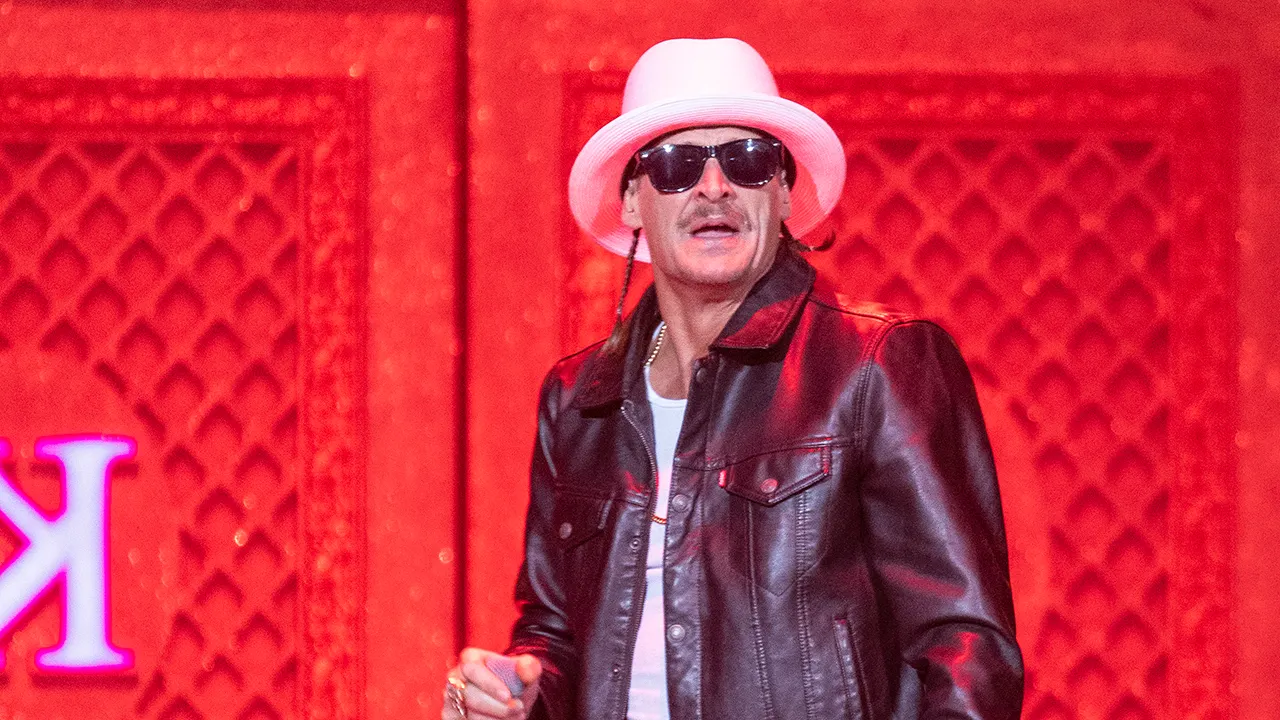
Kid Rock faced a storm of backlash online following his performance during Turning Point USA’s alternative Super Bowl halftime show, which aired Sunday night as a right-leaning counterpoint to the NFL’s official halftime spectacle. Branded as the “All-American Halftime Show,” the broadcast sought to provide an alternative for viewers who felt disconnected from mainstream media’s approach to the Super Bowl halftime experience. While the NFL’s official show, featuring Puerto Rican superstar Bad Bunny at Levi’s Stadium during Super Bowl LX, drew millions of viewers on NBC, TPUSA’s event targeted audiences seeking a distinctly conservative-themed celebration.
Despite attracting more than five million concurrent viewers on YouTube, the post-show conversation quickly shifted to controversy, centering on Kid Rock’s vocal performance. Fans on social media were quick to claim that the rocker was lip-syncing during the broadcast, and many were quick to criticize his execution. One X (formerly Twitter) user remarked, “Kid Rock doesn’t know how to lip sync his own songs.” Another user commented, “That was the worst lip sync I’ve ever seen #KidRockHalftime wow that was sad.” Similar posts proliferated, with fans writing, “Why kid rock lip sync everything??” and “Are we not gonna talk about the Kid Rock lip sync malfunction?” Other viewers went further, accusing the production of being pre-recorded, noting that the audio and visuals appeared out of sync. The sentiment across social media was one of disappointment for an audience that expected a live, high-energy musical performance.
Technical difficulties further complicated the show’s reception. The halftime event was initially slated to stream on X, but a last-minute licensing issue forced TPUSA to redirect viewers to their YouTube channel. In a sudden post, the organization explained, “UPDATE: Due to licensing restrictions, we are unable to stream The All-American Halftime Show on X. Head on over to our YouTube channel tonight around 8PM ET to watch the full show.” Despite the abrupt platform switch, the YouTube broadcast ultimately peaked at more than five million concurrent viewers, demonstrating that interest in the event remained strong despite the disruption.
Adding a deeply emotional element to the performance, the broadcast concluded with a tribute to Charlie Kirk, the late founder of Turning Point USA, who was tragically shot and killed in September 2025. A wide camera shot pulled back from Kid Rock and his guitar to reveal family photos of Kirk, his wife Erika, and their children, while the on-screen text read, “In Remembrance of Charlie Kirk.” The tribute was widely noted as a heartfelt moment, and many viewers praised the show for incorporating this personal and solemn touch amid the spectacle. Erika Kirk, Charlie’s widow and now CEO of the organization, later shared a montage of her late husband’s life on social media, further highlighting the emotional connection behind the performance.
Prior to the show, Kid Rock framed the performance as a high-stakes challenge. He described it as a David-and-Goliath battle, positioning himself against the enormous production scale of the NFL and the global appeal of a superstar like Bad Bunny. “We’re approaching this show like David and Goliath. Competing with the pro football machine and a global pop superstar is almost impossible… or is it?” he said in pre-show remarks. The statement reflected both a willingness to embrace risk and a desire to set the tone for an alternative, politically charged spectacle.
Interestingly, Kid Rock was not the only performer to face accusations of lip-syncing over Super Bowl weekend. Earlier in the day, Charlie Puth’s rendition of the national anthem drew speculation from viewers. Puth’s vocal arrangement included unexpected runs and stylistic embellishments, prompting fans to wonder whether the performance had been pre-recorded. While reactions to Puth were mixed—some praised his creativity while others questioned authenticity—it set a precedent for the intense scrutiny that performances during high-profile televised events now routinely face.
PLAY:
Other musical acts that day, however, received largely positive reviews. Brandi Carlile performed “America the Beautiful,” and Coco Jones sang “Lift Every Voice and Sing,” both earning acclaim for their live vocal performances. In comparison, Kid Rock’s lip-sync controversy stood out, highlighting the different expectations audiences have when watching a performance tied to a politically charged alternative broadcast.
The All-American Halftime Show was not without its defenders. Supporters praised the event for providing an alternative perspective during one of America’s most-watched annual broadcasts. Despite the technical glitches and performance criticisms, the show succeeded in drawing attention and delivering a spectacle for an audience that felt alienated by the mainstream halftime production. However, the lip-sync issues and last-minute platform changes made it clear that producing a live, flawless musical broadcast outside the infrastructure of the NFL presents significant challenges.
Social media amplified every misstep. The scrutiny Kid Rock faced illustrates the heightened expectations that now accompany any live or semi-live broadcast tied to a high-profile event. With millions of viewers watching in real-time and sharing their reactions instantly, even minor technical or performance flaws can dominate the conversation. Comments on platforms like X and YouTube were filled with both humor and criticism, demonstrating how quickly digital audiences can frame a narrative around a single perceived failure.
In the broader context, the TPUSA halftime show also served as a political statement, highlighting the organization’s right-leaning identity and creating a stark contrast with the official NFL halftime event. By including country and rock performers, emphasizing conservative values, and dedicating part of the show to the late Charlie Kirk, the broadcast underscored its mission to appeal to a specific demographic. Yet, that focus may have contributed to the divide in audience reception, with casual viewers comparing the performance to the high-budget, globally recognized NFL production.
The All-American Halftime Show further demonstrates how the Super Bowl, as a cultural touchstone, has become more than a sports event—it is a platform for music, politics, and social commentary. While the show drew millions and showcased prominent performers, including Kid Rock, Brantley Gilbert, Lee Brice, and Gabby Barrett, the backlash over lip-syncing reminded viewers that execution matters as much as intent.
Ultimately, Kid Rock’s performance will be remembered for both its ambitious concept and its technical controversies. The juxtaposition of heartfelt moments, such as the tribute to Charlie Kirk, against the viral criticism of lip-syncing created a complex legacy for the show. For TPUSA, the event successfully captured attention, sparked debate, and drew viewers seeking an alternative perspective, even if it did so amid controversy.
The weekend’s events also illustrate a broader trend: in the era of social media and instant feedback, performers at massive televised events must contend not only with live production challenges but also with instantaneous public judgment. While Kid Rock’s execution may have been flawed in the eyes of many viewers, the show’s ambitious scope, emotional tributes, and political messaging made it a noteworthy entry into the evolving history of Super Bowl halftime performances.
In the end, the All-American Halftime Show was a spectacle that combined political messaging, emotional remembrance, and musical performance into a single broadcast. While Kid Rock may have faced criticism for perceived lip-syncing issues, the show itself succeeded in drawing millions of viewers and creating a cultural conversation that extended beyond the event itself. From technical challenges to heartfelt tributes, the broadcast highlighted both the possibilities and pitfalls of staging alternative high-profile performances outside mainstream platforms, cementing its place as a memorable, if controversial, moment in Super Bowl history.

Emily Johnson is a critically acclaimed essayist and novelist known for her thought-provoking works centered on feminism, women’s rights, and modern relationships. Born and raised in Portland, Oregon, Emily grew up with a deep love of books, often spending her afternoons at her local library. She went on to study literature and gender studies at UCLA, where she became deeply involved in activism and began publishing essays in campus journals. Her debut essay collection, Voices Unbound, struck a chord with readers nationwide for its fearless exploration of gender dynamics, identity, and the challenges faced by women in contemporary society. Emily later transitioned into fiction, writing novels that balance compelling storytelling with social commentary. Her protagonists are often strong, multidimensional women navigating love, ambition, and the struggles of everyday life, making her a favorite among readers who crave authentic, relatable narratives. Critics praise her ability to merge personal intimacy with universal themes. Off the page, Emily is an advocate for women in publishing, leading workshops that encourage young female writers to embrace their voices. She lives in Seattle with her partner and two rescue cats, where she continues to write, teach, and inspire a new generation of storytellers.