

NOTE: VIDEO INSIDE THE ARTICLE.
The halftime spectacle at Super Bowl LX was always expected to spark conversation. What few anticipated was the degree to which language itself would become the central fault line in the post-performance debate.
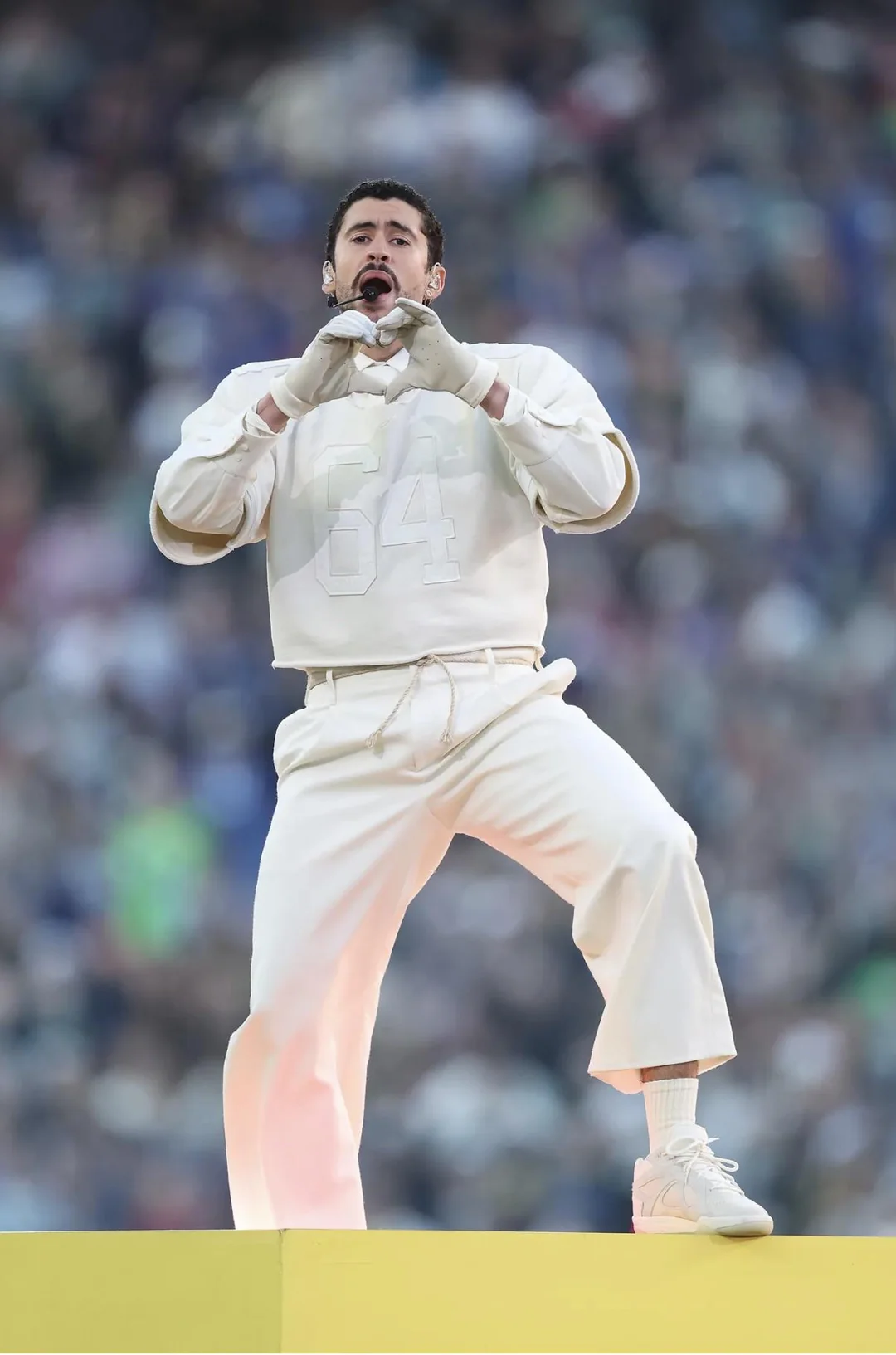
When Bad Bunny took the stage, he did so without compromise. The Puerto Rican global superstar delivered his entire set in Spanish, leaning fully into the musical and cultural identity that has defined his career. For millions of viewers, it was a high-energy, visually polished performance featuring surprise appearances from Ricky Martin and Lady Gaga. For others, it was disorienting.
Almost immediately, social media filled with polarized reactions. Some critics labeled the show “the worst of this century,” arguing that a Super Bowl halftime performance should be universally accessible to an English-speaking American audience. A recurring complaint centered on comprehension, with viewers saying they felt excluded because they did not understand the lyrics.
One widely circulated sentiment questioned why an event considered a cornerstone of American sports culture would feature a performance conducted almost entirely in Spanish. A number of commenters framed their criticism as confusion rather than hostility, emphasizing that they were not objecting to Latin culture itself but to the language barrier during a nationally televised event.
However, that view was met with strong pushback.
Supporters of the performance argued that music transcends language and that the halftime show has long prioritized spectacle, choreography, and cultural relevance over lyrical clarity. Many pointed out that the Super Bowl is broadcast globally and that the NFL has actively positioned itself as an international brand. From that perspective, featuring one of the most-streamed artists in the world — who performs primarily in Spanish — was less a provocation and more a reflection of shifting demographics and global influence.
One viewer described himself as “an old white guy who doesn’t speak a word of Spanish” and said he thoroughly enjoyed the performance regardless. Others praised the production value, choreography, and stage design, noting that the show delivered precisely what halftime is designed to provide: energy, memorability, and conversation.
Statistically, the context matters. Spanish is spoken by tens of millions of people in the United States, making the country one of the largest Spanish-speaking populations in the world. That reality complicates the argument that a Spanish-language performance is somehow disconnected from the American audience. For many households, Spanish is not foreign — it is native.
Bad Bunny himself has been consistent for years about his stance on language. In previous interviews, he has stated unequivocally that he has no intention of switching to English simply to expand market reach. His catalog spans multiple albums without a single full English-language track. That authenticity has been central to his global success, helping him accumulate billions of streams and multiple Grammy wins.
From a brand strategy perspective, the NFL’s decision aligns with a broader industry pattern. The halftime show has increasingly become a vehicle for cultural relevance and global resonance. Previous performers have leveraged the stage into massive post-show commercial gains. Rihanna’s streaming numbers surged dramatically after her appearance. Jennifer Lopez saw significant social media growth following her performance with Shakira. The Weeknd’s tour demand spiked sharply after his halftime show, contributing to record-breaking revenue.
Notably, halftime performers are not paid traditional performance fees. The NFL covers production costs, but artists typically receive only union-scale compensation. The true value lies in exposure. With viewership often exceeding 100 million, the platform offers marketing leverage that few stages in the world can match.
In that context, controversy is not necessarily a liability — it can amplify reach.
It is also important to distinguish between artistic dissatisfaction and cultural discomfort. Some viewers simply did not enjoy the music style. That is subjective and expected. The halftime show rarely satisfies everyone; it is, by design, a mass-market production attempting to bridge generational and cultural divides.
But the sharper critiques reveal a deeper tension: how Americans define “American” entertainment. The United States has no official federal language, despite English being dominant. Cultural expression in Spanish has been woven into American life for generations, particularly in states like California, Texas, Florida, and New York.
The NFL’s own messaging during the broadcast emphasized unity, tweeting: “Lo único más poderoso que el odio, es el amor. The Only Thing More Powerful Than Hate is Love.” The bilingual statement itself mirrored the performance — unapologetically inclusive.
Ultimately, the halftime debate reflects broader cultural currents rather than a singular performance misstep. To some, it was a bold celebration of Latin music at the highest-profile sporting event in the country. To others, it felt unfamiliar and alienating.
Both reactions underscore the same reality: the Super Bowl halftime show is no longer just an entertainment segment. It is a cultural referendum, replayed in real time across social media platforms.
Whether branded “the worst of this century” or hailed as groundbreaking, the performance achieved what halftime shows are engineered to do — dominate the conversation long after the final whistle.
PLAY:

Emily Johnson is a critically acclaimed essayist and novelist known for her thought-provoking works centered on feminism, women’s rights, and modern relationships. Born and raised in Portland, Oregon, Emily grew up with a deep love of books, often spending her afternoons at her local library. She went on to study literature and gender studies at UCLA, where she became deeply involved in activism and began publishing essays in campus journals. Her debut essay collection, Voices Unbound, struck a chord with readers nationwide for its fearless exploration of gender dynamics, identity, and the challenges faced by women in contemporary society. Emily later transitioned into fiction, writing novels that balance compelling storytelling with social commentary. Her protagonists are often strong, multidimensional women navigating love, ambition, and the struggles of everyday life, making her a favorite among readers who crave authentic, relatable narratives. Critics praise her ability to merge personal intimacy with universal themes. Off the page, Emily is an advocate for women in publishing, leading workshops that encourage young female writers to embrace their voices. She lives in Seattle with her partner and two rescue cats, where she continues to write, teach, and inspire a new generation of storytellers.