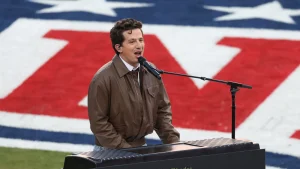



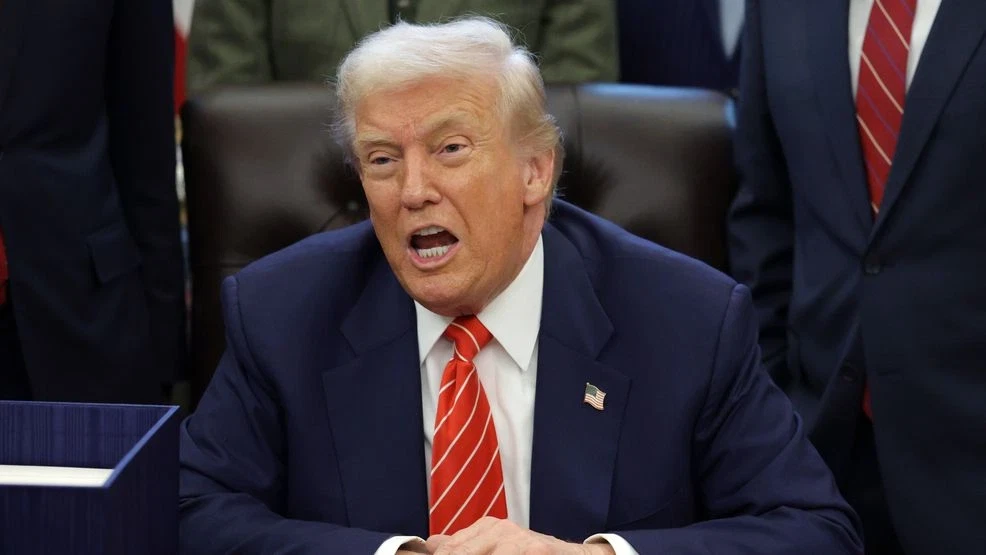
The spectacle of Super Bowl LX was already in full swing in San Francisco when President Trump finally addressed the event, making clear that he would not be attending. As pregame musicians packed away their instruments and the New England Patriots prepared to face off against favorites the Seattle Seahawks, Trump used his platform on Truth Social to issue a statement to millions of Americans and viewers worldwide.
Earlier, he had told the New York Post that the game was “too far” for him to travel, signaling that his absence was intentional. Yet, as the game unfolded on one of the biggest nights in American sports, Trump seized the moment to share his perspective, striking a tone that mixed criticism with patriotism.
In his post, the president directly criticized the NFL’s choice of halftime performer, stating that he had never heard of Puerto Rican singer Bad Bunny. “I think it’s a terrible choice. All it does is sow hatred. Terrible,” he wrote, reflecting the frustration expressed by many of his supporters regarding the league’s decision. The remarks underscored the ongoing debate over representation and culture at one of America’s most-watched sporting events, where artistic expression often intersects with political commentary.
Despite his criticisms, Trump concluded his statement with a more uplifting message. “Enjoy the Super Bowl, America! Our Country is stronger, bigger, and better than ever before, and the best is yet to come!” he proclaimed, offering a unifying note to fans and signaling pride in national achievements beyond the controversies surrounding the halftime show.
The timing of the post was notable. Issued while the game was underway, it allowed Trump to participate in the national conversation without overshadowing the spectacle on the field. The statement came as a reminder that even in absence, his voice carries influence, particularly during moments of heightened public attention like the Super Bowl.
Trump’s criticism of the halftime performer had already ignited debate prior to the game. Bad Bunny, a global music star and Grammy winner, has been both celebrated for his widespread appeal and criticized by segments of the conservative base. Some commentators argued that the NFL’s choice reflected cultural priorities at odds with traditional expectations for the national event, while others emphasized the importance of diversity and inclusivity in a globalized sports landscape.
In response, the artist focused on the show itself rather than the political drama, describing the halftime performance as a celebration and a “huge party.” He encouraged fans to embrace the energy of the moment, stressing that viewers did not need to understand Spanish to enjoy the music, only to dance and feel the spirit of the performance.
The Super Bowl has increasingly become a stage for both entertainment and social commentary. From controversial musical selections to politically charged statements, the event highlights how sports and culture intersect in contemporary America. Trump’s absence and subsequent post were part of a broader conversation about the role of politics in public spectacle, and the influence of prominent figures even when they are physically removed from the event itself.
While opinions on his remarks were divided, the president’s post served to amplify his presence during the game, offering supporters a sense of engagement while allowing critics to continue debates over music, culture, and representation at the Super Bowl. As the Patriots and Seahawks battled on the field, the evening became not only a showcase of athletic excellence but also a reflection of the broader societal and cultural dynamics shaping modern America.
In the end, Trump’s message combined both critique and encouragement, illustrating how the Super Bowl remains a unique platform where sport, culture, and political discourse intersect, and where the country’s attention can pivot as easily from the field to social media commentary. His decision not to attend may have kept him out of Levi’s Stadium, but it did nothing to remove him from the conversation dominating screens across the nation.

Sarah Mitchell is a bestselling novelist recognized for her insightful and emotionally resonant stories that explore the complexities of human relationships. Originally from Denver, Colorado, Sarah grew up in a family of teachers who nurtured her curiosity and love for storytelling. She studied psychology at Stanford University, where she became fascinated by the intricacies of human behavior—an interest that would later shape her writing career. Sarah’s novels are praised for their nuanced characters, intricate plots, and ability to capture the subtle tensions that define love, friendship, and family ties. Her breakthrough novel, The Spaces Between Us, became an instant bestseller, lauded for its honest portrayal of strained family relationships and the fragile bonds that hold people together. Since then, she has published several works that continue to captivate audiences around the world. Outside of her writing career, Sarah is passionate about mental health advocacy and often partners with organizations to promote awareness and support for those struggling with emotional well-being. Her personal life is quieter—she enjoys hiking in the Colorado mountains, practicing yoga, and spending time with close friends. With each new book, Sarah Mitchell cements her reputation as a writer who illuminates the beauty and struggles of human connection.