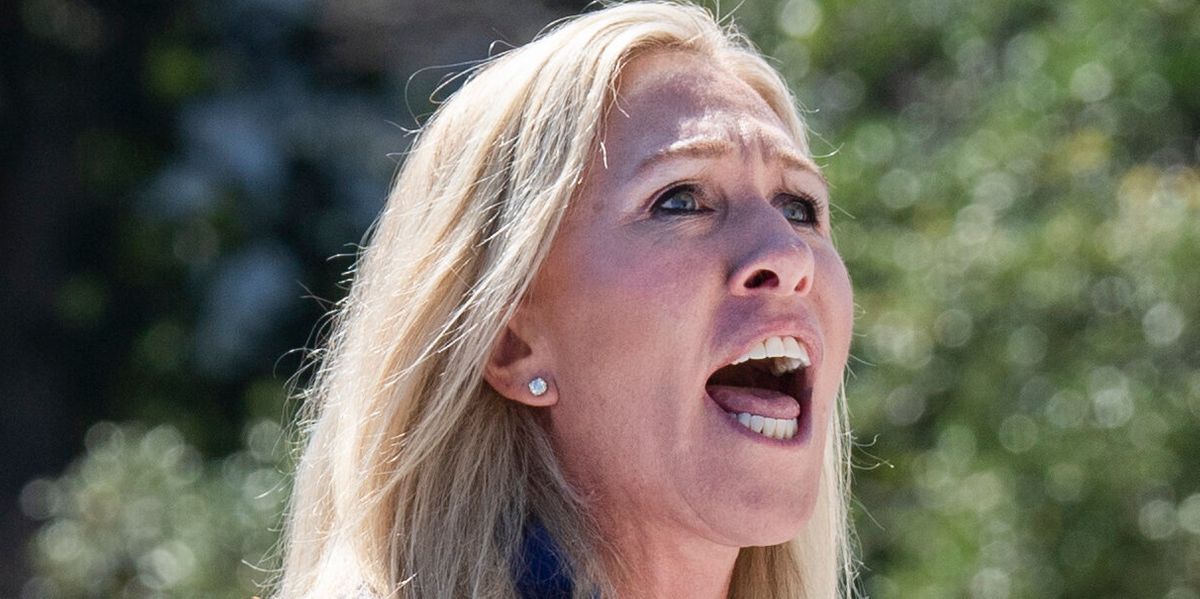
Former Congresswoman Marjorie Taylor Greene has once again made headlines for her controversial remarks, this time focusing her attention on the NFL and its decision to book Bad Bunny, the Puerto Rican reggaeton artist, for a Super Bowl halftime performance. Greene’s remarks, which she posted to social media, described the artist as a “demonic sexual performer,” sparking backlash and a wave of public conversation about the intersection of entertainment, politics, and cultural values.
Greene, known for her far-right views and frequent public controversies, has often criticized mainstream culture, especially when it comes to what she considers “family-friendly” entertainment. Her latest critique, however, has sparked debates not only about the appropriateness of certain performers but also about the ongoing struggle between conservative values and the evolving norms of popular culture.
Bad Bunny’s Rise to Global Fame
Bad Bunny, born Benito Antonio Martinez Ocasio, has become one of the most influential figures in modern music, blending reggaeton, Latin trap, and pop. From humble beginnings in Puerto Rico, he has risen to prominence through his genre-defying sound and unapologetically progressive stance on issues like gender fluidity, LGBTQ+ rights, and political activism.
His music often challenges societal norms, with themes of self-expression, sexual liberation, and empowerment. His stage persona and lyrical content are bold, often containing explicit references to sexuality and identity. While his work has garnered critical acclaim for its originality and his powerful voice on social issues, it has also sparked significant criticism, especially from more conservative figures like Greene, who see his performances as too provocative for mainstream events.
Bad Bunny’s participation in the Super Bowl halftime show is a testament to his global popularity and his wide-reaching influence across different demographics. As a Latinx artist, his inclusion also serves as a moment of cultural representation, showcasing the increasing diversity and inclusivity in major entertainment events like the Super Bowl.
Greene’s Critique: A Call for “Wholesome” Entertainment?
Marjorie Taylor Greene’s criticism of Bad Bunny’s booking is framed within a broader context of what she and other conservative figures deem appropriate for public consumption. In her social media post, she condemned the NFL for selecting an artist whose music, she argued, promotes “demonic” and “sexual” themes. She criticized the NFL for endorsing a performer whose lyrics, stage presence, and overall message she claimed were not suitable for a family-oriented event like the Super Bowl.
“Why is the NFL promoting a performer like Bad Bunny, who is known for his sexually explicit lyrics and provocative stage presence?” Greene wrote in a now-viral post. “This is not entertainment for family-friendly audiences, and it’s disturbing to see such a ‘demonic’ figure being celebrated on such a large platform.”
For Greene, and many who share her views, the Super Bowl represents more than just a football game; it is a symbol of American tradition, one that should promote values they consider wholesome, family-oriented, and in line with more conservative sensibilities. This argument is not new, as conservatives have often criticized entertainers who push boundaries for their perceived lack of moral decency, especially when their performances or messages are seen as challenging traditional gender roles, sexual mores, or religious values.
Bad Bunny’s Artistic Expression and Its Cultural Significance
While Greene’s remarks reflect one side of the debate, they also underscore a much larger and more complex conversation about the role of music and entertainment in society. Bad Bunny, like many artists before him, uses his platform to express views on a variety of social and political issues. He has been outspoken on matters such as Puerto Rican independence, LGBTQ+ rights, and his own rejection of rigid gender norms. His boldness in expressing his true self has resonated with millions around the world, especially within marginalized communities.
His music often deals with themes of sexual freedom, identity, and social justice. It’s not uncommon for Bad Bunny to incorporate elements of gender fluidity into his image, rejecting the traditional norms of masculinity that have long been prevalent in the reggaeton genre. His performances also challenge conventional ideas of gender and sexuality, and these elements have made him a trailblazer in the music industry.
For Bad Bunny’s fans, his music serves as both an artistic expression and a form of liberation. To his supporters, his unapologetic approach to identity is a source of empowerment, as it allows listeners, particularly from the LGBTQ+ community, to see themselves reflected in mainstream music. His decision to perform at the Super Bowl is symbolic of how far the Latin music genre, and the message of inclusivity that comes with it, have come in gaining recognition on a global scale.
Despite the cultural and artistic significance of Bad Bunny’s music, Greene’s criticism highlights a deep divide in public opinion over what constitutes acceptable entertainment. While Bad Bunny represents a new wave of artists challenging traditional boundaries, there are those, like Greene, who argue that certain forms of art and performance are too explicit for mainstream consumption, particularly when they are shown to young audiences during widely broadcast events like the Super Bowl.
NFL’s Defense and the Cultural Impact of the Halftime Show
In response to Greene’s criticism, the NFL defended its decision to book Bad Bunny, citing his cultural relevance and enormous popularity. The league’s halftime shows are designed to be a celebration of music and entertainment, showcasing a wide range of artists from different genres and backgrounds. Over the years, the NFL has featured performances from artists such as Beyoncé, Shakira, Katy Perry, and The Weeknd, reflecting the diverse tastes of its massive, global audience.
The NFL’s decision to feature Bad Bunny aligns with its broader strategy of reaching out to diverse cultural demographics. As the Super Bowl continues to grow in international viewership, the inclusion of a Latinx superstar like Bad Bunny speaks to the increasing recognition of Latin music and culture within mainstream American entertainment.
For many, Bad Bunny’s performance represents a victory for diversity and inclusion in music, especially at such a high-profile event. Critics of Greene’s position argue that the Super Bowl, and indeed most entertainment, should be a space where artists can express themselves freely, without fear of censorship or moral judgment.
The Cultural Divide: Conservative Values vs. Progressive Artistry
The clash between Greene’s criticism and Bad Bunny’s supporters underscores the larger cultural divide in the United States. At the heart of this debate is the question of what role entertainment should play in shaping social norms. For some, like Greene, entertainment is about reinforcing traditional values and providing content that is aligned with what they consider to be moral, family-friendly standards. For others, entertainment is a space for creative expression, experimentation, and pushing boundaries.
As the world of entertainment continues to evolve, so too does the conversation around what is acceptable and what is not. Greene’s condemnation of Bad Bunny’s performance may resonate with certain segments of the population, but it also serves as a reminder of the ongoing tension between progressive and conservative values in American culture.
Bad Bunny’s supporters continue to embrace his music and activism, viewing his platform as a reflection of the changing landscape of modern entertainment. For them, his inclusion in the Super Bowl halftime show is a victory for cultural representation and creative freedom.
A Broader Discussion: Art, Censorship, and the Role of Media
The ongoing debate surrounding Bad Bunny’s performance is just one example of the broader conversation about art, censorship, and the role of media in shaping societal values. In an era where culture is increasingly polarized, these conversations are likely to continue. What is clear is that the music industry, like many other creative industries, will continue to reflect and shape the cultural forces at play, whether through the inclusion of artists like Bad Bunny or through the ongoing challenges posed by critics like Marjorie Taylor Greene.

Emily Johnson is a critically acclaimed essayist and novelist known for her thought-provoking works centered on feminism, women’s rights, and modern relationships. Born and raised in Portland, Oregon, Emily grew up with a deep love of books, often spending her afternoons at her local library. She went on to study literature and gender studies at UCLA, where she became deeply involved in activism and began publishing essays in campus journals. Her debut essay collection, Voices Unbound, struck a chord with readers nationwide for its fearless exploration of gender dynamics, identity, and the challenges faced by women in contemporary society. Emily later transitioned into fiction, writing novels that balance compelling storytelling with social commentary. Her protagonists are often strong, multidimensional women navigating love, ambition, and the struggles of everyday life, making her a favorite among readers who crave authentic, relatable narratives. Critics praise her ability to merge personal intimacy with universal themes. Off the page, Emily is an advocate for women in publishing, leading workshops that encourage young female writers to embrace their voices. She lives in Seattle with her partner and two rescue cats, where she continues to write, teach, and inspire a new generation of storytellers.